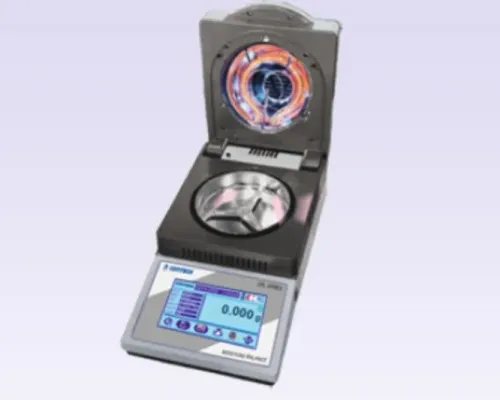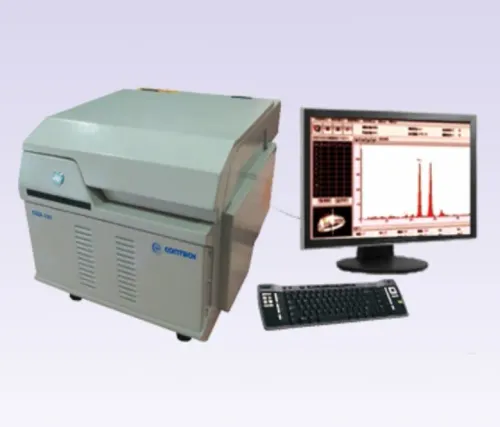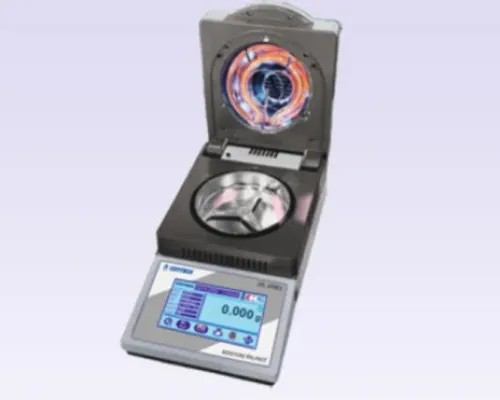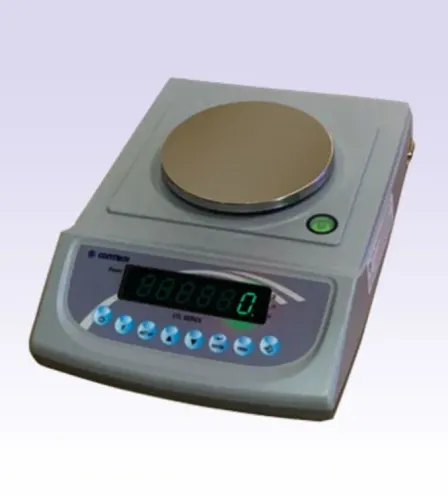

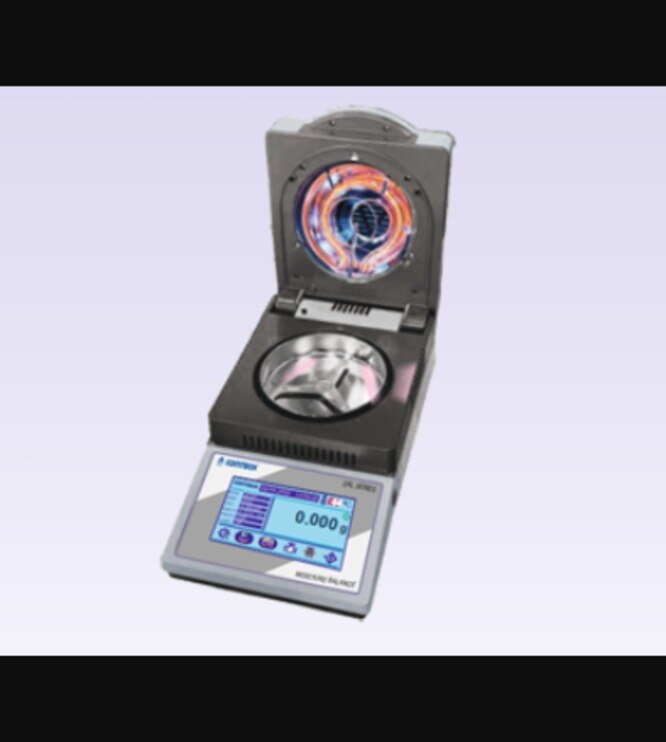
A moisture analyzer balance lets students observe how a sample loses mass during controlled heating, but the displayed percentage is meaningful only when sample preparation, temperature, endpoint, and weighing conditions are controlled. By the end, readers will know how to run the practical, calculate wet-basis moisture, identify unsuitable samples, and judge whether repeated results are trustworthy.
Key takeaways
- Measure mass loss, not water directly, during controlled heating.
- Spread samples thinly and load consistent masses for comparable results.
- Temperature and endpoint settings can change the reported moisture percentage.
- Repeat measurements and compare variation before accepting a class result.
What students measure during a loss-on-drying practical
A moisture analyzer balance measures mass lost during controlled heating, not water directly. It weighs a wet sample, heats it with an infrared or halogen source, tracks the drying curve, cools or stabilises the result, and displays a percentage.
This thermogravimetric instrument links mass, heat, time, and the selected endpoint; it is not simply a balance paired with an oven.
Use this practical sequence:
- Prepare a representative, homogenised portion.
- Place a clean, dry empty pan on the balance and close the draft shield.
- Tare the pan, then add the sample without spilling.
- Distribute the sample in a thin, even layer; remove clumps and avoid overloading.
- Select the temperature and endpoint: timed, constant-rate, or weight-stability.
- Allow heating to finish, then let the result cool or stabilise before recording it.
- Record wet mass, dry mass, temperature, endpoint type, elapsed time, final percentage, and the mass-versus-time drying curve.
Moisture measurement needs an explicitly labelled basis.
| Basis | Calculation | Example for 5.00 g wet and 4.20 g dry |
|---|---|---|
| Wet basis | (wet mass − dry mass) ÷ wet mass × 100 | 16.0% |
| Dry basis | (wet mass − dry mass) ÷ dry mass × 100 | 19.0% |
These percentages are not interchangeable. The calculation assumes mass loss is water; volatile solvents, oxidation, or decomposition can produce a precise but chemically wrong result. A stable plateau supports the endpoint, while a continuing decline signals further moisture loss or another process.
Which teaching samples work, and how should you load them?
A moisture analyzer balance for teaching laboratory in Ahmedabad works best with samples whose programmed mass loss is predominantly water. Use these categories for repeatable classroom demonstrations:
| Sample | Suitable use | Main caution |
|---|---|---|
| Soil, flour, rice and other grains | Compare moisture between prepared portions | Homogenise and break oversized particles |
| Food powders and prepared foods | Show drying curves and loading effects | Use promptly and control storage time |
| Paper, pharmaceutical excipients and polymers | Demonstrate material differences | Confirm heating will not cause decomposition |
| Volatile solvents, reactive chemicals and unstable ingredients | Unsuitable for a simple loss-on-drying exercise | Mass loss may not represent water |
Biological and food samples need clean containers, defined storage times and appropriate laboratory hygiene. Bacterial growth can change the sample during storage and create a safety hazard.
Homogenise each material before taking a portion, then break large pieces to a consistent size; do not grind so aggressively that friction heats the sample or drives off moisture.
Choose enough material to produce a visible, stable signal without overloading the pan. Spread it in a thin, even layer across the pan. Do not pile powder in the centre, leave large grains touching, or permit clumps to remain.
A thick layer can dry at the surface while water stays inside; crusting then makes the result depend on loading technique.
Lower liquids and wet pastes carefully to prevent splashing, and select heating that avoids violent boiling. An overloaded pan, uneven heating or nonrepresentative subsampling can produce a precise-looking result that does not describe the original material. A laboratory moisture balance therefore rewards disciplined preparation as much as accurate weighing.
How do temperature and endpoint change the reported moisture?
A fast digital moisture analyzer can report a precise number without measuring water alone. Low or moderate heating may remove free moisture while leaving bound moisture in the matrix; higher temperatures shorten the run but increase spattering, case-hardening, oxidation, volatile-solvent loss, and thermal decomposition.
| Endpoint | Stopping rule | What the result indicates |
|---|---|---|
| Timed | Stop after the programmed duration | The time has elapsed, not that the sample is fully dry |
| Constant-rate | Stop when the mass-loss rate reaches the selected condition | Drying has slowed according to the instrument criterion |
| Weight-stability | Stop after mass remains within the specified tolerance | A stable plateau supports the selected endpoint |
Compare these three endpoints on a suitable teaching material and inspect the mass-versus-time curve. A slowly declining curve signals continuing moisture loss or another mass-loss process; a plateau supports an endpoint. The reported moisture therefore depends on temperature, heating mode, and stopping rule.
Mass loss represents water only when the sample chemistry supports that assumption. Discuss whether the result measures free water, bound water released by the programme, solvent evaporation, or decomposition products.
Establish the moisture measurement method against ISO 712-1 for cereals and cereal products, ASTM E871 for wood and wood products, or Karl Fischer titration when water content—not total loss on heating—is the question.
Before research comparison or product release, record temperature, ramp or heating mode, endpoint criterion, elapsed time, and reference method.
How can a class control errors and interpret repeat results?
Do not trust a mean until the instrument, sample, and drying method have passed basic controls. A laboratory moisture balance needs separate checks for weighing and heating: level the unit, check weighing performance with a suitable mass, and verify heating temperature independently. A balance check cannot reveal an incorrect heater temperature.
1. Place the moisture analyzer balance on a stable bench away from fans, air-conditioning outlets, open windows, doors, and busy bench edges. Drafts, vibration, and warm air movement can disturb a low-mass sample. Keep the pan clean and dry, inspect the heating area, and remove residue between samples to prevent cross-contamination.
2. Run duplicate measurements for a teaching demonstration and three replicates when comparing materials or methods. Keep sample preparation, loading mass, pan distribution, temperature, and endpoint identical. Do not average results until unexplained variation has been investigated and documented.
3. Record every replicate, the mean, and a range or standard deviation. An unstable display points to drafts, vibration, poor levelling, a dirty pan, evaporation before closure, or a continuing drying curve.
4. Treat an unusually high result as a fault to investigate. Check for splashing, volatile solvents, decomposition, excessive temperature, and contamination. Inconsistent replicates point to poor homogeneity, uneven pan coverage, clumping, crust formation, or inconsistent endpoint selection.
How should an Ahmedabad teaching laboratory select and use the instrument?
Choose a moisture analyzer balance for teaching laboratory in Ahmedabad when the lesson demonstrates rapid loss on drying, not when students need a universal water assay. Food powders, grains, soil, paper, pharmaceutical excipients, polymers, and chemicals fit after you confirm that heating will not remove significant solvent or decomposition products.
| Teaching use | Fit | Control |
|---|---|---|
| Food powders, grains, soil | Good for rapid screening | Compare grain results with ISO 712-1 or the applicable oven method |
| Paper, excipients, polymers | Useful when mass loss is predominantly water | Check for binders, solvents, or heat-sensitive components |
| Volatile, reactive, or thermally unstable chemicals | Poor choice for simple loss-on-drying | Use a different method, such as Karl Fischer titration |
Teach students to treat the displayed percentage as the output of a defined programme, not proof of accuracy. Compare it with a recognised oven procedure or Karl Fischer result before research comparison or product decisions.
Ahmedabad conditions need practical controls: keep the digital moisture analyzer away from air-conditioning outlets, fans, open windows, vibrating benches, and busy edges. Air-conditioning can change a hygroscopic sample before weighing.
Ask suppliers to demonstrate:
- Temperature verification, balance checks, pan cleaning, and method storage.
- Endpoint selection and replicate reporting using your own samples.
CONTECH INSTRUMENTS LTD. belongs on the comparison list when documented checks, service, training, consumables, and method suitability meet the lesson’s needs.
Related product
 | Moisture Balances Moisture Balances (CAL Series) (0.001 g to 180 g) Moisture Balances (CAL Series) (0.001 g to 180 g) The CONTECH CAL Series Moisture Balances are advanced moisture analyzers designed for fast,... View product → |
Frequently asked questions
What do students measure during a loss-on-drying practical?
Students measure the percentage of sample mass lost during controlled heating. The loss includes moisture and other volatile substances, so it is not automatically pure water.
Which teaching samples work, and how should students load them?
Use stable, safe samples such as flour, soil, grains, or dried plant material. Spread a representative portion evenly across the pan and keep the starting mass and layer thickness consistent.
How do temperature and endpoint change the reported moisture?
Higher temperatures can remove moisture faster but also drive off volatile compounds or cause decomposition. A time-based endpoint and an automatic constant-mass endpoint can produce different results.
How can a class control errors and interpret repeat results?
Use clean, dry pans, tare the balance, avoid drafts, record sample and programme details, and repeat the test. Investigate large differences between repeats instead of averaging them without review.
How should an Ahmedabad teaching laboratory select and use the instrument?
Choose a moisture analyzer balance with a readable display, suitable heating control, repeatable endpoint settings, simple data recording, and local service support. Train students to handle hot pans and verify results with repeat tests.