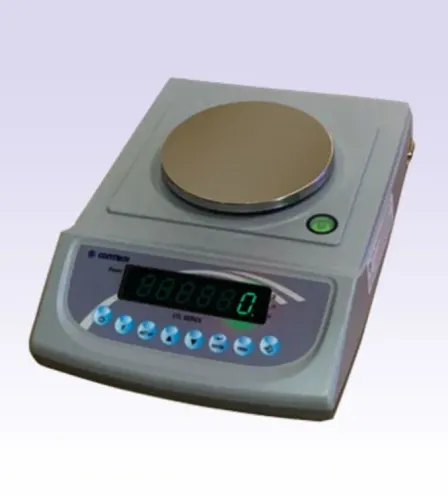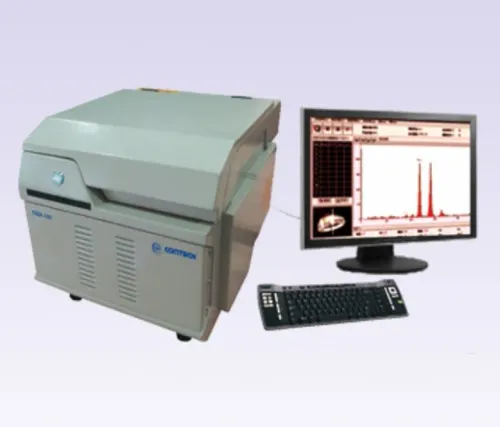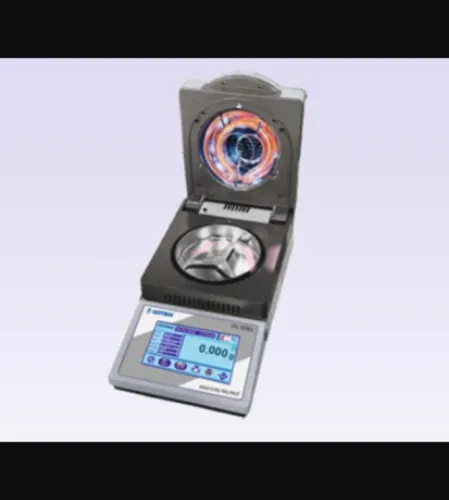

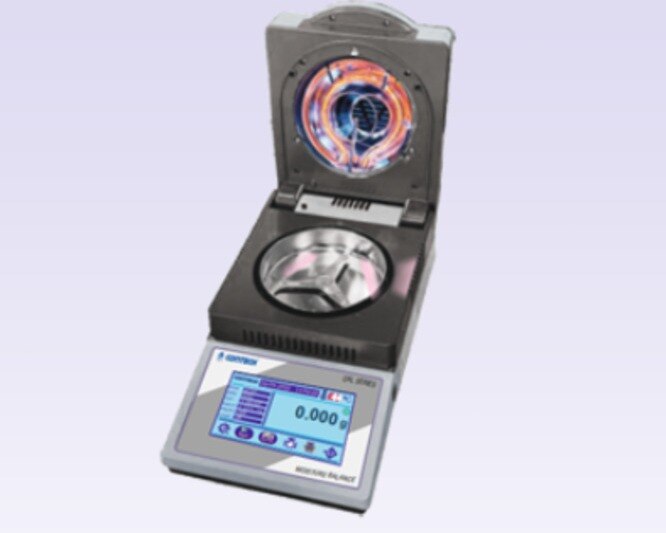
A moisture balance can shorten checks on powders, chemicals and casting materials, but it cannot tell you whether a ring is 22-karat or whether bullion contains the declared gold content. You will be able to match the instrument to your operation, calculate a defensible result, compare alternatives and choose whether to buy, rent, outsource or skip the equipment.
Key takeaways
- Buy when moisture or volatile content can cause casting, plating or release failures.
- Use a defined sample mass, drying program and endpoint for every moisture determination.
- Control sample handling, room conditions and instrument checks to improve repeatability.
- Outsource testing when failures are rare or the required method is unclear.
Which Ahmedabad jewellery operations actually need moisture analysis?
Buy a laboratory moisture balance for jewellers in Ahmedabad only when a material’s moisture or volatile content can cause a process failure. The clearest cases are manufacturing, casting and plating units that check incoming or in-process materials before use or release.
| Operation | Sample or decision | Value of moisture analysis |
|---|---|---|
| Manufacturing or job-work | Investment powder, polishing compounds, soldering fluxes, waxes | Detect variable moisture before defects, rework or drying delays |
| Casting or plating | Hygroscopic salts, cleaning residues, plating chemicals | Support batch release and supplier-dispute evidence |
| Gold-buying desk or retail shop | Finished rings, bullion and customer items | Little defensible moisture use; measure purity instead |
| Assaying laboratory | Precious-metal samples | Prioritise assay equipment unless it also controls moisture-sensitive inputs |
A laboratory moisture balance uses loss on drying: it weighs the mass lost during heating, not gold content. It cannot replace X-ray fluorescence, fire assay or cupellation, and it is not a gold purity checking balance for fineness, karat, alloy composition or precious-metal content.
A finished gold ring or dry bullion bar normally provides little useful moisture information. Heating can remove oil, flux, plating residue or surface water; oxidation can increase mass. Neither result proves moisture in the metal.
Frame the purchase around rejected batches, rework, drying delays or supplier disputes—not faster weighing. A small retail shop may have no defensible use, while a job-work unit handling variable process powders may have a clear one. An assaying laboratory should invest in assay equipment first unless it also manages moisture-sensitive incoming materials.
How do you run and interpret a moisture-determination test?
Run moisture determination with the material’s validated method, not a copied universal 105 °C setting. A moisture balance measures loss on drying, so temperature, ramp rate and endpoint determine what the reported moisture analysis actually means.
- Tare the clean pan, mix the batch, and take a representative portion.
- Spread it in a thin, even layer; a heap can trap wet material and distort the result.
- Check that the sample will not melt, scorch, decompose, oxidize, or volatilize solvents and oils under the proposed program.
- Set the validated temperature, ramp and endpoint, then start the run.
- Handle hot residue safely, record the wet mass, dry mass and result, and clean the pan.
| Endpoint | Use it when | Main risk |
|---|---|---|
| Stable mass | Repeated readings meet your defined mass-change limit | Decomposition can appear falsely stable |
| Defined time | The material has a validated drying time | Slow drying can leave residual moisture |
Calculate moisture or loss on drying as (wet mass − dry mass) ÷ wet mass × 100. For 10.000 g wet sample ending at 8.600 g: (10.000 − 8.600) ÷ 10.000 × 100 = 14.0%.
That result proves 1.400 g was lost under that temperature and endpoint; it does not prove that all 1.400 g was water. ASTM E1131’s treatment of thermogravimetric loss reinforces interpreting the temperature region of each mass change. Compare the method with an oven reference or Karl Fischer titration when true water content is required.
A precise reading from unsuitable heating remains chemically wrong.
How can you make the result repeatable in Ahmedabad conditions?
Make sampling consistent before blaming the moisture balance. A defensible moisture determination starts with a representative portion, not a convenient scoop from the container surface.
- Mix the powder, divide the batch using a documented procedure, and run duplicate portions. Record sample identity, batch or lot number, date, operator, sample mass, temperature, endpoint and each replicate result.
- Investigate materially different duplicates for segregation, crust formation, bubbling, splashing, coarse particles or uneven pan loading. Pan size, particle size, sample mass and layer thickness affect moisture analysis: a compact heap dries differently from a thin layer, while excess material can hide a wet interior.
- Keep containers sealed and use the same equilibration time. During Ahmedabad’s monsoon, hygroscopic powders and salts can gain mass after opening; dry-season air-conditioning also changes handling conditions. Transfer samples promptly between weighing and heating.
- Let warm samples reach a consistent condition before weighing because convection causes unstable readings. Use a draft shield, keep the bench level, and avoid drafts, vibration, temperature gradients and nearby ovens.
- Verify the balance routinely with traceable checks and validate handling in both monsoon and dry-season conditions. Do not assume one local humidity figure suits every material or installation.
Report moisture percentage separately from total loss on drying. Solvents, volatile oils or decomposed material can contribute to the loss, so a repeatable result is not automatically a true water-content result.
What should you compare before buying a moisture balance?
Compare the workflow, not just the displayed resolution. A laboratory moisture balance trades equipment cost for faster moisture determination, fewer transfers and better throughput.
| Option | Strength | Limitation |
|---|---|---|
| Oven plus external precision balance | Lower specialised-equipment cost; suits a reference loss-on-drying method | Longer drying, desiccator cooling, separate weighing and more operator handling |
| Halogen or infrared analyzer | Similar automation and rapid results | Heat-sensitive materials need a validated lower-temperature method or Karl Fischer titration |
| Simple gravimetric method | Basic weighing before and after drying | A precision balance measures mass accurately but cannot determine moisture alone |
| Moisture balance | Faster runs, continuous weighing and automated endpoints | The heating program can produce a precise but chemically wrong result |
Request more than the published 0.001 g to 180 g range. Ask for model-specific:
- Readability, weighing capacity, heating range and temperature accuracy
- Sample-pan dimensions, endpoint criteria and repeatability data
- Data export, calibration procedure, electrical supply and installation requirements
Validate the new method against a specified oven loss-on-drying procedure or an established laboratory method, using representative production samples. Establish bias, repeatability, endpoint behaviour and an acceptable difference before using results for batch release.
When comparing CONTECH INSTRUMENTS LTD. with other suppliers, request a live demonstration using your investment powder, polishing compound or chemical, not a convenient dry sample. Also request written method-development guidance, calibration documentation, Ahmedabad installation service, operator training and a clear response process for repairs and recalibration.
Related product
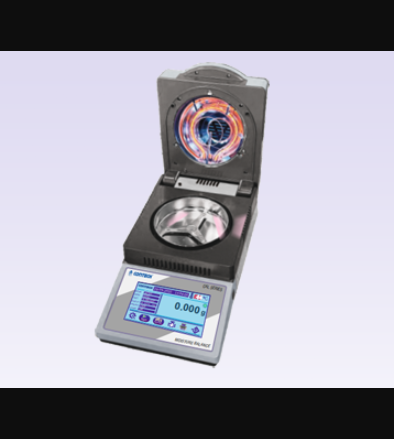 | Moisture Balances Moisture Balances (CAL Series) (0.001 g to 180 g) Moisture Balances (CAL Series) (0.001 g to 180 g) The CONTECH CAL Series Moisture Balances are advanced moisture analyzers designed for fast,... View product → |
Should you buy, rent, outsource or avoid the instrument?
Buy a laboratory moisture balance when you run frequent go/no-go checks on moisture-sensitive powders or process chemicals, the cost of rejected batches or drying delays is visible, and staff can validate and follow a method for each material.
| Option | What it means | When it applies |
|---|---|---|
| Buy | Own and operate the instrument | Manufacturers with several moisture-sensitive inputs; job-work units after proving recurring savings |
| Rent or demonstrate | Test demand before committing capital | Seasonal work, uncertain volumes or unproven payback |
| Outsource | Send samples to a testing laboratory | Infrequent tests, hazardous samples or costly method validation |
| Avoid | Use another measurement method | Finished-jewellery purity, karat or bullion weighing |
A small jewellery shop will often outsource. An assaying laboratory should buy only when moisture testing is a separate, documented service, not a substitute for precious-metal analysis. Use X-ray fluorescence, fire assay or another validated elemental-analysis method for fineness and precious-metal content.
Include method development, calibration verification, cleaning, replacement pans, service, documentation and staff training in the cost. Ask how the supplier handles a failed endpoint, contaminated pan, software export and recalibration.
For each candidate material, compare the laboratory moisture balance result with an oven or Karl Fischer reference, review duplicate data and set a written acceptance limit. That moisture determination makes the purchase defensible; moisture analysis without correlation can create faster disputes rather than prevent them.
A laboratory moisture balance for jewellers in Ahmedabad earns its place only when the avoided loss exceeds its operating and validation burden.
Frequently asked questions
Which Ahmedabad jewellery operations need moisture analysis?
Manufacturing, casting and plating units need it when moisture or volatile content can affect incoming materials, processing or product release.
How do you run and interpret a moisture-determination test?
Prepare a representative sample, record its starting mass, heat it under a defined program, and interpret the final mass loss as moisture or volatile content only when the method supports that conclusion.
How can you make moisture-balance results repeatable in Ahmedabad conditions?
Standardise sample handling, sample mass, pan loading, drying temperature, endpoint settings and cooling conditions, then record each result with the method and instrument status.
What should you compare before buying a laboratory moisture balance?
Compare weighing readability, heating range, endpoint control, sample capacity, repeatability, calibration options, data recording and local service support.
Should a jeweller buy, rent, outsource or avoid a moisture balance?
Buy for frequent, decision-critical testing; rent for a defined short-term need; outsource when tests are infrequent; avoid the instrument when moisture results do not change a process decision.