
An electronic moisture balance heats a weighed sample and tracks the mass it loses, but that loss is not automatically the amount of water present. You will learn how to prepare samples, choose a drying program, control Kolkata’s humid conditions, interpret the result, and compare an instrument with a reference method before relying on it for production or laboratory decisions.
Key takeaways
- Treat the result as Loss on Drying, not water-specific measurement.
- Record sample mass, temperature, stop criterion, and drying time for every test.
- Build drying programs with reference-method correlation before routine use.
- Protect samples and balance from Kolkata’s humidity during storage and weighing.
What an Electronic Moisture Balance Actually Measures
An electronic moisture balance measures mass lost by a weighed sample during programmed heating. It records initial mass, tracks the loss continuously, and calculates dry mass at the stopping point. This produces Loss on Drying (LOD), not a water-specific measurement.
Volatile solvents, plasticizers and decomposition products can appear as apparent moisture, while chemically bound water is not separately identified.
For moisture content determination, report the basis with the result. Wet-basis moisture uses the original sample mass; dry-basis moisture uses the dry-solids mass. Calculate moisture percentage as (initial mass − dry mass) ÷ initial mass × 100. Convert it with dry-basis percentage = 100 × wet-basis percentage ÷ (100 − wet-basis percentage).
Confusing these bases creates apparently conflicting laboratory results.
A complete moisture analysis report should state:
- The moisture percentage and whether it is wet-basis or dry-basis.
- The initial mass, dry mass, programmed temperature and endpoint rule.
- The sample identity and preparation method, because grinding and layer thickness affect mass loss.
- That the result is LOD when volatile components could contribute to the loss.
Use Karl Fischer titration when the specification requires water alone, especially at low levels or in a matrix containing interfering volatiles. It identifies water through a chemical reaction rather than treating every heated mass loss as moisture.
A Repeatable Test Sequence From Sample to Result
A representative sample is the foundation of moisture measurement. Mix the lot, or follow its established sampling plan, before taking the test portion; a precise pan result can still misrepresent a heterogeneous batch. Keep the portion in a sealed, labelled container and minimise exposure between opening and weighing.
1. Prepare the sample consistently. Grind coarse grains to a defined particle size where the method requires it. Break up food products and chemicals without heating them. Do not compact powders; loosen them for an even layer. For sludge or wet pastes, choose a pan and sample mass that limit splashing.
2. Place the empty pan on the electronic moisture balance, close the chamber if applicable, and tare it. Add the same target mass for every replicate, then spread it across the pan in a thin, even layer. A thick or uneven layer can crust over while moisture remains underneath, changing the drying curve and endpoint.
3. Select the validated temperature, ramp rate, endpoint rule and maximum time for the material. Record the initial mass before heating; fixed-time drying, constant mass-loss rate and staged programs are different methods.
4. Start the run and monitor the drying curve rather than relying on appearance. Stop only when the programmed endpoint is reached within the allowed time; record final mass, temperature and method parameters.
5. For moisture content determination, retain the result with the sample identity and replicate number. Correlate the procedure with the applicable reference method before using it for release decisions.
How to Develop a Drying Program for Difficult Materials
Start with a conservative temperature, then compare the proposed program with a lower-temperature run. Choose a ramp that removes moisture without browning, caramelization, scorching, smoking, foaming, splattering, crust formation or decomposition. Inspect the residue and drying curve; continued mass loss after apparent drying signals a misleading endpoint.
| Endpoint method | How it works | Correlation requirement |
|---|---|---|
| Fixed time | Stops after a programmed drying time | Compare drying time and final mass with the reference method |
| Constant-rate-of-mass-change | Stops when mass change remains below a defined rate | Confirm the rate threshold gives equivalent results |
| Two-stage temperature program | Uses one temperature for initial drying and another for completion | Correlate both stages and the final endpoint |
For heat-sensitive chemicals, food products and samples that oxidise or decompose, reduce the ramp or use staged heating. Use a cover or suitable pan arrangement when the method permits it, especially when splattering or rapid evaporation affects moisture measurement.
Record sample mass, layer thickness, temperature, ramp, endpoint rule and final drying time for repeatable moisture analysis and moisture content determination.
Loss on Drying can include solvent, plasticizer or other volatile loss, not only water. Use Karl Fischer titration when only water must be quantified, particularly when volatile components could distort the result. A precise drying curve does not make a non-water-specific result water-specific.
Controlling Kolkata Humidity During Weighing and Storage
Kolkata’s monsoon humidity can change a result before heating begins. Hygroscopic powders, grains, pharmaceuticals and food products absorb or release moisture between opening and weighing, so the displayed value cannot correct for moisture gained before testing.
- Keep each sample in a sealed, clearly labelled container until testing. Record laboratory temperature and relative humidity, open the container for the shortest practical time, and transfer the sample rapidly to the tared pan.
- Install the electronic moisture balance on a rigid, level surface away from air-conditioning outlets, drafts and vibration. Keep hot samples from creating convection over the pan, which can make the signal unstable or trigger a premature endpoint.
- Allow the electronic moisture balance to stabilise thermally before validation or routine testing. Moving it between rooms, placing it near a heat source or starting immediately after installation can shift the result.
- For an electronic moisture balance for measurement in Kolkata, check the operating-environment range in the manual or datasheet before purchase. Confirm the specified temperature and relative-humidity limits, especially if the instrument will operate outside a controlled laboratory; do not assume a Kolkata room meets them.
Correlating the Result With a Reference Method
A rapid electronic result is fit for release, acceptance or process control only after product-specific comparison with the applicable reference method. Sample preparation, grinding, temperature, ramp rate, layer thickness and endpoint rule can make moisture measurement differ from an oven result.
| Factor | Electronic method | Correlation risk |
|---|---|---|
| Sample preparation | Defined grinding, mass and layer | Uneven particles or a thick layer retain moisture |
| Heating | Recorded temperature and ramp | Faster heating can cause decomposition or splattering |
| Endpoint | Fixed time or mass-loss criterion | Different endpoints produce different results |
For cereals and cereal products, use ISO 712 as the reference approach because it defines preparation and calculation requirements. A precise pan result can still be wrong when a heterogeneous bulk lot was poorly sampled.
Before replacing the reference method, validate moisture content determination with at least 10 representative portions, each tested in duplicate by both methods. Predefine the reporting basis, sampling plan, repeatability limit, allowable bias or equivalence interval, and outlier rule; investigate outliers and retain the records rather than deleting inconvenient results.
The validation file must contain calibration records, temperature verification, stored method parameters and exportable raw-result data. Use the electronic method for moisture analysis only when repeatability and bias meet those limits.
What to Check Before Buying for a Kolkata Laboratory
Before buying an electronic moisture balance for measurement in Kolkata, require evidence beyond maximum sample weight and display readability.
- Stated operating-temperature and relative-humidity limits, plus protection against high ambient humidity.
- Local mains compatibility, including voltage, frequency and plug arrangement.
- Availability of suitable pans, heating elements and replacement parts.
- Documented temperature verification, calibration support and service response times.
- Method storage, user access controls and exportable raw-result data.
- Repeatability results using your actual product matrix, not a demonstration powder.
| Check | Ask for | Failure avoided |
|---|---|---|
| Environment | Datasheet limits and humidity precautions | Drift outside a controlled laboratory |
| Method | Stored temperature, ramp, endpoint and sample mass | Unrepeatable moisture analysis |
| Validation | Replicates, bias against the chosen reference procedure and outlier rules | Mistaking precision for accuracy |
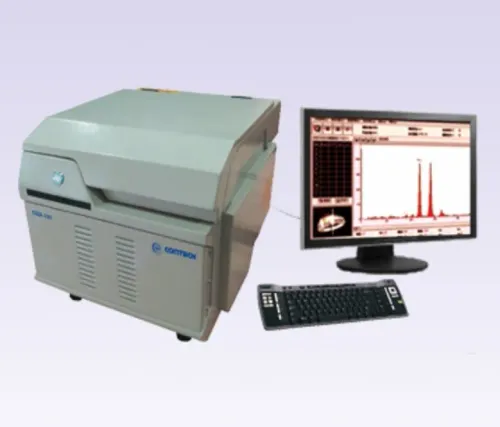
Ask the supplier to run your sample using the proposed method and compare it with the chosen reference procedure. CONTECH INSTRUMENTS LTD. can be considered alongside other local suppliers, but choose on documented performance, support and validation evidence—not catalogue resolution alone.
Related product
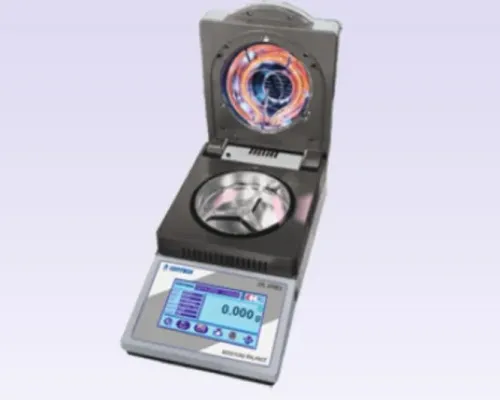
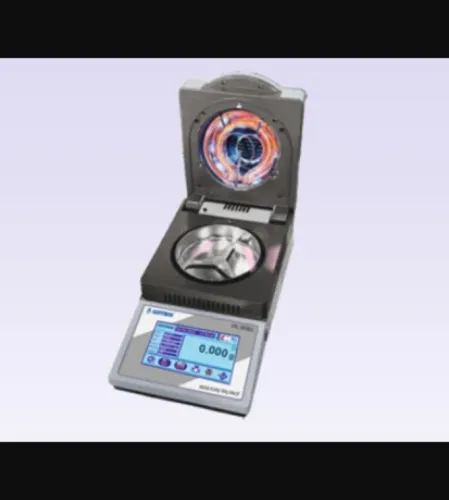
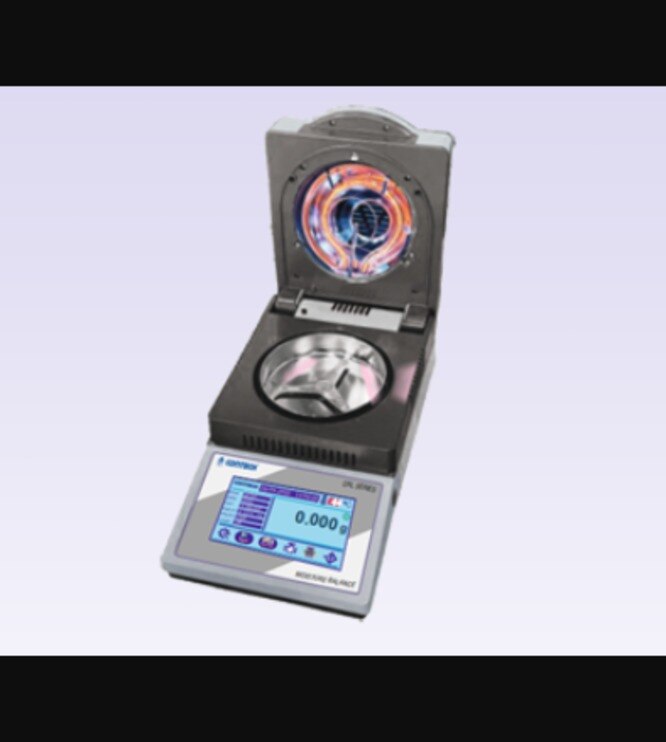
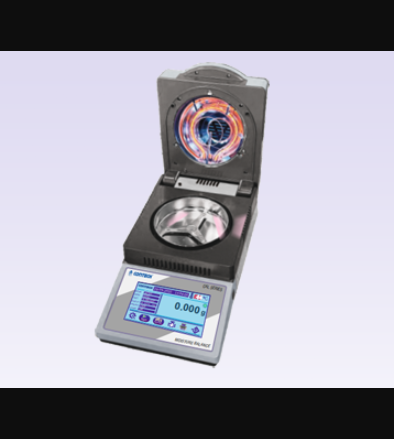 | Moisture Balances Moisture Balances (CAL Series) (0.001 g to 180 g) Moisture Balances (CAL Series) (0.001 g to 180 g) The CONTECH CAL Series Moisture Balances are advanced moisture analyzers designed for fast,... View product → |
Frequently asked questions
What does an electronic moisture balance actually measure?
It measures mass lost during programmed heating and reports Loss on Drying (LOD), not water alone. Volatile compounds can also contribute to the result.
How do you perform a repeatable moisture balance test?
Prepare a representative sample, tare the pan, record the initial mass, apply the drying program, and document the final mass, temperature, stopping point, and result.
How do you develop a drying program for difficult materials?
Compare drying temperatures, sample quantities, and stopping criteria while checking for scorching, crust formation, splattering, and incomplete drying. Confirm the selected program against a reference method.
How does Kolkata humidity affect moisture measurement?
Humid air can change a hygroscopic sample’s mass during handling and storage. Minimise exposure, keep containers sealed, stabilise the balance area, and record relevant laboratory conditions.
How do you correlate an electronic moisture balance result with a reference method?
Test matched samples with the balance and a named reference method, compare the results across representative moisture levels, and investigate consistent bias or excessive variation.