
A low purchase price does not guarantee a dependable moisture result. You need to compare the instrument’s full operating cost, establish a repeatable sample method, and confirm that mass loss represents water rather than solvents or heat damage. By the end, you will have a practical buying and validation checklist for your laboratory or production line.
Key takeaways
- Budget for calibration, pans, lamps, service, software, and operator time.
- Calculate moisture percentage from initial and final sample weights.
- Match sample preparation and drying settings to the material.
- Use an alternative method when LOD causes decomposition or false results.
What does an affordable moisture balance in Mumbai really cost?
The quoted price is only the entry cost. An affordable moisture balance in Mumbai also includes installation, 230-V/50-Hz compatibility, stable earthing, calibration, supplied or replacement test weights, sample pans, printer or software support, annual service, replacement lamps, and operator time.
Compare these specifications before choosing on price:
| Feature | Lower-cost unit | Higher-value unit |
|---|---|---|
| Weighing and heating | Smaller capacity, basic heater | Capacity and temperature range matched to the sample |
| Control and records | Manual endpoint, little method storage | Automatic endpoint, stored methods, data export |
| Support | Longer service wait, shorter warranty | Local response, longer warranty, calibration support |
Moisture balance cost in Mumbai rises when a unit needs frequent lamp changes, paid software, unavailable pans, or distant service. Request repeatability at your intended sample mass and moisture range. A 0.01% display does not mean 0.01% accuracy: sample heterogeneity, convection, temperature non-uniformity, and endpoint instability can dominate the result.
For a one-year comparison, calculate purchase price plus installation, routine consumables, calibration visits, replacement parts, downtime, and operator minutes for preparing and cleaning each test. A cheaper balance can cost more if each test takes five extra minutes or failed results require retesting.
Ask for a product-specific demonstration using the same sample, mass, temperature program, and moisture range. Compare repeatability and endpoint time, not the smallest displayed increment.
How do you run a moisture balance test and calculate moisture percentage?
1. Stabilise the moisture balance away from drafts and vibration. Place a clean, empty pan on the balance, close the chamber, and tare it. Instability here creates false movement in the mass reading.
2. Take a representative sample, then spread it in a thin, even layer without overloading the pan. Close the lid and record the initial sample mass.
3. Select the validated drying program. Confirm its temperature, ramp or stepped heating profile, endpoint criterion, and maximum test time. Do not rely on a factory default for moisture content determination problems.
4. Run the test until the programmed endpoint. Record the dry or endpoint mass, then allow the pan to cool before handling it. A hot pan can cause burns and interfere with the next weighing.
5. Calculate moisture percentage by loss on drying:
moisture percentage = (initial mass − dry mass) ÷ initial mass × 100
For a 10.00 g initial mass and an 8.20 g endpoint mass:
(10.00 − 8.20) ÷ 10.00 × 100 = 18.0% moisture
The calculation is simple. Obtaining a representative initial mass and a valid endpoint is the difficult part; non-water volatiles or decomposition can also contribute to mass loss.
Record the product code, batch number, sample preparation, temperature program, start and endpoint times, replicate results, and operator name. These details let you investigate a result that conflicts with the specification.
How should you prepare samples and choose a drying program?
Matrix behaviour determines both sample preparation and drying settings. For powders and granules, take increments from several locations, mix them, and test a subsample; segregation and surface drying can create moisture gradients. Break lumps without heating. Mix laboratory soil, then remove stones or oversized particles only as the written laboratory procedure directs.
| Matrix | Preparation | Drying decision |
|---|---|---|
| Powder or granules | Mix multiple increments; crush lumps without heat | Thin, even layer; validate mass and thickness |
| Paste or food | Spread evenly; test loading changes for repeatability | Use staged heating or a permitted pan liner to prevent splattering |
| Soil | Mix the laboratory sample; remove specified oversized material | Validate layer thickness and drying time |
Use a thin layer, but validate mass and thickness for each product. A thick layer dries slowly; a very small sample magnifies milligram weighing error. Choose an affordable moisture balance for moisture content determination in mumbai by comparing drying curves with the reference oven method, not by selecting one temperature for everything.
Excessive heat can cause browning, crusting, caramelisation, oxidation, or decomposition; insufficient heat can leave bound or slowly migrating water. Validate an automatic endpoint against repeated runs or oven results: a small mass-change threshold can stop early, or react to drafts, vibration, and temperature drift.
Record the validated temperature, ramp, mass, thickness, pan type, endpoint, and maximum test time.
Which moisture content determination problems show that LOD is unsuitable?
A loss-on-drying (LOD) balance is unsuitable when you need a water result rather than a total mass-loss result. It heats and weighs the sample; solvents, volatile oils, fragrances, smoke, and decomposition products can leave with H2O, so the arithmetic stays correct while the reported moisture becomes chemically misleading.
Warning signs in moisture content determination problems include:
- A crust forms and seals wet material below the surface.
- Splattering ejects sample from the pan.
- Uneven spreading creates hot and cool zones.
- A hygroscopic sample gains water during grinding or transfer.
- Oxidation or decomposition creates extra mass loss.
- An automatic endpoint stops before slow moisture release is complete.
In humid Mumbai, use closed containers, fixed exposure times, rapid weighing, and consistent sample conditioning. Otherwise, the sample can change before heating begins.
| Method | Use it when | Main limitation |
|---|---|---|
| LOD balance | Routine production screening after validation | Measures all mass loss, not selectively H2O |
| Karl Fischer titration | Low water levels, volatile non-water components, chemically bound water, or heat-sensitive samples | More reagent handling and method complexity |
| Conventional oven | The product specification names an oven reference and the sample tolerates longer heating | Slower and still method-dependent |
Choose Karl Fischer when selective water measurement matters. Choose the oven method when the specification requires it. Accept a fast balance result for production only after correlating it with the required reference method at both low and high moisture levels. Without that correlation, speed does not prove suitability.
How can you verify a Mumbai supplier before buying moisture measurement equipment?
Do not choose from brochures. Require a product-specific acceptance test using retained material at your intended sample mass and moisture range, with repeated runs on both a low-moisture sample and a high-moisture sample.
Ask the supplier to document these acceptance terms:
- Permitted bias against your specified oven or Karl Fischer method
- Repeatability limit for replicate results
- Maximum time to endpoint
- Data-record format, including sample ID, method, temperature, masses, times, and result
- Required response if a result fails, such as investigation, recalibration, method adjustment, or replacement
| Check | What to confirm | Why it matters |
|---|---|---|
| Local operation | 230 V, 50 Hz, stable earthing, draft protection, vibration control | Electrical noise, drafts, or vibration can destabilise small samples |
| Ownership | Pans, lamps, replacement parts, calibration support | Unavailable consumables can stop testing |
| Records | Data export and software or printer compatibility | Manual transcription creates avoidable errors |
| Service | Calibration provider, Mumbai visit time, warranty exclusions | A low quote becomes expensive during downtime |
Ask who performs calibration, how quickly a service visit is available in Mumbai, and which labour, travel, parts, or consumables fall outside the warranty. CONTECH INSTRUMENTS LTD. can support a local discussion about moisture measurement equipment alongside laboratory balances and testing equipment, but demonstrated performance should decide the purchase.
An affordable moisture balance in Mumbai produces accepted, repeatable results with manageable service and operator costs.
Related product
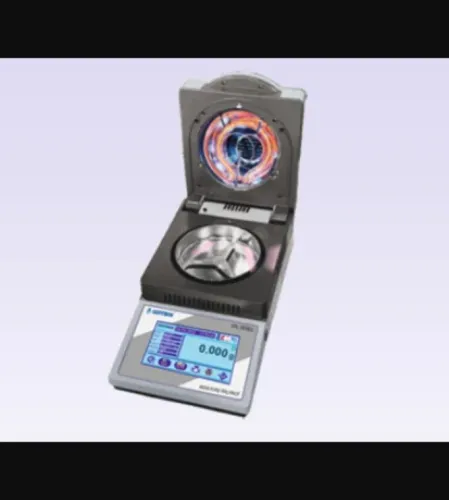
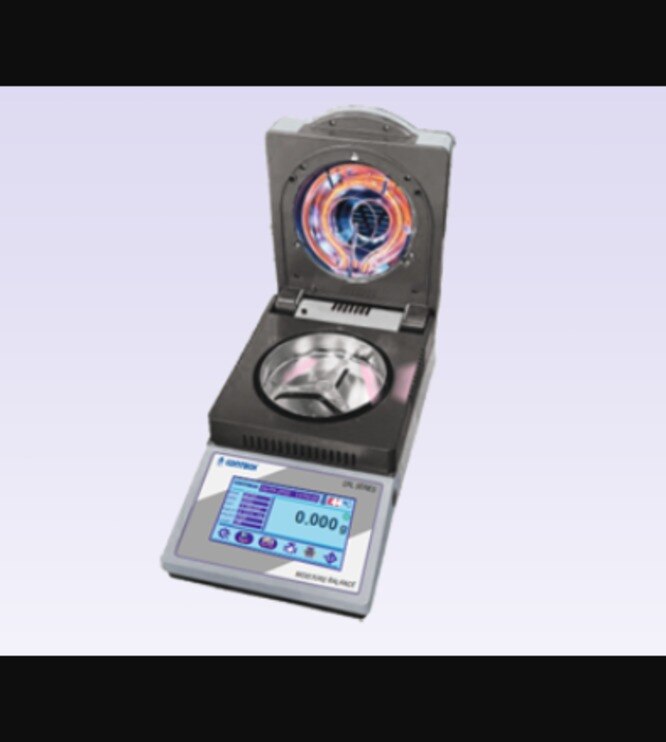
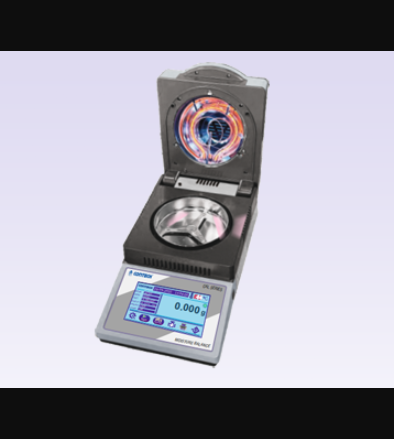 | Moisture Balances Moisture Balances (CAL Series) (0.001 g to 180 g) Moisture Balances (CAL Series) (0.001 g to 180 g) The CONTECH CAL Series Moisture Balances are advanced moisture analyzers designed for fast,... View product → |
Frequently asked questions
What does an affordable moisture balance in Mumbai really cost?
Include the instrument price plus installation, 230-V/50-Hz compatibility, earthing, calibration, test weights, sample pans, software or printer support, annual service, replacement lamps, and operator time.
How do you run a moisture balance test and calculate moisture percentage?
Record the initial sample weight, dry the sample to a stable endpoint, record the final dry weight, then calculate moisture percentage as (initial weight − final weight) ÷ initial weight × 100.
How should you prepare samples and choose a drying program?
Homogenise the sample, use a representative test portion, spread it evenly across the pan, and select temperature, heating profile, and endpoint criteria based on the material.
Which moisture content determination problems show that LOD is unsuitable?
Use another method when heating decomposes, oxidises, volatilises components, creates a crust, releases bound water slowly, or removes substances other than water.
How can you verify a Mumbai supplier before buying moisture measurement equipment?
Ask for installation details, calibration traceability, service response terms, replacement-part availability, electrical compatibility, demonstration results, and references for similar applications.