
Yes, but rain is not the main threat to a moisture analyzer. High humidity, condensation, temperature swings, and uncontrolled sample handling can change the result before heating begins. You will learn how to protect the instrument, prepare representative samples, interpret loss on drying, choose a defensible method, and verify performance with wet-season samples.
Key takeaways
- Keep the analyzer room dry, stable, and free from condensation.
- Seal monsoon samples immediately and load a representative test portion.
- Treat LOD as lost sample mass, not automatically as water.
- Validate drying temperature and endpoint for each material type.
What Mumbai monsoon conditions can do to the analyzer and sample
A moisture analyzer weighing balance for monsoon samples in Mumbai can operate reliably, but stable room conditions matter more than rain outside. Check the instrument’s permitted temperature, relative-humidity, and non-condensing operating limits; condensation on the pan, load cell, or electronics can destabilize readings or cause damage.
| Condition | What it does | Required response |
|---|---|---|
| Humid air | Changes a hygroscopic sample while it waits | Use a moisture-tight container and test promptly |
| Condensation | Adds liquid water and destabilizes weighing | Stop and let the instrument reach room conditions |
| Rainwater exposure | Introduces external contamination | Remove surface water or reject the sample |
| Genuinely wet sample | Contains excess water that may not represent the material | Follow the method’s sampling and pre-treatment rules |
Keep the analyzer away from drafts, vibration, direct sunlight, air-conditioner discharge, and rapid temperature changes. Let a cold or transported instrument reach room conditions before moisture detection; do not switch it on and test immediately.
Rainwater or surface water is contamination unless the method defines it as part of the sample. Remove it or reject the portion. Absorbed moisture belongs in the result only when the method measures it as a property of that material.
A stable drying endpoint cannot correct an unstable initial mass or a sample changed by humid air or dry air-conditioning.
How to prepare and load a monsoon sample without changing it
1. Collect the sample in a moisture-tight container, seal it immediately, and begin testing promptly. For moisture measurement in Mumbai, humid monsoon air can make a hygroscopic sample gain water, while dry air-conditioning can make it lose water. Keep the container closed during instrument warm-up.
2. Mix the sealed sample before opening it, then take a representative portion from several areas. Wet material can segregate and develop moisture gradients, so a surface scoop may not match the container’s average moisture content. Define the test portion mass in the method and use that mass consistently.
3. Reduce particle size using the same sieve, grinder setting, or cutting procedure for every replicate. Coarse particles dry unevenly; grinding too aggressively heats the sample and can drive off moisture before loading. Cool the prepared material in the closed container if grinding raises its temperature.
4. Remove excess surface water when it is rainwater or other contamination, not when the method defines that water as part of the sample. Spread the defined portion as a thin, even layer across the pan; do not touch the pan, spill material, or leave clumps that crust during heating.
5. Close the heating chamber promptly and record the time from opening the container to the run start. Include that handling time in your moisture content analysis validation, because a readable balance cannot correct for moisture gained or lost before heating.
What the displayed LOD percentage actually means
A moisture analyzer calculates loss on drying from two weighings: the initial mass before heating and the final dry mass after the programmed endpoint. Mass loss equals initial mass minus final dry mass.
For a 10.00 g sample ending at 8.40 g, the loss is 1.60 g, and wet-basis moisture is 1.60 ÷ 10.00 × 100 = 16.0%.
Dry-basis moisture uses the final dry mass as the denominator: 1.60 ÷ 8.40 × 100 = 19.05%. State the basis beside every moisture content analysis result because these percentages are not interchangeable.
Loss on drying fails to represent water content when heating removes other material. The lost mass can include:
- Water
- Volatile oils
- Solvents
- Residual chemicals
- Decomposition products
The displayed value therefore describes mass loss under that temperature, time, ramp, sample mass, and endpoint—not automatically moisture detection for water alone. A sample that decomposes or releases oil can produce a high result without containing equivalent water.
When the requirement is specifically water, consider Karl Fischer titration. It is selective for water but requires a suitable solvent and reagent, a validated dissolution or extraction procedure, and control of atmospheric moisture; it is not automatically superior for every bulk sample.
A moisture analyzer does not replace a conventional analytical balance when you must preserve the sample, transfer it, or test it by another method.
How to choose a drying program for grains, spices, powders, polymers, and slurries
Select the program by material, not by the instrument’s default setting. Temperature, ramp, sample mass, spreading, and endpoint are method variables in moisture content analysis. A high-moisture Mumbai sample can boil, splatter, crust, scorch, or decompose before the displayed value stabilises.
| Material | Program choice | Endpoint and risk control |
|---|---|---|
| Grains | Compare temperature, portion mass, and drying time with the applicable reference procedure, including ISO 712 where it applies. | Match the reference result; a stable display alone is insufficient. |
| Spices | Use the lowest validated temperature and a controlled ramp. | Check for volatile-oil loss, which can inflate apparent moisture. |
| Polymers and chemical powders | Start gently with a small, evenly spread portion. | Stop before softening, decomposition, or chemical reaction; verify against a reference. |
| Slurries | Use a smaller portion, thin spreading, and a suitable sample pad where the validated method permits it. | Choose a gentler program to prevent boiling and splattering, then confirm recovery. |
A digital moisture analyzer can show a repeatable endpoint that is still wrong because loss on drying includes volatile substances or decomposition products. Run representative Mumbai wet-season samples in replicate on the analyzer and by the reference oven method or Karl Fischer procedure.
Establish allowable bias and repeatability before routine testing; changing temperature, ramp, portion, or spreading requires revalidation.
What to compare before accepting a digital moisture analyzer
Accept a digital moisture analyzer only after its specifications match your sample and its results agree with your reference method. For a moisture analyzer weighing balance for monsoon samples in Mumbai, check these points:
| Specification | Acceptance check | Failure consequence |
|---|---|---|
| Heating technology | Confirm halogen, infrared, or other heater type and its validated program | Uneven drying, scorching, or slow runs |
| Temperature range and control | Verify the usable range, ramp settings, stability, and sensor control | Boiling, crusting, or decomposition |
| Weighing resolution | Match readability to the required reporting precision | False confidence from extra decimal places |
| Maximum sample mass and pan dimensions | Confirm the portion fits as a thin, even layer | Spillage or incomplete drying |
| Endpoint detection | Test timed, stability-based, or percentage-loss criteria | A stable endpoint can still be wrong |
| Repeatability | Run replicate portions and set an allowable spread | Uncontrolled sampling or heating variation |
| Data export and calibration | Check result formats, audit records, weight calibration, and temperature calibration provisions | Missing traceability |
| Operating limits | Record permitted temperature, relative humidity, and non-condensing conditions | Condensation, drift, or electronic damage |
Verify mass externally with calibrated weights. Verify heater temperature separately with the specified temperature procedure; passing the weight check does not prove the heater is correct.
Run replicate wet-season samples against the laboratory’s reference oven or Karl Fischer method, then establish allowable bias and repeatability. CONTECH INSTRUMENTS LTD. can help compare documented environmental limits, heating programs, calibration provisions, and application fit instead of capacity or readability alone.
Related product
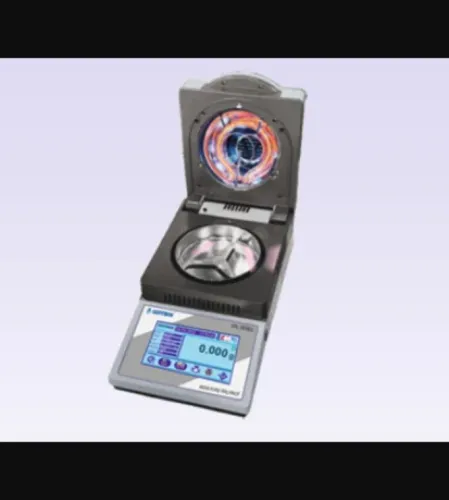
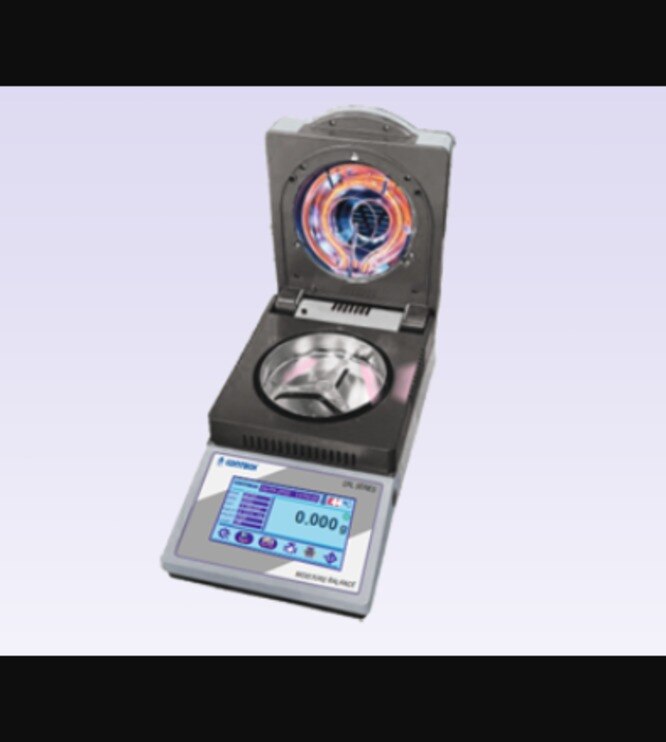
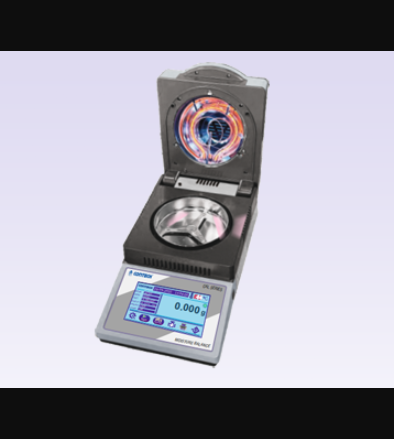 | Moisture Balances Moisture Balances (CAL Series) (0.001 g to 180 g) Moisture Balances (CAL Series) (0.001 g to 180 g) The CONTECH CAL Series Moisture Balances are advanced moisture analyzers designed for fast,... View product → |
Frequently asked questions
Can a moisture analyzer weighing balance handle Mumbai monsoon samples?
Yes, when you operate it within the manufacturer’s temperature, relative-humidity, and non-condensing limits. Keep the instrument away from wet benches, direct airflow, and condensation.
How do you prepare a monsoon sample for moisture content analysis?
Mix the sample, minimise exposure to room air, use a clean dry pan, and load the test portion quickly. Record the sample condition and test temperature.
What does the displayed LOD percentage mean?
LOD means loss on drying. The percentage represents the mass lost during heating relative to the starting sample mass; it is not automatically the sample’s water percentage.
How should you choose a drying program for different samples?
Use a lower temperature for heat-sensitive polymers and volatile materials, while grains, spices, powders, and slurries need programs validated for their thickness, particle size, and drying endpoint.