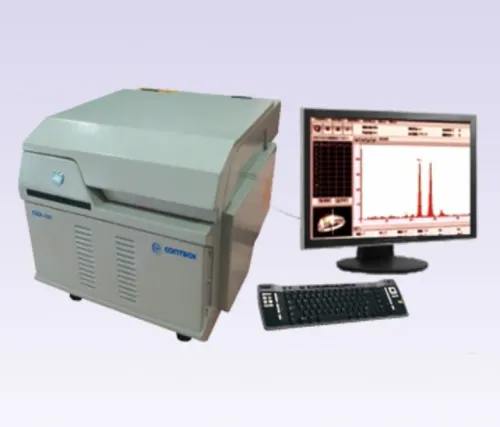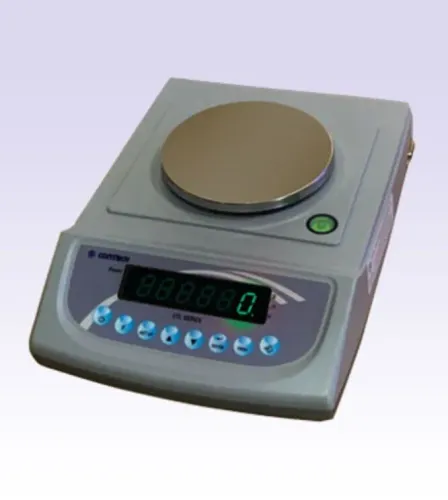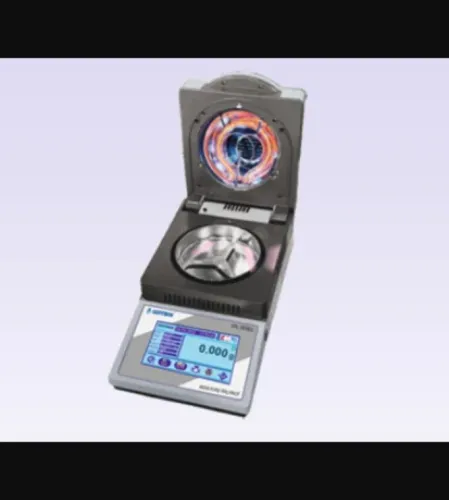

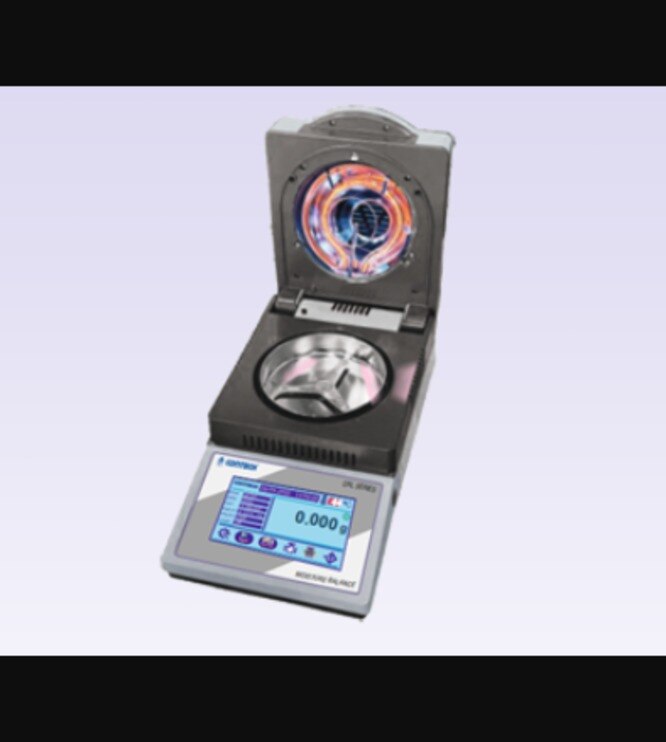
A moisture balance analyzer combines weighing, controlled heating, temperature measurement, and software, so its purchase specification must cover more than readability and maximum capacity. By the end, you can compare the included hardware, drying method, sample requirements, validation tools, and Mumbai installation support before requesting a quotation.
Key takeaways
- Request the sample pan, heater, calibration weights and operating manual in the quotation.
- Confirm sample mass, heating range and endpoint criteria for your material before comparing results.
- Validate Mumbai power supply, bench space, ventilation and service support before delivery.
- Require method settings, repeatability data and acceptance testing in the purchase specification.
What hardware and specifications should arrive with the analyzer?
A complete moisture balance instrument quotation should identify every item needed to run a test, not just the displayed readability. For a moisture balance for analyzer before purchase in Mumbai, ask for the following specifications and supplied hardware:
- Heating unit: halogen, infrared, or another stated technology; usable temperature range, temperature setting resolution, and temperature-control accuracy.
- Weighing system: capacity, readability, repeatability, and stability time under the stated operating conditions.
- Sample system: stainless-steel or aluminium pans, pan handler, pan support, and the number of supplied pans. Confirm whether replacement pans are available.
- Protection and sensing: draft shield, lid, temperature sensor, and the heater’s over-temperature protection.
- Interface: display size and readable result fields, keypad or touchscreen controls, method storage, drying-curve display, and user access controls where required.
- Power and installation: rated voltage, frequency, power consumption, plug type, earthing requirement, ambient operating range, ventilation clearance, and any restrictions on vibration or air movement.
- Calibration equipment: certified test weight for the balance and a temperature calibration kit or traceable temperature reference for the heater. Balance calibration alone does not verify drying temperature.
- Documentation: operating manual, installation instructions, calibration procedure, preventive-maintenance schedule, software backup method, and stated local service response time.
Require the quotation to state whether the power supply is included and how the unit recovers a stored method after a power interruption. A moisture analyzer weighing balance in Mumbai also needs confirmed access to replacement heating elements, pans, and calibration support.
How does one test run produce a moisture result?
The result is a loss-on-drying value, so it represents mass lost during heating, not automatically water content. Volatile oils, solvents, or other components can contribute; use “moisture content determination” only when the method has been shown to represent water for that material.
- Place the clean, empty pan on the balance and tare it.
- Spread a representative wet sample across the pan, close the heater, and record the initial sample mass.
- Select the stored method: drying temperature, temperature profile, endpoint rule, and reporting units. Start the run.
- The heater removes volatile material while the balance repeatedly measures mass. The instrument calculates moisture analysis from the mass loss and shows the drying curve.
- At the endpoint, record the result and retain the method and sample identification.
The endpoint choice changes the result and the time required:
| Option | How it stops | Main risk |
|---|---|---|
| Fixed time | Stops after a programmed duration | The sample remains wet if drying is slow |
| Constant weight | Stops when successive readings meet a defined mass-change limit | Noise can prolong the run |
| Automatic stability | Uses a programmed rate-of-change criterion | A poor criterion can stop early or chase balance noise |
Require these result fields: initial mass, final dry mass, moisture percentage, dry-matter percentage, drying temperature, elapsed time, endpoint criterion, sample ID, method ID, and drying curve. Ask for stored endpoint parameters and repeatability data from several lots across the expected moisture range, including difficult-to-dry samples.
How do sample size, material and temperature affect the method?
Use a validated sample mass, not the largest amount that fits the pan. A few grams spread as a thin, even layer usually dries more consistently than a deep bed; excessive depth traps moisture, extends drying time, and creates a dry crust over wet material.
Record the mass range, pan-loading practice, and preparation method in the procedure.
Reduce lumps and standardise particle size without heating the sample. Mix before taking the portion, spread it across the pan, and avoid scraping material against the rim. Spattering, foaming, crust formation, or oxidation can cause mass loss unrelated to water, so moisture content determination by loss-on-drying is not automatically water-specific.
| Material | Preparation | Temperature or programme |
|---|---|---|
| Powders | Break agglomerates; distribute a shallow layer | Fixed temperature; use a ramp if the surface crusts |
| Food | Homogenise; test a consistent portion and spread quickly | Moderate temperature; automatic endpoint suits variable moisture |
| Pharmaceuticals | Follow the product method and protect heat-sensitive ingredients | Validated low temperature or stepped programme |
| Sludge | Mix thoroughly; use a thin layer to expose wet solids | Higher or stepped drying; constant-weight endpoint helps slow samples |
| Plastics | Cut or granulate uniformly; prevent sticking and spatter | Programme below decomposition or softening temperature |
| Difficult samples | Test several lots across the moisture range | Compare fixed-time, stepped, and stability endpoints |
Choose the programme from drying behaviour, not maximum heater temperature. Volatile solvents, decomposition, oxidation, and material loss can bias moisture analysis; use Karl Fischer or another matrix-specific reference method when the target is water alone. Samples that darken, boil, crust, or lose solids need an application trial before purchase.
What must you validate before installing a unit in Mumbai?
Validate the method and installation, not just the display. A resolution of 0.001 g or 0.01% moisture does not prove usable accuracy.
1. Compare repeatability and bias with your laboratory oven, Karl Fischer method, or applicable product standard. Use representative samples, not a supplier’s easy demonstration material.
2. Run application trials on the real matrix. Check for solvent loss, decomposition, oxidation, crust formation, spattering, and drifting mass; use Karl Fischer when the target is water specifically.
3. Verify the weighing system with a certified test weight under actual loading and heating conditions. Verify the heater separately with a temperature calibration kit or traceable temperature reference.
4. Record the required electrical supply, plug arrangement, earthing, ambient operating range, ventilation clearance, humidity limit, and protection from air movement. Unstable power, poor earthing, vibration, heated drafts, and high humidity can defeat a stable balance.
5. Inspect the proposed bench. Keep it rigid, level, away from doors and air-conditioner outlets, and free from nearby equipment that vibrates.
6. For a moisture balance for analyzer before purchase in mumbai, obtain a documented plan for pan and heating-element replacement, software backup, preventive maintenance, calibration intervals, and service turnaround.
For a moisture analyzer weighing balance in mumbai, consumable availability and local calibration support can matter more than a small difference in nominal readability. Get these acceptance checks and service commitments in writing before installation.
What should a Mumbai purchase specification and quotation include?
A quotation for a moisture analyzer weighing balance in Mumbai should state the complete installation and support commitment, not only readability, capacity, and temperature range. Specify supply voltage, earthing, ambient limits, ventilation clearance, method storage capacity, software backup, and whether saved methods survive a power interruption.
Ask the supplier to answer these procurement questions in writing:
- Can you store user-defined methods with sample ID, temperature, endpoint, time, sample mass, drying curve, and final result? Can the instrument export CSV or PDF files, and does it provide user permissions and an audit trail for release testing?
- What happens after a power cut? Does the moisture balance instrument resume the interrupted method, preserve the last result, or require a full restart? Request a demonstration.
- Which replacement pans, pan handlers, heating elements, fuses, temperature sensors, and other consumables are stocked in India? State prices and lead times separately.
- What is included in preventive maintenance: balance verification, heater inspection, temperature verification, cleaning, software backup, and a service report? State the recommended interval.
- Which certified test weights and traceable temperature reference or calibration kit are supplied? Request separate calibration certificates for the weighing system and heater.
- What Mumbai response time applies to a breakdown, and where is the unit serviced? Ask CONTECH INSTRUMENTS LTD. to name the escalation contact and turnaround target.
Make acceptance conditional on representative-sample repeatability and bias against your oven, Karl Fischer method, or product standard—not the displayed resolution alone.
Related product
 | Moisture Balances Moisture Balances (CAL Series) (0.001 g to 180 g) Moisture Balances (CAL Series) (0.001 g to 180 g) The CONTECH CAL Series Moisture Balances are advanced moisture analyzers designed for fast,... View product → |
Frequently asked questions
What hardware and specifications should arrive with a moisture analyzer?
Ask the supplier to list the weighing unit, heating module, sample pan or pan holder, power cable, calibration accessories, operating software, user manual and service documentation. The quotation should also state readability, maximum capacity, temperature range, temperature resolution, repeatability, dimensions and power requirements.
How does one test run produce a moisture result?
The instrument weighs the sample, heats it under a selected temperature program, records mass loss and stops at a defined endpoint. It calculates moisture content from the initial and final masses, so the reported result depends on the temperature, drying time, endpoint rule and sample preparation.
How do sample size, material and temperature affect moisture analysis?
Use a sample mass and spreading depth that allow uniform heating without splashing or crust formation. Solvents, sugars, oils and heat-sensitive materials need different temperature programs, while coarse or non-uniform samples need consistent grinding and mixing. Compare results only when sample preparation and method settings match.
What must you validate before installing a moisture balance in Mumbai?
Check the available mains voltage and earthing, stable bench space, ambient temperature, humidity, ventilation, clearance around the heater and protection from vibration. Confirm delivery access, calibration support, spare pans and local service response before accepting the installation.
What should a Mumbai purchase specification and quotation include?
Specify the application, sample types, target moisture range, sample mass, heating method, temperature range, endpoint criterion, reporting format, calibration procedure and acceptance test. Require separate prices for the instrument, accessories, installation, training, warranty, preventive maintenance, calibration and replacement consumables.