
A Mumbai retailer must weigh more than the instrument price: testing volume, customer waiting time, outsourced laboratory delays, disputed purity claims, compliance, and service access all affect the decision. By the end, you can calculate when an in-store analyzer earns its place, identify the jobs it cannot perform, and test a proposed unit against the jewellery your shop actually handles.
Key takeaways
- Buy when daily testing delays cost more than ownership and operator time.
- XRF measures elemental composition quickly but does not replace every assay method.
- Test each jewellery type with clean, representative surfaces and recorded results.
- Demand a live trial using your own gold stock before purchase.
When does buying a gold analyzer beat outsourcing tests?
A gold analyzer for jewellery retailers in Mumbai earns its keep when daily testing volume makes waiting expensive. Count each category separately: incoming-stock checks, old-gold purchases, customer verification requests, and disputed readings.
Multiply weekly items by the outside laboratory fee, then add staff time, turnaround delays, postponed purchases, lost customer confidence, and the expected loss from accepting under-karat metal.
| Option | Cost or benefit to compare | Best fit |
|---|---|---|
| Outsourced laboratory or assay service | Per-test fee, staff time, turnaround, and confirmation strength | Occasional high-value investigations |
| Gold analyzer in-store | Purchase, installation, training, calibration materials, compliance, software, maintenance, and Mumbai service visits | Many purchases tested daily |
| Combined workflow | Immediate screening plus independent confirmation fees | High-value, disputed, or suspicious pieces |
A retailer should buy only when the full ownership cost divided by expected accepted tests, plus running costs, beats outsourcing. Faster readings also support customer conversations and sorting, but only if staff position items consistently and save reports.
- Include AERB registration or licensing work, shielding, warning controls, interlocks, operator training, reference materials, calibration, software, maintenance, and service visits.
- Keep an independent laboratory or assay service for serious disputes; fire assay remains a destructive reference-style route.
- Treat the instrument as a rapid control tool, not a replacement for BIS hallmarking, HUID verification, an accredited assay, or required sale documentation.
A store with occasional investigations may spend less outsourcing. A gold analyzer for jewellery retailers in Mumbai is strongest where frequent screening prevents bad purchases and speeds decisions.
What does XRF measure, and how does it compare with other tests?
An XRF gold analyzer estimates the elemental composition of a measured surface from characteristic fluorescent X-rays. It can report Au percentage or calculated fineness and identify silver, copper, zinc, palladium, platinum and nickel when its calibration and detector can resolve them.
A gold purity tester for jewellers therefore provides more information than a single karat label.
22K equals about 91.67% gold, or fineness 916; 18K equals 75.00%, or 750; 14K equals about 58.50%, or 585. Check the actual Au percentage and the instrument’s rounding rules. A displayed karat number is a calculation, not a separate measurement.
| Option | What it measures | Main trade-off |
|---|---|---|
| XRF | Surface elemental composition | Fast and information-rich, but costs more and needs a representative spot |
| Touchstone and acid | Scratch colour and acid reaction | Inexpensive, operator-dependent and potentially damaging |
| Density or conductivity | Bulk physical or electrical response | Struggles with hollow, stone-set, layered or multi-metal jewellery |
| Fire assay | Gold content after destructive sampling | Reference-style evidence for serious disputes, but destroys the sample |
XRF can mislead when plating, rhodium, solder, dirt or gold-filled construction covers the tested area. Fire an independent confirmation for a disputed or high-value piece. An in-store reading does not replace a BIS hallmark, HUID verification, assay-office result or required sale documentation. It also says nothing about stone authenticity, internal voids or total article weight.
How should a jewellery shop test different pieces?
Use the same presentation routine before judging an XRF gold analyzer’s speed. Clean and dry each item, remove polishing residue, then choose a flat, representative area. Secure it without fingers or nearby metal in the beam path, and avoid stones, prongs, solder joints, clasps and visibly plated sections.
- Run several spots; record each location and reading. Investigate inconsistent results instead of averaging them away.
- Position curved rings firmly so the beam meets the surface squarely. Test several links of a chain or use a suitable fixture.
- Check accessible walls of hollow ornaments. Treat a high outer-skin reading with suspicion because the interior may contain a different alloy.
- Use an aperture and sample chamber that can hold small earrings and irregular pieces securely.
- Measure more than one face of coins and bars when their surfaces differ.
- Use filings or a permitted filed section to assess bulk composition; a finished surface alone cannot prove it.
| Piece type | Main positioning risk | Practical response |
|---|---|---|
| Ring or chain | Curvature or movement changes the illuminated area | Stabilise the ring; test several links |
| Hollow ornament | Outer layer reads richer than the interior | Check accessible walls; investigate high readings |
| Earring or irregular piece | Area will not sit securely | Confirm the aperture and chamber hold it |
| Coin or bar | Faces have different surface histories | Measure more than one face |
Plating, rhodium, gold-filled construction, heavy solder, dirt, layered jewellery and a high-purity outer layer can mislead surface readings. Save readings or reports for old-gold purchases and customer disputes.
Which specifications and ownership costs matter in Mumbai?
Choose by measurement uncertainty and sample access, not headline speed: a fast result from the wrong spot is an expensive result.
| Option | Strength | Main limitation |
|---|---|---|
| Benchtop enclosure | Controlled positioning, shielding, aperture and repeatable testing | Needs counter space; awkward articles may not fit |
| Handheld unit | Reaches large or irregular jewellery | Positioning varies, and radiation controls demand greater discipline |
Ask each supplier for the detector type, measurement spot size, minimum sample dimensions, calibration method, alloy library and repeatability data. Require results for 22K, 18K, 14K, silver-rich and soldered jewellery, not only a polished 916 sample.
Check that the software stores spectra, exports reports, records the operator and test time, and prevents silent calibration changes. Verify the aperture, sample chamber, interlocks, warning lights, shielding, software-update policy, warranty, preventive-maintenance schedule and Mumbai service response time.
Your ownership calculation must include reference materials, calibration, operator training, radiation-compliance work, software, maintenance and service visits. Contech Instruments Ltd. belongs in the comparison only if its documented performance, local support and compliance assistance fit your test volume.
Radiation safety is part of the purchase. Confirm the applicable AERB registration or licensing route, installation requirements, operator training and service obligations before bringing the unit into a showroom.
During demonstrations, test chains, hollow ornaments, small stoneset pieces, bars and repaired jewellery. A lower-priced unit becomes uneconomic if it cannot hold these items securely or produces inconsistent readings. Calculate total cost per accepted test, not cost per scan.
Related products
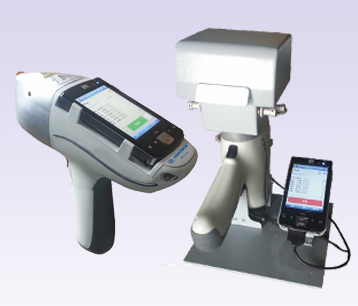 | X-RAY FLUORESCENCE SPECTROMETERS GOLD PURITY CHECKING INSTRUMENTS X-Ray Fluorescence Spectrometer Handheld Detector X-Ray Fluorescence Spectrometer Handheld Detector (Si-PIN / SDD) – CGX-104 The X-Ray Fluorescence... View product → |
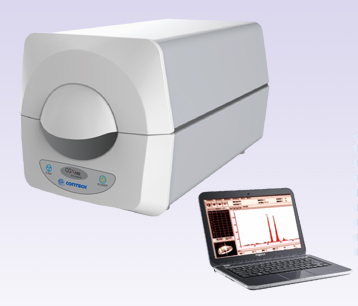 | X-RAY FLUORESCENCE SPECTROMETERS X-Ray Fluorescence Spectrometer – Gas Proportional XRF Detector CGX-101 / Silicon-PIN XRF Detector C GOLD PURITY CHECKING INSTRUMENTS X-Ray Fluorescence Spectrometer – Gas Proportional XRF Detector CGX-101 / Silicon-PIN XRF Detector CGX-102 X-Ray... View product → |
How can you prove the analyzer works for your stock before buying?
A factory calibration does not prove that a unit suits your jewellery mix. Require a shop-specific acceptance trial for the gold analyzer for jewellery retailers in Mumbai, using identified reference coupons or certified reference materials that match what you buy and sell.
| Stage | Samples | Evidence to record |
|---|---|---|
| Reference check | 916, 750, 585, silver-rich alloys and common soldered pieces | Mean, spread, Au percentage, calculated fineness, operator and test location |
| Position check | Each reference measured several times and at more than one position where possible | Repeatability, expected result and any bias |
| Blind check | Real rings, chains, hollow ornaments, coins, bars, filings and irregular pieces | XRF result against an independent laboratory or assay service |
Ask the supplier to state expected repeatability and explain every bias against the reference. A gold purity tester for jewellers that reads one clean coupon accurately but varies on chains, hollow pieces or soldered repairs has not passed your acceptance test.
Compare blind results with independent testing, especially for plating, gold-filled construction, layered jewellery, heavy solder or a suspiciously high surface reading. Test a filed or cut section when permitted; a bright outer layer can conceal poorer bulk metal.
Reject the unit if it cannot hold small pieces securely, document calibration, or produce consistent results on your stock. Buy only when the trial demonstrates repeatable screening, compliance and service costs fit your volume calculation, and you retain an independent confirmation route for serious disputes. Otherwise, outsource testing or use a combined workflow.
Frequently asked questions
When does buying a gold analyzer beat outsourcing tests?
Buying makes sense when incoming stock, old-gold purchases, customer checks, and disputed readings create enough delay or testing expense to justify ownership, training, maintenance, and calibration.
What does an XRF gold analyzer measure?
An XRF gold analyzer measures the elemental composition at the tested surface and estimates gold fineness. Compare its readings with fire assay, touchstone testing, and density testing according to the accuracy, speed, and sampling needs of your shop.
How should a jewellery shop test different pieces?
Clean and inspect the test area, test representative points on each piece, record the item and result, and use an additional method when plating, solder, hollow construction, or a disputed reading could affect the result.
Which specifications and ownership costs matter in Mumbai?
Compare measurement range, repeatability, spot size, test time, calibration process, software and report functions, ventilation and power requirements, service response, consumables, training, warranty, and annual maintenance.
How can you prove the analyzer works for your stock before buying?
Ask the supplier to test your own rings, chains, coins, plated items, soldered pieces, and known reference samples. Compare repeated readings with trusted records and verify that reports support your purchasing workflow.
Related product
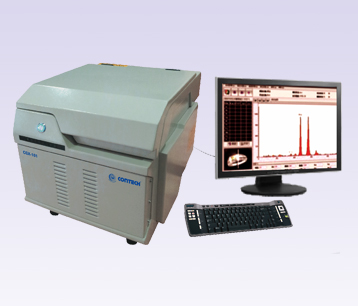 | X-RAY FLUORESCENCE SPECTROMETERS X-Ray Fluorescence Spectrometer – Gas Proportional XRF Detector CGX-101 X-Ray Fluorescence Spectrometer – Gas Proportional XRF Detector CGX-101 The X-Ray Fluorescence Spectrometer – Gas Proportional XRF Detector CGX-101... View product → |