
A low-cost moisture balance can produce repeatable numbers that are still wrong when sampling, heating, endpoint selection, or calibration is poorly controlled. You will be able to separate instrument error from sample error, correct common moisture determination problems, and decide when Loss on Drying is unsuitable for a water-specific result.
Key takeaways
- Confirm repeatability, heating stability, readability, pan size, and capacity before routine use.
- Spread samples evenly and control layer thickness to prevent uneven drying and false results.
- Set temperature and endpoint criteria from validated method data, not convenience.
- Use Karl Fischer when water-specific measurement matters or Loss on Drying is unsuitable.
What an affordable moisture balance must deliver beyond a low price
A low purchase price does not make an affordable moisture balance suitable for routine work. Check whether the display is readable at your intended sample mass, replicate results agree, heating remains stable and controlled, and the pan and maximum sample capacity fit your material.
Use this purchasing checklist:
- Confirm readability, repeatability, temperature range, and temperature stability with documented specifications or test results.
- Check adjustable drying time and endpoint controls; automatic shut-off is not reliable for every material.
- Require stored methods so another analyst can reproduce temperature, time, heating mode, and sample settings.
- Require result history and data export in a usable format, not only a final number on the display.
- Keep separate balance calibration and temperature calibration records. Accurate weighing cannot correct an unverified temperature sensor.
- Ask who provides service, calibration, spare pans, and reference standards in Bengaluru, and how quickly support is available.
A low price becomes expensive when undocumented settings force retesting, or when one laboratory cannot transfer a method consistently to another instrument. Compare repeatability across replicate tests, not only the fastest drying time.
Searching for an affordable moisture balance for problems laboratory results in bengaluru should lead you to these practical risk checks: a device that produces fast, traceable, repeatable measurements is affordable; one that creates disputed results is not.
A step-by-step sequence for moisture determination problems
Start moisture analysis troubleshooting with the sample and weighing conditions, not the programme or the instrument. Moisture determination problems often begin with handling: a warm portion, contaminated pan, moving air, vibration, or evaporation during transfer can create a false result before heating starts.
- Confirm the sample mass against the method and check that the portion represents the material.
- Tare a clean, dry pan, then place it on a stable, level surface.
- Spread the portion evenly so one thick mound does not dry more slowly than the exposed surface.
- Check for air movement, vibration, warm samples, pan contamination, and loss during transfer.
- Wait for a stable displayed mass before starting. Record any drift.
- Review the heating profile, temperature sensor verification, stop condition, and calculation basis.
- Repeat the test with a suitable reference material and compare replicate results.
- Record balance calibration and temperature calibration separately. A balance can weigh repeatably while its heating temperature is biased.
Use these checks to separate balance drift from a genuine material result:
| Check | Balance drift suggests | Genuine result suggests |
|---|---|---|
| Zero before loading | Zero changes between runs | Zero returns consistently |
| Replicate portions | Wide, unexplained spread | Similar values within the method limit |
| Displayed mass | Mass wanders without sample change | Mass stabilises before the endpoint |
| Reference material | The same reference changes between tests | The reference behaves consistently |
If the reference fails, correct the weighing or heating control before changing the method. If it passes while your sample varies, investigate sampling, transfer, or material behaviour instead of blaming the instrument.
How sample preparation, sampling, and layer thickness create false results
A false moisture content determination often begins before the pan reaches the balance. Coarse pieces, mixed particle sizes, clumped powders, overloaded pans, and uneven layers dry at different rates; melting, foaming, or splattering can eject material and report excessive loss.
1. Mix the bulk sample before subsampling. Take representative portions from soil, food, powders, granules, textiles, and pharmaceutical samples rather than scooping from the surface. For segregated materials or products containing wet and dry components, mix gently and run replicate portions to expose sampling variation.
2. Fix the preparation method. Record grinding time, target particle size, sieve procedure, and container type. Grinding increases surface area, while grinding heat can drive off moisture before testing; cool the sample in a closed container and use the same procedure for every portion.
3. Transfer hygroscopic samples quickly from sealed containers. In humid Bengaluru conditions, an open container can gain moisture during weighing, while prolonged exposure can change the result before heating starts.
4. Spread the prepared portion in a thin, even layer. A thick layer can develop a dry crust that traps water underneath and triggers a premature endpoint. A very small portion magnifies transfer loss and readability effects, while too much sample promotes foaming, splashing, and incomplete drying.
Moisture content is not water activity. Moisture content measures water or loss on drying relative to sample mass; water activity measures how available that water is for microbial growth and chemical reactions. Use a water-activity meter when shelf life or microbial stability is the decision.
How to set temperature, heating mode, and a defensible endpoint
A default programme cannot suit every material. A temperature high enough for rapid drying can char sugars, oxidise oils, melt fats, form a surface skin, or decompose proteins; a lower setting can leave moisture trapped beneath a crust. Treat temperature as a method variable during moisture content determination, not as a speed control.
Set and record:
- Temperature and heating mode, such as standard, ramp, or stepped heating
- Sample mass and pan type
- Layer thickness and arrangement
- Timed duration or automatic rate-of-loss endpoint
- Residue appearance, including browning, foaming, splattering, melting, or crust formation
For sugary, oily, or high-protein samples, begin at a lower temperature and step upward. Use an absorbent or inert mixing aid only when the validated method permits it, then inspect the residue. This approach reduces moisture analysis troubleshooting caused by surface films and violent boiling.
Endpoint choice changes the result:
| Option | What it does | Main risk |
|---|---|---|
| Timed programme | Heats for a fixed duration | Stops before slow-drying material is dry |
| Rate-of-loss shut-off | Stops when mass loss falls below a set rate | Stops too early during slow drying or continues through decomposition |
| Validated reference method | Defines the result for comparison | Requires matching sample preparation, temperature, time, and calculation basis |
For a new material, compare timed programmes and automatic endpoints with the validated reference method. Do not assume agreement with an oven result merely because both tests use the word moisture.
When Loss on Drying is acceptable—and when you need Karl Fischer
Loss on drying (LOD) measures mass lost under heat; it does not prove that the lost mass was water. Volatile solvents, residual reagents, plasticisers, oxidation products, and thermally decomposed material can evaporate or break down with water, making the reported moisture falsely high.
| Method | What the result represents | When it applies |
|---|---|---|
| LOD | Total mass loss under the selected heating conditions | Use when the validated specification allows broader mass loss and the material remains stable at that temperature |
| Karl Fischer titration | Water content through a water-specific chemical reaction | Use when the specification requires water alone, especially for solvent-containing, reactive, or heat-sensitive samples |
| Another water-specific method | Water measured by a defined selective procedure | Use when Karl Fischer is unsuitable and the alternative method is validated for the sample |
Do not raise the temperature simply to shorten drying. Charring, oxidation, melting, skin formation, or decomposition adds non-water loss and defeats moisture analysis troubleshooting. Confirm the method with a validated reference before accepting an automatic endpoint.
An affordable moisture balance is useful when LOD is the intended measurand, not when the specification silently demands water content. During supplier evaluation, consider CONTECH INSTRUMENTS LTD. alongside any supplier only after you verify:
- Stored methods and exportable result records
- Separate balance and temperature calibration support
- Temperature verification and repeatability evidence
- Service arrangements and access to reference standards
A low price cannot compensate for repeated tests caused by undocumented settings or poor method transfer.
Related product
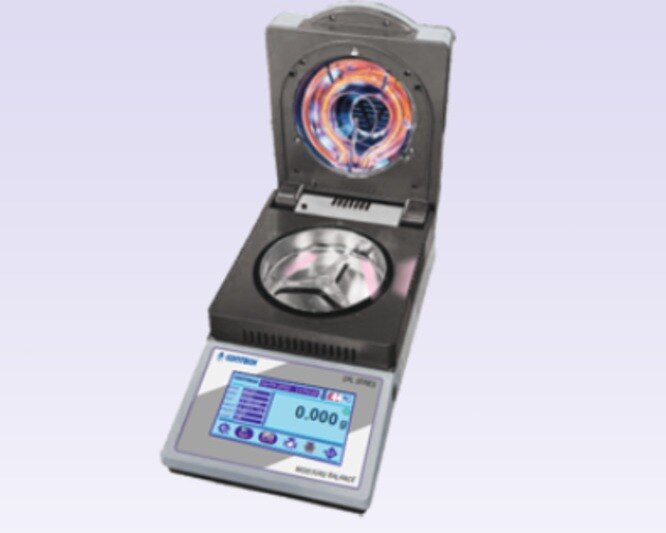
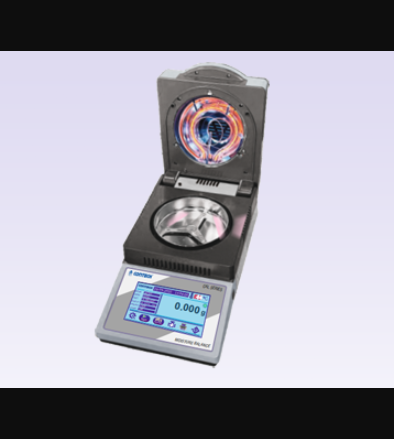 | Moisture Balances Moisture Balances (CAL Series) (0.001 g to 180 g) Moisture Balances (CAL Series) (0.001 g to 180 g) The CONTECH CAL Series Moisture Balances are advanced moisture analyzers designed for fast,... View product → |
Frequently asked questions
What must an affordable moisture balance deliver beyond a low price?
It must provide a readable display at your sample mass, repeatable results, stable controlled heating, and a pan and capacity suited to the material.
How do sampling and layer thickness cause moisture determination problems?
A nonrepresentative sample, uneven particle size, or a thick layer can dry unevenly and produce results that do not reflect the full sample.
How should you set temperature, heating mode, and the endpoint?
Use a validated method to set the temperature and heating profile, then define the endpoint with a measurable mass-loss or time-stability criterion.
When is Loss on Drying acceptable, and when is Karl Fischer necessary?
Loss on Drying is suitable when all volatile loss represents moisture. Use Karl Fischer when you need water-specific measurement or the sample contains other volatile substances.