
Unstable moisture results do not automatically mean that the testing machine has failed. By separating sample handling, laboratory conditions, method settings and instrument faults, you can identify the cause, verify the result against a reference method and decide when a moisture balance is unsuitable.
Key takeaways
- Change one testing factor at a time and record mass, temperature and relative humidity.
- Check wet-basis and dry-basis calculations before blaming the moisture balance.
- Stabilise sample handling and room conditions before changing the drying programme.
- Service or replace the instrument when verification fails after method control.
Start with the symptom: a fault sequence for unstable moisture results
A moisture result that swings between duplicate tests is a fault symptom, not a diagnosis. In research labs in Bengaluru, separate sample movement from laboratory handling and testing machines by changing one factor at a time and recording sample mass, wet- or dry-basis calculation, temperature, relative humidity and endpoint.
- Test a sealed, well-mixed reference material in duplicate. If it repeats, test the original sample again; a failure only with the original points to segregation, crusting, hygroscopic moisture gain or an unrepresentative portion.
- Keep the sample container closed until weighing, prepare aliquots quickly, and use a validated mass spread evenly across a clean pan. If results change after longer exposure to room air, the laboratory handling or Bengaluru humidity—not the analyzer—is driving the fault.
- Run the same sample by an agreed comparison method. Check whether each method measures water or total volatile loss, and convert wet-basis and dry-basis results explicitly before calling them different.
- Inspect the testing machines for a dirty pan, drafts, vibration, poor levelling, balance drift and incorrect software settings. Confirm the balance with a suitable mass standard, then verify heater temperature, sensor response and endpoint using a reference material; balance calibration alone cannot validate moisture analysis.
- Repeat after cleaning and stabilising the instrument. Persistent failure with both reference material and comparison checks identifies the machine; failure only with the sample identifies the material or method.
Overheating can caramelise, oxidise or seal a sample surface, slowing diffusion and creating a falsely low result. Lower-temperature, staged drying may expose the real cause.
When Loss on Drying gives the wrong answer
Loss on drying can report mass lost, not water. A heated moisture balance will count volatile solvents and decomposition products, while chemically bound water released during heating can inflate the result. Overheating can also crust, caramelise, oxidise or polymerise a sample; the surface film slows diffusion and produces a falsely low result.
| Method | What it measures | Why results disagree |
|---|---|---|
| Loss on drying | Total mass lost during the programmed heating cycle | Volatiles and decomposition are counted as moisture |
| Karl Fischer | Water reacting with the titration chemistry | Incomplete extraction, reagent drift, leaks or reactive samples distort the result |
| Reference oven method | Mass lost under its specified temperature, time and airflow | A different heating profile changes evaporation and decomposition |
For moisture content analysis that specifically means water, Karl Fischer is usually the stronger choice, especially when volatile non-aqueous components are present. Aldehydes, ketones, strong oxidisers, reducers and insoluble samples can interfere; use a validated reagent system, oven transfer or alternative method when the chemistry demands it.
Do not accept a balance calibration as proof of the complete moisture analysis. Check the weighing function with a mass standard, then compare a reference material using the full method, including sample mass, pan loading, heating profile, endpoint algorithm and calculation.
For hygroscopic powders, sealed vessels and rapid transfer matter: opening a container during tare-and-transfer can add more error than the machine’s repeatability.
Control Bengaluru handling conditions before changing the programme
An analyzer can be working correctly while Bengaluru handling conditions change the result. Monsoon humidity can make hygroscopic material gain water; dry, cooled air can remove it. Air-conditioning cycles also change sample and container temperature, causing condensation or evaporation before weighing.
1. Keep sample containers closed until preparation, and record laboratory temperature and relative humidity with each result. A warm sample entering a cold air-conditioned room can condense water and produce a high result; prolonged exposure to dry air can produce a low result.
2. Fix the preparation sequence: use the same grinding time, particle-size range, mixing procedure and maximum delay before weighing. Grinding improves uniformity but can warm the material, expose fresh hygroscopic surfaces or drive off water, creating irreproducible duplicates.
3. Use a consistent sample mass and spread it as a thin, even layer across a clean pan. Too much material, clumps or material touching the pan edge slows drying and gives a low or variable endpoint; an uneven layer can produce local overheating and an artificially high result.
4. Use rapid transfer, preconditioned containers or sealed weighing vessels for moisture-sensitive samples. Opening a container for a conventional tare-and-transfer step can introduce more error than the instrument itself.
These controls belong in the method record alongside the temperature ramp and endpoint. Moisture content analysis that changes after an air-conditioning cycle reflects handling, not necessarily moisture balance problems; the same variation can alter pressed-powder density and pellet integrity for X-ray fluorescence preparation.
Set and verify a method instead of copying a temperature
Do not copy a published temperature. Establish the complete method on your matrix and target endpoint, because sample mass, layer thickness, pan type, heating ramp and result calculation can all change moisture analysis results.
- Define the result basis: wet-basis or dry-basis moisture, and whether the reported loss represents water or total volatile loss.
- Test a representative sample at several temperatures and masses. Choose the lowest temperature that gives a stable endpoint without crusting, caramelisation, oxidation, polymerisation or a surface film; longer drying or staged heating can outperform a hotter programme.
- Keep the sample layer thin and record the exact mass, pan, preparation, exposure time and temperature ramp. Hygroscopic materials need sealed weighing vessels, rapid transfer or preconditioned containers.
- Set the endpoint from evidence, not convenience: use a defined rate-of-mass-loss threshold, a fixed drying time, or both, then confirm that extending the run does not materially change the result.
Verify the method in full. Check the balance function with a suitable mass standard, but do not treat that check as proof of the heating system or endpoint algorithm.
Run replicate preparations, a reference material and a comparison method such as Karl Fischer or oven drying when the result must represent water rather than every volatile loss. Record repeatability, recovery or bias against predefined limits, along with the complete programme.
A balance calibration alone will not expose moisture balance problems caused by heating, preparation or calculation.
Decide whether the instrument fits the work or needs service
Retain the instrument only if it reproduces your complete method, not merely its final temperature. Compare sample mass, layer thickness, pan geometry, heating rate, endpoint criterion, calculation basis and drying time before blaming the machine for moisture balance problems.
| Method or condition | What to compare and document | What to request |
|---|---|---|
| Sample and result basis | Sample preparation, mass, grinding, wet-basis or dry-basis reporting, and whether the result is water or total volatile loss | A transferred method sheet with acceptance limits |
| Physical behaviour | Spattering, foaming, boiling, uneven spreading and chamber contamination | A slower heating profile, suitable pan and demonstration using your difficult sample |
| Measurement system | Balance repeatability, heater temperature, sensor response, endpoint software and displayed result | Calibration records plus a complete-method comparison against an oven, Karl Fischer titration or reference material |
| Bengaluru handling | Container-closure time, preparation interval, laboratory temperature and relative humidity during monsoon and air-conditioning cycles | Recorded environmental conditions and duplicate results from sealed aliquots |
Ask for a balance check with a suitable mass standard, but do not treat it as proof of valid moisture content analysis. The complete method needs a reference material or comparison method; a weighing calibration cannot verify heating, endpoint detection or calculation.
Before servicing testing machines, document drafts, vibration, levelling, pan cleanliness, balance drift, heater performance and software settings. Use a validated, representative mass spread evenly across the pan; a tiny portion magnifies weighing error. CONTECH INSTRUMENTS LTD. can be included in a comparison only after its instrument is tested with your transferred method and acceptance limits.
Related product
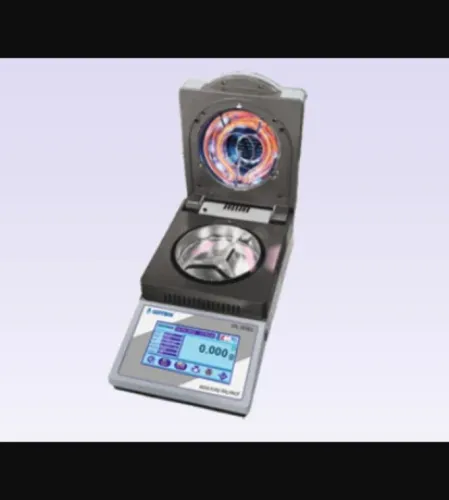
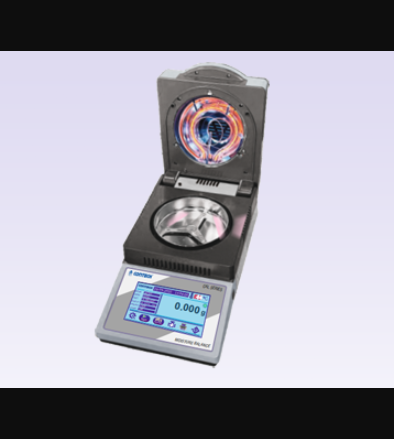 | Moisture Balances Moisture Balances (CAL Series) (0.001 g to 180 g) Moisture Balances (CAL Series) (0.001 g to 180 g) The CONTECH CAL Series Moisture Balances are advanced moisture analyzers designed for fast,... View product → |
Frequently asked questions
What should you check first when duplicate moisture results are unstable?
Change one factor at a time and record sample mass, wet- or dry-basis calculation, temperature, relative humidity and endpoint.
Why can Loss on Drying give the wrong moisture result?
Loss on Drying also removes volatile substances, decomposes heat-sensitive material and measures mass loss rather than water alone.
How do Bengaluru laboratory conditions affect moisture analysis?
Sample exposure to Bengaluru humidity, warm handling areas and delays before weighing can change the result before testing begins.
How should you set a moisture analysis method?
Use a representative sample, establish the drying temperature and endpoint with repeat tests, then verify the method against a reference or known material.
When does a moisture balance need service?
Arrange service when controlled repeat tests remain unstable, temperature verification fails, the balance drifts or the instrument cannot reach its endpoint consistently.