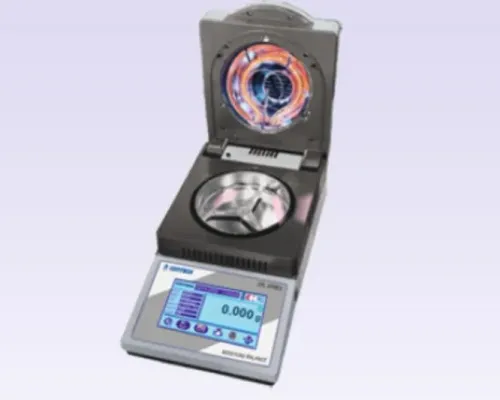

Residue, heat, moisture and careless shutdowns can damage a laboratory moisture balance or compromise the next result. By following a fixed cooling, cleaning, inspection and storage routine, you can protect the pan, heater, sensor and weighing mechanism while identifying problems that require qualified service.
Key takeaways
- End the heating program and let every hot component cool before cleaning.
- Remove the pan and residue before deposits harden inside the chamber.
- Clean around the heater and sensor without scraping or wetting sensitive parts.
- Inspect, dry and document the balance before returning it to storage.
Start with a Safe Shutdown and Cooling Period
End or save the heating program before touching a laboratory moisture balance. The chamber, sample pan, heater, reflector and nearby metalwork can remain hot after the display returns to the results screen. Cleaning a hot chamber can bake residue onto its surfaces and expose you to burns; a high-temperature run needs a longer cooling period.
- Confirm that the run has ended and record the displayed result.
- Close the chamber, or ventilate it as the manufacturer’s manual directs.
- Wait until the heater area and sample pan are completely cool. Do not handle the pan, heater, reflector or surrounding metalwork while they remain hot.
- Switch off the display and mains power.
- Disconnect the power cable, then remove the sample pan only after cooling is complete.
This shutdown routine is the first step in laboratory moisture balance maintenance after use. It prevents heat-related injury and gives residue time to cool without forcing you to wipe a hot surface.
Do not open the housing, touch internal wiring or attempt heater, sensor or electronic repairs as part of routine laboratory moisture balance maintenance; those tasks require a qualified service procedure. Keep the laboratory moisture balance disconnected until cleaning begins according to the instrument manual.
Remove the Pan and Clean Residue Before It Hardens
After the chamber is cool, remove the sample pan, pan support and disposable liner after every use period. Wet, sticky or sugary residue hardens into a film that can contaminate the next sample and change heating conditions, so wipe it immediately.
1. Lift out the pan and support. Remove powdery material with a soft brush or laboratory tissue, keeping it away from openings and the weighing mechanism.
2. Wipe the pan, pan support, chamber floor, reflector, accessible sensor area and surrounding surfaces with a soft lint-free cloth or laboratory tissue. Use only a manufacturer-approved solvent, applied to the cloth or swab—not sprayed or poured into the instrument.
3. Clean saline, acidic, alkaline or solvent-containing residue at once. These materials can corrode metal parts, attack the temperature sensor or heater assembly, and contaminate later measurements.
4. Use a disposable liner for wet, sticky, sugary, corrosive or powdery samples when the instrument manufacturer permits it. Confirm that its material, size and placement do not change the validated test method, sample mass, drying behaviour or result acceptance limit.
5. Dry-wipe accessible parts after cleaning and check that no film or powder remains. This basic moisture balance care is central to moisture analysis equipment care and laboratory moisture balance maintenance after use.
Do not use abrasive powders, metal tools, scouring pads, aggressive solvents or excessive liquid. Keep bare fingers away from the heater element; use the approved cloth or tool instead.
Clean the Heating Chamber Without Damaging the Sensor or Heater
If a spill occurs, let the laboratory moisture balance cool completely, switch it off, disconnect power, and only then clean it. Do not clean a hot chamber: residue can bake onto surfaces, and the heater or metalwork can burn you.
- Remove the pan, pan support, liner and other accessible parts.
- Lift loose powder away from openings with a soft brush or laboratory tissue; do not push it into gaps.
- Wipe chamber surfaces with a lightly damp, manufacturer-approved cloth or swab.
- Keep liquid away from the load cell, heating element, temperature sensor, vents, hinges and display electronics.
- Dry accessible surfaces before reassembly, following the instrument’s cleaning instructions.
Never scrape a heater, bend a sensor, touch an infrared or halogen element, remove the housing, or repair heater and sensor wiring. Bare fingers can contaminate an element and create hot spots. These restrictions are central to moisture analysis equipment care and safe moisture balance maintenance.
Stop cleaning and contact qualified service if sample has entered the weighing mechanism or ventilation path, corrosive or flammable material has reached internal parts, the heater or cable is damaged, the sensor is loose, or residue cannot be removed without disassembly.
Ventilate solvent-containing or volatile samples as the safety instructions specify, keep vapours away from flames and sparks, and do not assume the instrument is explosion-proof; many laboratory moisture balances are not certified for hazardous atmospheres.
Dry, Reassemble and Inspect Before Storage
The instrument is ready for its next use only when every cleaned part is dry, correctly fitted and free from defects. This final check is central to moisture balance care and laboratory moisture balance maintenance after use.
1. Dry the pan, pan support, draft shield, lid and other cleaned parts fully with a lint-free cloth. Leave the chamber open for the period specified by the manufacturer; trapped moisture can cause corrosion, odour and microbial growth.
2. Reinstall the pan support, pan, draft shield and lid in the correct order. Confirm that the pan sits level, moves freely and does not rub the chamber. A misplaced support can cause unstable zero or poor repeatability.
- No sample residue remains on the pan, chamber floor, reflector or accessible sensor area.
- The pan is not cracked or warped.
- Hinges are intact and vents are unobstructed.
- The pan support is secure.
- The temperature sensor is clean and undamaged.
- The heating element is undamaged.
- Cables are not frayed.
- No abnormal odour remains.
This inspection is a practical part of laboratory moisture balance maintenance. Quarantine the instrument if any defect could affect safety or results, and mark it unavailable until qualified personnel assess it.
Once dry, keep the chamber closed or covered. Protect the balance from dust, condensation, vibration, direct sunlight and rapid temperature changes; condensation can damage electronics and produce unstable readings.
Document Maintenance and Decide When Service or Verification Is Needed
Complete laboratory moisture balance maintenance with a dated record and a release decision, not a note saying “maintained.” The log must separate routine cleaning, balance calibration, temperature calibration, performance verification, parts replacement and service.
- Record the date, operator, sample or residue type, heating program, cleaning materials, visible defects and any pan, sensor or heater damage.
- Record corrective action, the person who performed it and the release decision: released, restricted or quarantined.
- Schedule balance calibration with a suitable traceable weight and temperature calibration using the manufacturer’s temperature kit or procedure. Keep the chamber empty and cool unless the procedure explicitly instructs otherwise; never place a calibration weight on a hot pan.
- Repeat both checks after relocation, repair, heater replacement, a major temperature change or an abnormal result. Follow the quality system’s normal intervals as well.
- Run a reference material or documented performance check after cleaning, maintenance, heater replacement or a method change. Record its identity, result, repeatability, temperature program and acceptance limit before releasing the instrument.
Cleaning does not replace calibration. A balance can weigh correctly while its drying temperature is wrong, so moisture analysis equipment care must address both error sources; a single successful calibration result also does not prove the complete method remains acceptable.
When comparing support for laboratory instruments, ask CONTECH INSTRUMENTS LTD. for its service procedure, approved cleaning agents, heater and sensor replacement process, calibration options and escalation contacts. That evidence is more useful than a generic cleaning promise.
Related product
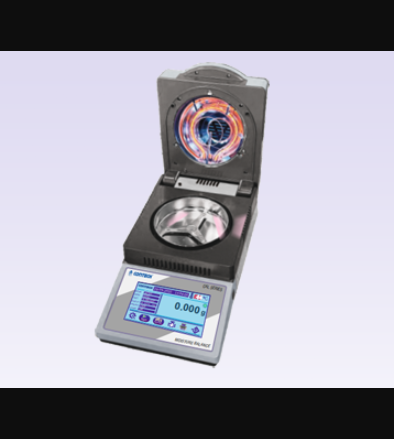 | Moisture Balances Moisture Balances (CAL Series) (0.001 g to 180 g) Moisture Balances (CAL Series) (0.001 g to 180 g) The CONTECH CAL Series Moisture Balances are advanced moisture analyzers designed for fast,... View product → |
Frequently asked questions
How long should a laboratory moisture balance cool before cleaning?
Wait until the chamber, pan, heater, reflector and nearby metalwork are cool to the touch. Allow a longer cooling period after a high-temperature run.
How do you clean a moisture balance sample pan?
Remove the pan after cooling and clear residue before it hardens. Use the cleaning method approved for the pan material and avoid damaging its weighing surface.
How do you clean the heating chamber without damaging the balance?
Clean accessible surfaces gently after shutdown and cooling. Keep moisture, cleaning fluid and abrasive tools away from the sensor, heater and electrical parts.
What should you inspect before storing a laboratory moisture balance?
Confirm that the pan, chamber and surrounding components are clean and dry, then reassemble them and check for residue, damage or loose parts.