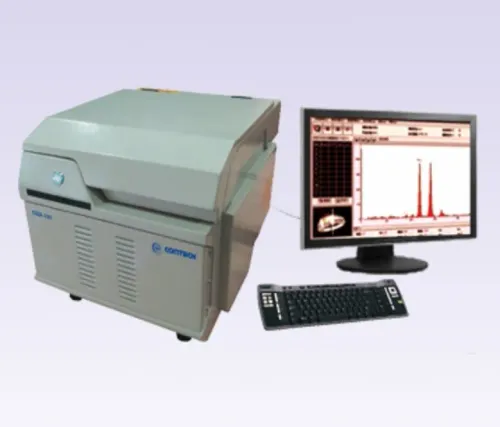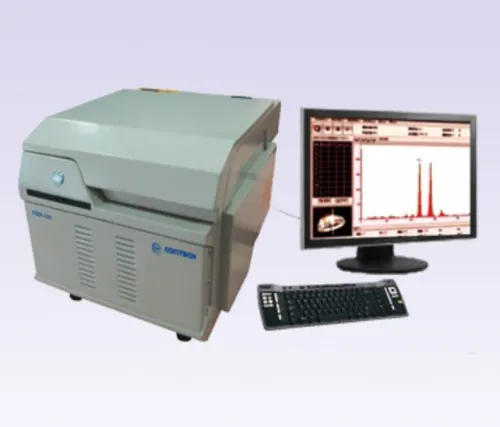

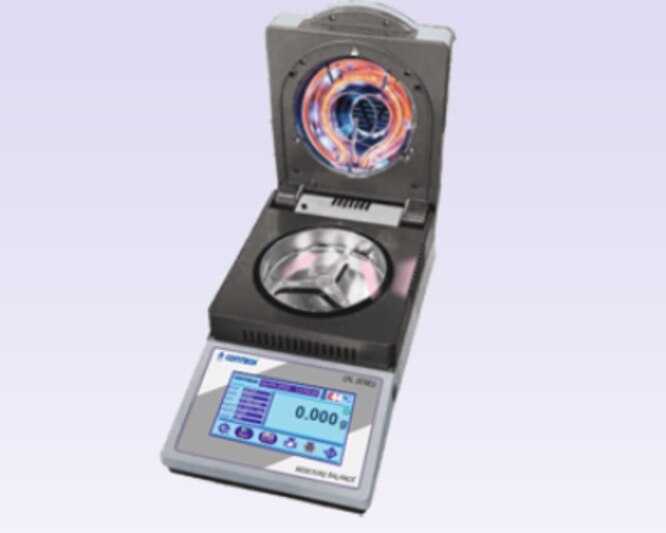
A moisture result is only as useful as the heating method, sample preparation, and endpoint behind it. You will be able to compare halogen, infrared, microwave, and oven-based systems, identify when loss on drying is unsuitable, and specify a method that agrees with your chemical product’s approved reference test.
Key takeaways
- Use loss on drying to report mass loss, not water content by assumption.
- Match analyzer heating method and sample capacity to your production pace.
- Choose an oven or Karl Fischer test when the sample or result demands it.
- Validate temperature, balance performance, sample preparation, and endpoint settings before approval.
How does a laboratory moisture balance calculate moisture?
A laboratory moisture balance calculates loss on drying, not water by assumption. Its integrated precision balance first records the wet sample mass; the heater then raises the sample pan to the programmed temperature. During drying, the balance tracks mass loss continuously or at set intervals.
The instrument combines the balance, pan, heater, temperature controller, and endpoint algorithm, so it is not a standalone analytical balance placed beside an oven.
| Instrument stage | What happens | Output |
|---|---|---|
| Initial weighing | The wet sample is weighed before heating | Initial mass |
| Drying | Heat removes mass while the balance monitors the sample | Mass-loss curve |
| Endpoint | The method stops at its defined drying endpoint | Final mass |
| Calculation | The software compares initial and final mass | Loss-on-drying percentage |
The displayed percentage is calculated as (initial mass − final mass) ÷ initial mass × 100. A moisture balance analyzer reports this decrease as loss on drying. Volatile solvents, decomposition products, oxidation products, and chemically released gases also reduce mass and can therefore be reported as moisture.
The first displayed result is not necessarily final. Define a fixed drying time, a constant-mass test, a rate-of-change limit, or another validated endpoint that stops neither before drying is complete nor after decomposition begins.
Readability, such as 0.001 g, is only the smallest displayed increment. Method accuracy depends on temperature uniformity, balance performance, sample homogeneity, repeatability, and agreement with a reference method. A laboratory moisture balance with finer digits does not automatically produce a more accurate chemical result.
Which analyzer type suits a chemical company’s production pace and sample?
Halogen or infrared suits rapid routine screening; microwave suits a validated matrix with strong, even microwave absorption. Choose a conventional hot-air oven when reference comparability, batch capacity, or a slower but familiar procedure matters more than minutes saved.
| Option | Heating speed and uniformity | Throughput, repeatability, energy, and risk |
|---|---|---|
| Halogen | Rapid heating; results shift with sample thickness, particle size, and temperature profile | High routine throughput and moderate energy use; repeatability is strong only with controlled loading; excessive heat can decompose samples |
| Infrared | Rapid loss-on-drying; lamp-to-sample distance and heating uniformity control the result | Good screening throughput; repeatability depends on lamp condition, spreading, and endpoint; local hot spots increase decomposition risk |
| Microwave | Often fastest because dielectric heating reaches into the sample; uneven absorption can cause hot spots | Potentially low energy use and high speed; repeatability requires matrix validation; uneven materials risk local overheating |
| Hot-air oven | Slow surface-to-centre heating with stable, familiar temperature control | Highest batch capacity and a scalable reference procedure; separate cooling and weighing add time; longer heating increases energy use but can reduce hot-spot risk |
A digital moisture analyzer cannot transfer a method from one formulation to another unchanged. Check sample mass, particle size, layer thickness, temperature program, endpoint, replicate repeatability, and agreement with the approved oven or Karl Fischer result. Compare method accuracy and thermal-decomposition risk, not merely a displayed readability such as 0.001 g or 0.01%.
In Chennai’s humid conditions, rapid container-to-pan transfer also protects results for hygroscopic chemicals.
When is an analyzer the wrong choice compared with an oven, balance, or Karl Fischer test?
A moisture analyzer is the wrong choice when the result must specifically represent water, or when the approved customer method demands oven loss on drying. Use a digital moisture analyzer for fast, repeated routine testing only after correlating its result with the approved reference method.
| Option | Best fit | Trade-off or limitation |
|---|---|---|
| Moisture analyzer | Rapid, repeated process checks | Minutes rather than hours, but it measures mass loss, not automatically water; volatile solvents and decomposition products count |
| Hot-air oven plus analytical balance | Recognised reference procedure, larger batch capacity, lower initial equipment cost, or a customer-specified test | Dry, cool in a desiccator or controlled environment, and reweigh; the method takes longer |
| Volumetric Karl Fischer | Higher water levels when the specification is specifically for water | More specific than loss on drying, but reagent, matrix, sample size, and configuration control the usable range |
| Coulometric Karl Fischer | Lower water levels when the specification is specifically for water | More specific than loss on drying, with the same matrix and sample-handling controls |
| Near-infrared | Rapid, non-destructive screening | Requires representative calibration samples, controlled presentation, and regular reference checks |
Do not use loss on drying without investigating a chemical that contains volatile solvents, decomposes or oxidises at the drying temperature, forms a surface crust, or releases bound water slowly. Karl Fischer still needs controls for incomplete dissolution or extraction, atmospheric moisture uptake, side reactions, and reactive ingredients.
Choose the oven when defensible reference compliance matters more than speed; choose Karl Fischer when water, rather than total volatile loss, is the specification.
How should you set temperature, sample preparation, and the drying endpoint?
Choose the lowest temperature that dries the chemical completely and repeatably without decomposition. A higher setting does not automatically improve a moisture balance analyzer result; it can drive off solvents, oxidise the sample, form a crust, or release chemically bound gases.
1. Start with the approved test method and available thermal-stability data. Define the target temperature range, sample mass, drying atmosphere, and safety limits before operating the laboratory moisture balance. If no stability data exist, run a temperature screen and inspect the residue for colour, odour, melting, bubbling, or other decomposition signs.
2. Standardise the sample before comparing instruments. Homogenise powders, break oversized particles when the method permits, and record the particle-size treatment, mixing procedure, pan type, and sample mass.
Spread the material in a thin, even layer; overloading, liquid splashing, or surface hardening can trap wet material beneath a dry skin and produce a falsely early endpoint.
3. Select an endpoint that the method can defend: a fixed drying time, a fixed temperature/time programme, a constant-mass sequence, or a validated rate-of-change threshold. Demonstrate the choice with replicate tests; a displayed mass that appears stable does not prove that drying is complete.
4. Control exposure for hygroscopic chemicals in Chennai’s humid conditions. Record container-opening time, weigh promptly, document sample conditioning and ambient conditions, and use draft protection or a covered pan where suitable. These controls can affect repeatability more than displayed balance resolution.
What should a Chennai chemical laboratory verify before approving a digital moisture analyzer?
Approve a digital moisture analyzer only after it produces defensible results for the chemical you actually test. Ask the supplier to demonstrate the matrix using your intended sample mass, particle-size treatment, pan loading, temperature profile, and endpoint—not a generic powder.
Record these acceptance results:
- Compare replicate analyzer results with the approved hot-air oven or Karl Fischer method.
- Document bias, repeatability, working range, and specificity for water when the specification concerns water rather than total mass loss.
- Test robustness by varying normal mixing, grinding, spreading, and transfer practices.
- Check result stability after controlled exposure to laboratory air, especially for hygroscopic chemicals in Chennai.
- Verify temperature uniformity and balance linearity; a readability of 0.001 g or 0.01% does not prove method accuracy.
Use this decision framework before assigning the moisture analyzer a role:
| Role | Evidence required | Documentation level |
|---|---|---|
| Release method | Correlation, bias, precision, range, specificity, and defined failure limits | Full validation and approved procedure |
| Process-control tool | Repeatability, trend control, and a demonstrated reference-method relationship | Controlled verification |
| Screening device | Consistent ranking and documented limits for follow-up testing | Basic verification |
Write procedures for daily checks, cleaning, pan replacement, calibration, failed endpoints, and retesting. For a system from CONTECH INSTRUMENTS LTD., assess configuration, draft protection, method controls, and service support against this evidence, not brand or speed alone.
Related product
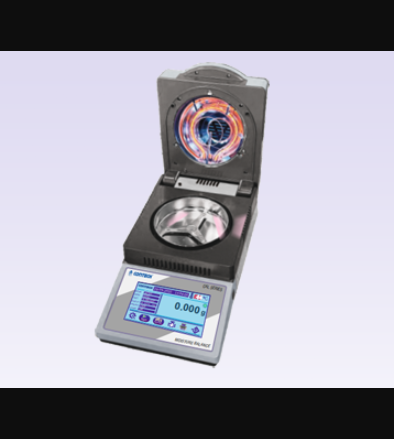 | Moisture Balances Moisture Balances (CAL Series) (0.001 g to 180 g) Moisture Balances (CAL Series) (0.001 g to 180 g) The CONTECH CAL Series Moisture Balances are advanced moisture analyzers designed for fast,... View product → |
Frequently asked questions
How does a laboratory moisture balance calculate moisture?
It records the wet sample mass, heats the sample pan, and tracks mass loss during drying. The reported result is loss on drying unless water-specific testing has been established.
Which moisture analyzer type suits a chemical company’s production pace and sample?
Choose a rapid infrared or halogen analyzer for routine, repeated samples when its heating profile suits the material. Compare sample capacity, temperature control, repeatability, and drying time against the production workload.
When is an analyzer the wrong choice compared with an oven, balance, or Karl Fischer test?
Use an oven when a reference method requires a defined drying procedure or larger sample. Use a balance alone when you only need mass measurement. Use Karl Fischer titration when you need water-specific results, especially at low moisture levels or when other volatiles would distort loss on drying.
How should you set temperature, sample preparation, and the drying endpoint?
Set temperature from the material’s validated method, spread a representative sample in a thin even layer, and define the endpoint using a stable mass-change limit or approved time-temperature method. Record sample mass, temperature, endpoint, and result.
What should a Chennai chemical laboratory verify before approving a digital moisture analyzer?
Verify the heater’s temperature range, balance readability and repeatability, calibration records, pan capacity, method storage, data export, safety features, service support, and performance with representative Chennai laboratory samples.