
Teaching laboratories need moisture experiments that produce understandable results within a class period without sacrificing control over sample preparation or interpretation. By the end, you will know how a moisture balance supports demonstrations and student practice, how to run a defensible measurement, and when an oven or water-specific method is the better choice.
Key takeaways
- Track mass loss during drying instead of reporting only a final moisture value.
- Control sample mass, temperature, ramp and endpoint settings for fair comparisons.
- Use an oven to teach reference methods; choose a moisture balance for faster demonstrations.
- Repeat measurements and report sample preparation, settings and uncertainty honestly.
Why a moisture balance adds teaching capacity
A single drying run can show students how mass changes over time, not just present a final number. This is the central moisture balance benefit for educational institutions in Hyderabad: demonstrations become observable, while individual or small-group experiments connect sample behaviour to drying temperature, ramp, and endpoint settings.
| Teaching approach | What students see | Practical effect |
|---|---|---|
| Moisture balance | A live drying curve and changing mass | Compare materials and settings in one laboratory session |
| Oven plus external balance | Initial and final masses | Longer waiting and no continuous drying record |
| Final moisture result only | One reported value | Limited evidence for explaining drying behaviour |
Students can compare a powder, food, soil, or tablet material, repeat the same method, and investigate why results differ. A curve reveals constant-rate drying, falling-rate drying, and the point where mass stabilises; a single oven result hides those transitions. Faster turnaround also reduces waiting between classes and creates more opportunities for repeatability practice.
Local handling affects moisture measurement. In Hyderabad’s warm, seasonally humid conditions, hygroscopic salts, powders, foods, pharmaceuticals, and soils can gain or lose water before weighing.
- Keep samples in sealed containers until use.
- Minimise exposure while students transfer and weigh portions.
- Record whether the sample was freshly collected, equilibrated, or previously opened.
Use the curve to discuss method dependence, not to treat every percentage as an absolute moisture value.
What students do from sample preparation to moisture result
Start with a representative sample, because moisture measurement is only as reliable as the portion placed in the pan. Students mix or homogenise the material, transfer a measured portion to a clean pan, and spread it without losing material.
- Tare the empty pan, then record the initial sample mass.
- Choose or set the drying temperature and endpoint for the method.
- Start heating and watch the changing mass on the drying curve.
- Let the program stop when the endpoint is reached.
- Record the final mass and the calculated moisture content determination.
The moisture balance repeatedly weighs the heated sample. It calculates mass loss by comparing the initial mass with the final mass, then commonly reports moisture percentage, solids percentage, or residual dry mass.
| Basis | Calculation | Meaning |
|---|---|---|
| Wet basis | Mass lost ÷ initial mass × 100 | Moisture as a percentage of the original sample |
| Dry basis | Mass lost ÷ final dry mass × 100 | Moisture relative to the remaining dry material |
| Residual dry mass | Final mass ÷ initial mass × 100 | Material left after drying |
A Loss on Drying result is not automatically water alone. Solvent, fragrance, chemically released water, or decomposition products also reduce the mass during heating and enter the reported loss. Students must therefore label the result as Loss on Drying unless the method proves that only water evaporated.
How to choose samples and control the experiment
A representative sample matters more than a tiny difference in balance readability. Mix the material before subsampling, reduce particle size when appropriate, and spread the portion as a thin, even layer; an overloaded pan dries unevenly and distorts moisture content determination.
| Sample type | Preparation focus | Main warning |
|---|---|---|
| Foods | Chop or grind, then mix thoroughly | Sugars and fats can brown, spatter, or burn |
| Soil | Break clumps and mix before subsampling | Uneven particles produce uneven drying |
| Pharmaceutical materials and powders | Homogenise without changing composition | Hygroscopic material gains moisture from humid air |
| Polymers | Cut into small pieces only when safe | Softening, melting, or decomposition can precede drying |
Before heat is applied, students must inspect every sample for burning, spattering, flammability, explosive behaviour, solvent vapour, or decomposition. Do not place an unknown reactive material in a heated pan.
Use one controlled method for every comparison. The control checklist is:
- Clean, dry pan and correct tare
- Representative sample mass
- Consistent sample thickness and distribution
- Fixed drying temperature and ramp rate
- Defined endpoint, such as stable mass over a stated interval
- Limited exposure to room air before weighing
- Cooling in a desiccator or closed container when the method requires it
- Repeat measurements using fresh portions
Warm, seasonally humid Hyderabad conditions make sealed containers and short handling times important for hygroscopic foods, salts, powders, pharmaceuticals, and soil. Record the sample condition, temperature program, endpoint, and any visible change beside each moisture measurement.
Which instrument fits the learning objective: moisture balance, oven, or digital tester?
Choose a moisture balance when students need a visible drying curve, programmed speed, and several comparative results in one class. The moisture balance repeatedly weighs the heated sample, reducing transcription errors and showing how temperature and endpoint change the result.
| Option | Main teaching value | Trade-offs |
|---|---|---|
| Moisture balance | Programmable drying, drying curve, method storage, result export, high throughput | Costs more than an oven and external balance; results depend on the drying method |
| Oven plus external balance | Strong hands-on teaching and a useful reference procedure | Takes longer, requires separate weighing, and increases handling and transcription errors |
| Digital moisture tester | Convenient, but the name covers different technologies | Check whether it uses loss on drying, capacitance, resistance, microwave, infrared, or another indirect principle |
| Karl Fischer titration | Measures water specifically | Requires reagents, titration technique, waste control, and greater operating cost |
A digital moisture tester is not automatically a moisture balance. Before purchase, match the sample matrix and calibration model, identify the measurement principle, and confirm wet-basis or dry-basis output. An indirect tester calibrated for grain cannot be assumed suitable for soil, powders, polymers, or pharmaceutical materials.
For moisture content determination that includes water plus other volatile loss, a moisture balance fits routine teaching. Use Karl Fischer when the learning objective or specification demands water-specific measurement.
The moisture balance benefits for educational institutions in Hyderabad increase when software preserves mass-and-time data, not just a final percentage. CONTECH INSTRUMENTS LTD. can help a laboratory compare workflow, export format, stored methods, and application fit instead of choosing on display resolution alone.
Related product
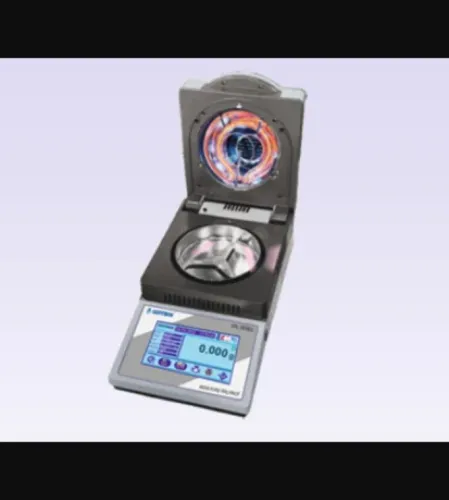
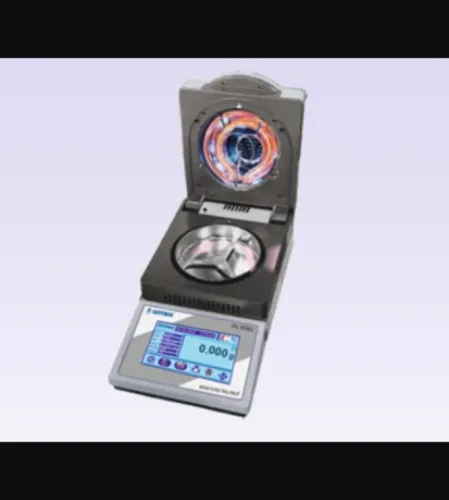
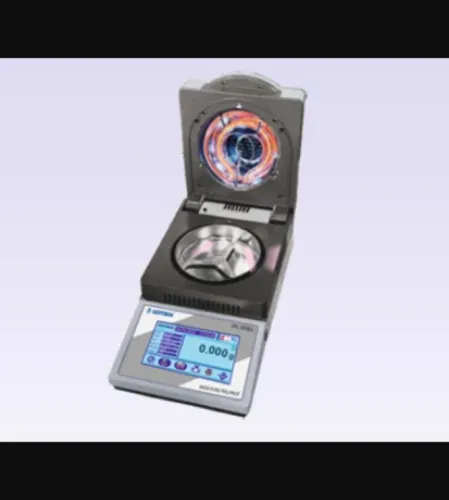
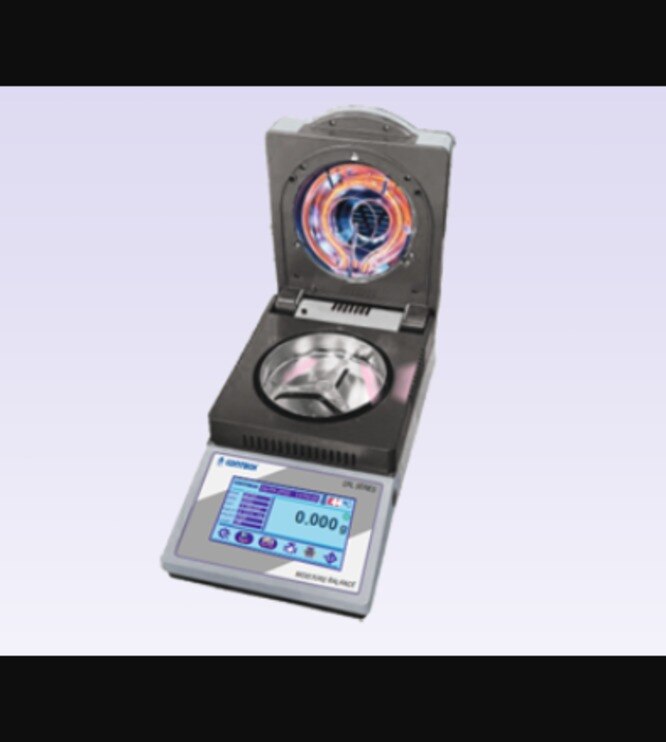
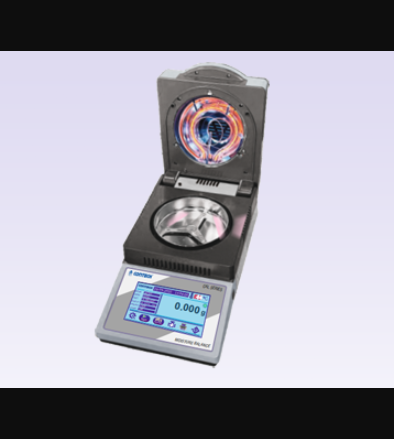 | Moisture Balances Moisture Balances (CAL Series) (0.001 g to 180 g) Moisture Balances (CAL Series) (0.001 g to 180 g) The CONTECH CAL Series Moisture Balances are advanced moisture analyzers designed for fast,... View product → |
How to make the result useful, repeatable, and scientifically honest
A higher drying temperature does not automatically improve moisture content determination. It can drive off moisture faster, but it can also char, oxidise, or decompose the sample before drying is complete.
Students should compare drying curves at different temperatures and identify the stable endpoint: the point at which successive mass readings change by less than the chosen criterion. This makes moisture measurement a method-development exercise rather than a race to the lowest final mass.
Check each part of the result separately:
- Weighing: verify the balance with certified test weights across the working range.
- Heating: check temperature and ramp performance with a suitable reference or temperature check.
- Endpoint: compare the complete procedure with an established oven method or Karl Fischer result.
A display’s readability is not result accuracy. A tiny sample mass change can create a large percentage error, while uneven particles, hygroscopicity, air movement, vibration, and temperature variation can dominate uncertainty.
| Reference method | What it verifies | Limitation |
|---|---|---|
| Oven procedure | Agreement with established loss-on-drying method | Takes longer and may include volatile substances |
| Karl Fischer result | Water-specific agreement | Requires different reagents, technique, and equipment |
| Certified test weight | Balance indication and repeatability | Does not verify heating or endpoint behaviour |
These controls reveal the moisture balance benefits for educational institutions in Hyderabad: students see why method settings affect results, not just how to read a number.
In warm, seasonally humid Hyderabad conditions, use sealed containers, short exposure times, and record sample condition. Keep the instrument away from fans, windows, air-conditioning outlets, vibration, and direct sunlight.
Frequently asked questions
How does a moisture balance add teaching capacity?
It displays mass change during drying, allowing students to connect sample behaviour with temperature, ramp and endpoint settings in one session.
What do students do during a moisture content determination experiment?
Students prepare and weigh a sample, set drying conditions, observe mass loss, identify the endpoint and record the final moisture result.
How should teaching labs choose samples and control the experiment?
Choose safe, stable samples with measurable moisture, then keep sample mass, particle size, spreading depth, temperature and endpoint criteria consistent.
When should a lab choose an oven, moisture balance or digital moisture tester?
Choose an oven for reference-method teaching, a moisture balance for visible and rapid drying demonstrations, and a digital tester when routine operation matters most.