
A Mumbai laboratory cannot treat a web listing as proof that an electronic moisture analyzer is ready to ship, configured for its samples, or supported after installation. You will be able to verify stock status, compare the instrument with an oven-and-balance workflow, define a repeatable test method, and request the documents needed before ordering.
Key takeaways
- Request the exact model, stock status, serial number, and confirmed installation date.
- Match heating method, temperature range, readability, capacity, and repeatability to your test method.
- Calculate LOD as mass lost during heating divided by initial sample mass, multiplied by 100.
- Control sample preparation, heating settings, and endpoint criteria to compare moisture results.
How to verify electronic moisture analyzer availability in Mumbai
“Available” means more than a web listing. For an electronic moisture analyzer in Mumbai, it means the supplier can identify the quoted unit, confirm its stock or factory lead time, and commit to a usable installation date.
1. Ask whether the instrument is physically in Mumbai, held at another Indian location, available only for demonstration, or imported after ordering. Request the dispatch date and the consequence of customs or factory delays.
2. Match the quotation to the required configuration: heated loss-on-drying system, balance resolution, sample capacity, heating range, endpoint control, and method storage. A search for an electronic moisture for analyzer supplier in Mumbai can return a general weighing-scale dealer rather than a laboratory instrument source.
3. Get installation scope in writing. It should state delivery to your site, method setup using your sample, operator training, and verification of the electrical supply, earthing, and operating conditions.
4. Confirm calibration support, a calibration certificate or traceability document, and the procedure for future balance and temperature checks. Ask whether spare pans, pan handlers, filters, and other consumables are locally available.
5. Record the service commitment: Mumbai service location, coverage for Andheri, Thane, Navi Mumbai, or Bhiwandi, response time, escalation contact, and expected repair turnaround.
A supplier has not proved availability until these details apply to the quoted serialised configuration, not merely to a similar model shown online.
Which instrument specification fits your laboratory method
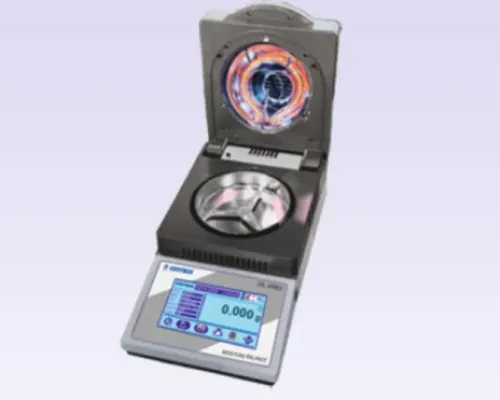
Compare by method, not by the wording on the quotation. A moisture analyzer weighing balance in mumbai fits rapid routine loss-on-drying work when you need controlled heating, repeatable weighing, stored methods, and an automatic endpoint.
| Option | Specifications to compare | Best fit | Main limitation |
|---|---|---|---|
| Heated halogen or infrared analyzer | Balance readability, sample capacity, temperature range, heating profile, endpoint algorithm | Fast routine testing with a defined LOD method | Reports all mass loss, including solvents or decomposition products |
| Laboratory oven plus balance | Oven uniformity, temperature control, balance readability, cooling and weighing procedure | Reference methods requiring longer, separately controlled drying | More handling, longer turnaround, and greater exposure to room humidity |
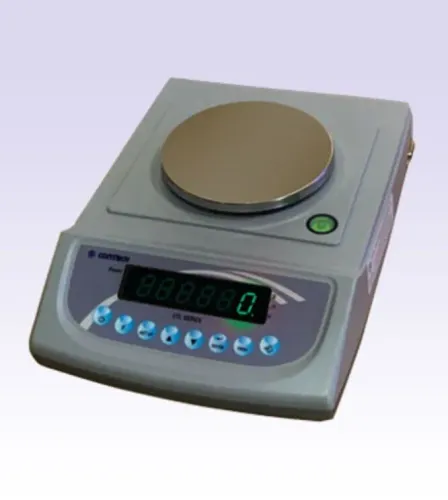
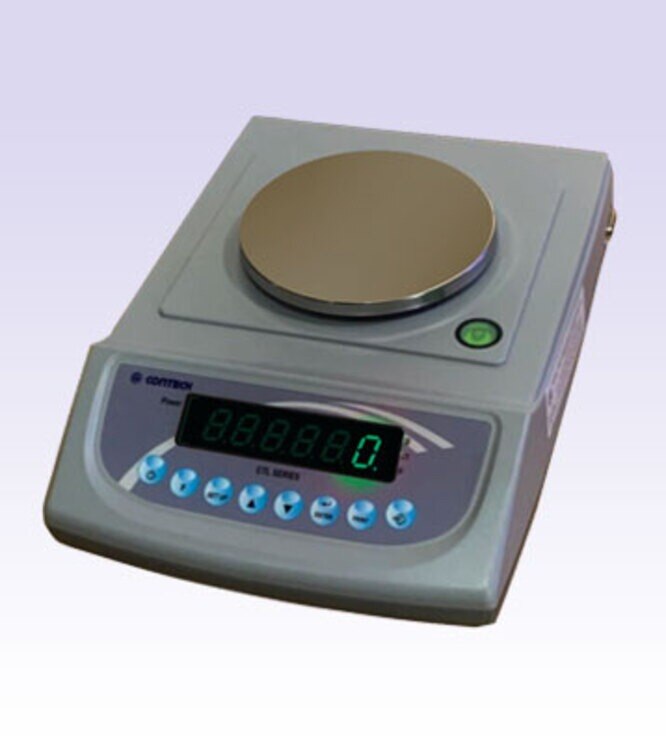
| Balance alone | Readability, capacity, calibration status | Measuring mass, not moisture | Cannot determine moisture without a separate drying method |
For a moisture analyzer balance in mumbai, request specifications that match your sample rather than the maximum advertised temperature or capacity. Confirm that the pan accommodates your normal mass and that the balance resolution detects the expected mass change.
Lock these method variables before comparing results:
- Sample mass and particle size
- Layer thickness and pan loading
- Drying temperature and ramp
- Endpoint stability or time limit
- Replicates across the normal moisture range
Compare replicate results with your existing oven LOD procedure. For plastics, ASTM D6980 is an example of a material-specific loss-on-drying reference; agreement matters more than a faster display.
What happens during a moisture test and how LOD is calculated
A loss-on-drying test weighs a sample, heats it, and reports the mass lost as a percentage. Prepare a clean, dry pan, confirm the analyzer’s calibration status, and mix the sample so its moisture is uniform. A thin, even layer dries more consistently than a heap.
- Place the empty pan on the balance, close the chamber, and tare it.
- Add the specified sample mass and record the wet mass, including the method identification and sample number.
- Spread the sample evenly, select the validated temperature, heating mode, and endpoint, then start the run.
- Let the analyzer stop at its stable endpoint. Record drying temperature, elapsed time, dry mass, and displayed moisture percentage.
- Save or print the result with operator, instrument identification, date, batch number, and any observation such as scorching or splashing.
Calculate loss on drying as: LOD (%) = [(wet mass − dry mass) ÷ wet mass] × 100. For example, a 5.000 g sample drying to 4.600 g loses 0.400 g, giving an LOD of 8.00%.
A halogen or infrared analyzer does not identify water selectively. Solvents, oils, or decomposition products also contribute to mass loss, so compare the method with your approved oven procedure before accepting results. A moisture analyzer balance in Mumbai should therefore be operated with the same sample mass, temperature, and endpoint used during method verification.
Why the same sample can produce different moisture results
The same sample produces different moisture results when its preparation or drying endpoint changes. Before accepting a percentage, lock the sample mass, particle size, layer depth, temperature programme, and endpoint rule in a written method.
| Variable | What to control | What goes wrong if it changes |
|---|---|---|
| Sample condition | Homogenise the batch, prevent evaporation, and record its temperature before weighing | A wet or segregated portion gives a result that does not represent the batch |
| Sample mass | Use the same target mass and pan type for every test | A thicker load can dry more slowly and trap moisture |
| Particle size | Use a defined sieve, grinding time, or preparation procedure | Larger particles expose less surface area and prolong drying |
| Layer depth | Spread the sample evenly in a thin layer | A heap can form a dry crust while moisture remains underneath |
| Heating programme | Fix starting temperature, ramp rate, final temperature, and maximum sample temperature | Heat-sensitive material can darken, oxidise, crust, or decompose before the endpoint |
| Endpoint | Define the mass-loss stability criterion, time limit, and displayed resolution | A short test understates moisture; excessive drying can include non-water losses |
Run replicate tests during method approval. Compare the individual values and the mean, not a single attractive reading.
For an electronic moisture analyzer in Mumbai, ask whether the endpoint algorithm reproduces your written method. A quoted temperature range alone proves little: verify ramp control, temperature uniformity, pan capacity, and calibration status. Accept results only when the same sample preparation and endpoint settings produce repeatable values.
What to request before ordering and installing the instrument
Do not treat a web listing as proof of local availability. A result for electronic moisture for analyzer supplier in mumbai proves little until the seller identifies the exact configuration, stock location, delivery date, installation scope, and service coverage.
Request these items before issuing a purchase order:
- A quotation naming balance resolution, sample capacity, heating method, temperature range, endpoint algorithm, pan quantity, and method-storage capacity.
- Calibration documents for the weighing system and temperature sensor, plus the planned calibration and measurement-traceability procedure for an ISO/IEC 17025 quality system.
- A demonstration using your sample, showing taring, thin sample spreading, endpoint stability, repeatability, wet and dry mass records, and export or print functions.
- Written safety limits for flammable solvents and combustible powders, ventilation requirements, and permitted sample types.
- Installation details stating supply voltage, frequency, earthing, operating conditions, bench requirements, and whether a stabilizer or UPS is recommended.
Check the offer against the promise:
| Check | Acceptable evidence | Warning sign |
|---|---|---|
| Stock | Serialised unit or stated factory lead time | “Available” with no date |
| Demonstration | Your sample and saved method | Water-only demonstration |
| Service | Response time, spare pans, filters, and calibration visits | No named service contact |
| Installation | On-site setup and operator training | Delivery at the door |
For a moisture analyzer weighing balance in mumbai, ask CONTECH INSTRUMENTS LTD. to document these points in the quotation, not in a verbal assurance. Also confirm delivery and service coverage for Andheri, Thane, Navi Mumbai, or Bhiwandi before signing.
Related product
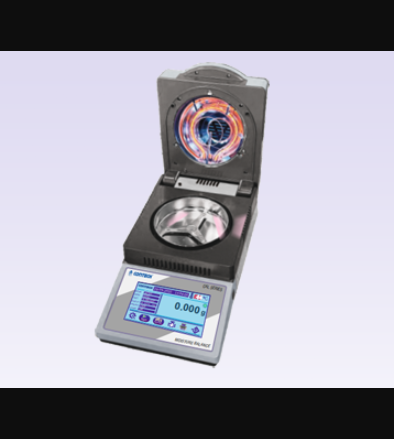 | Moisture Balances Moisture Balances (CAL Series) (0.001 g to 180 g) Moisture Balances (CAL Series) (0.001 g to 180 g) The CONTECH CAL Series Moisture Balances are advanced moisture analyzers designed for fast,... View product → |
Frequently asked questions
How do you verify electronic moisture analyzer availability in Mumbai?
Ask the supplier to identify the exact model and configuration, state whether the unit is physically in stock or has a factory lead time, and provide a written dispatch and installation date. Confirm what calibration certificate, warranty, software, accessories, and service support are included.
Which specifications matter when choosing a moisture analyzer balance in Mumbai?
Compare the heating method, temperature range, temperature step, weighing capacity, readability, repeatability, sample-pan size, endpoint detection, and data-export options. Select specifications from your validated test method rather than choosing the highest capacity or fastest heating rate.
How is loss on drying calculated with a moisture analyzer?
The analyzer weighs the sample before heating, removes volatile material under the programmed conditions, and weighs the residue. Calculate LOD as (initial sample mass minus final sample mass) divided by initial sample mass, multiplied by 100.
Why can the same sample produce different moisture results?
Results change when samples are not homogeneous, particle size differs, exposure to room humidity changes, sample mass varies, or the temperature, heating profile, endpoint, and pan loading differ. Use a defined preparation method and record each test setting.
What should you request before installing a moisture analyzer?
Request the quotation, technical datasheet, model and configuration, stock or lead-time confirmation, calibration certificate, installation requirements, warranty terms, service contacts, operating manual, and a site-readiness checklist. Confirm the power supply, bench stability, ventilation, ambient conditions, and operator training.