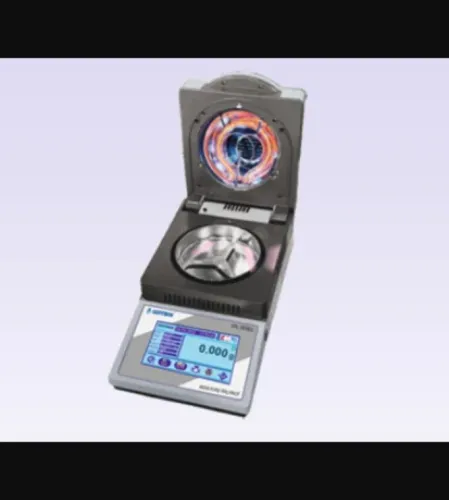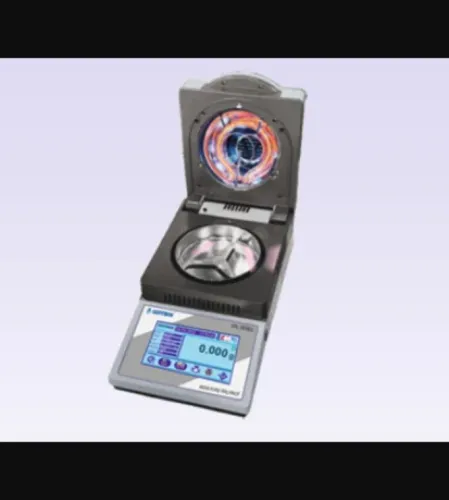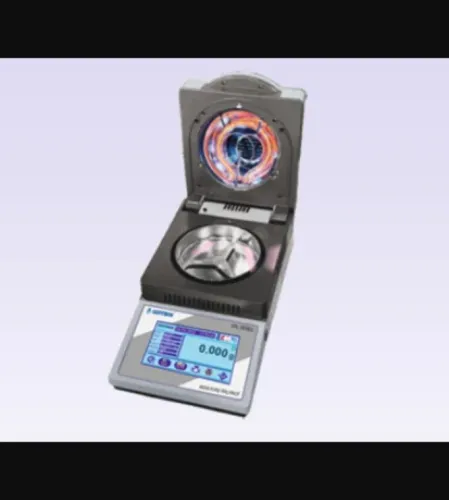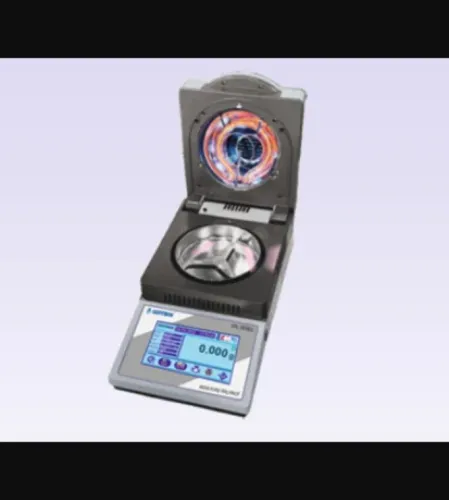

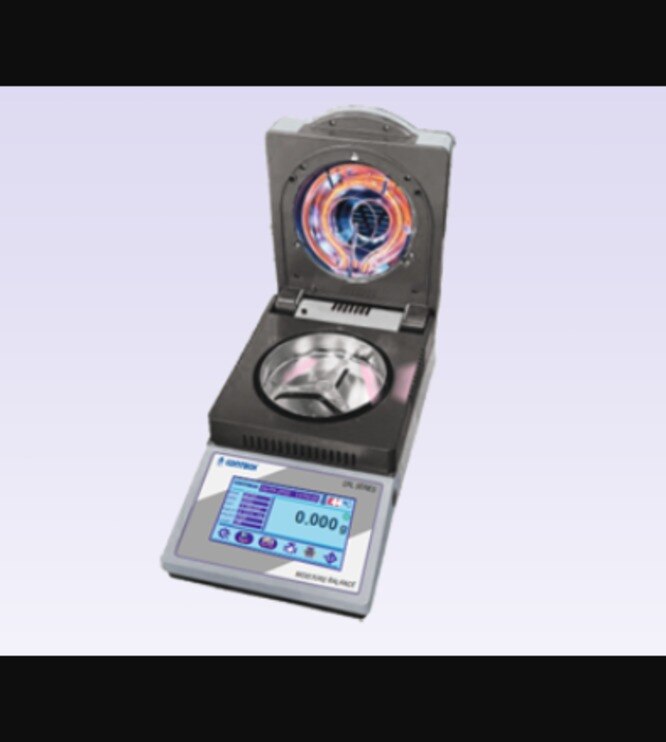
Unstable, slow, or implausible moisture results usually come from a mismatch between the sample, drying method, instrument condition, and Mumbai’s humid, changeable environment. Use a controlled fault-check sequence to identify the cause, correct the test, and confirm the result with replicate samples and an appropriate reference method.
Key takeaways
- Record room temperature and relative humidity with every moisture result.
- Transfer hygroscopic samples quickly in sealed containers.
- Match drying temperature and endpoint criteria to the material.
- Check weighing, heating, and software faults separately before changing the method.
Start with the symptom: unstable, drifting, slow, or impossible results
An unstable, drifting, slow, or impossible result needs a fault-isolation check, not an immediate change to drying temperature. For electronic moisture balance for measurement problems in mumbai, record room temperature and relative humidity beside every result; humidity changes during transfer can alter hygroscopic samples before heating starts.
- If the display jumps or the sample blows from the pan, stop drafts from air-conditioning, fans, doors, and extractors. Level the electronic moisture balance, allow warm-up, close the draft shield, and check that the chamber and lid close without obstruction.
- If the reading drifts with an empty, clean pan, suspect the balance mechanism, vibration, contamination, or unstable conditions. Run routine weighing calibration; a stable display does not prove the heating temperature is correct.
- If only one pan produces abnormal results, inspect it for dents, residue, poor seating, or excessive tare error. Replace it with a clean, dry pan and repeat.
- If the empty pan behaves correctly but samples dry slowly or stop implausibly, inspect the heater, temperature sensor, chamber vents, and method settings. Verify temperature separately from weighing calibration, then check endpoint, time limit, temperature, and shut-off criteria.
- If replicates disagree, mix the lot and test fresh portions before changing settings. A loss-on-drying result can include solvents, other volatiles, sublimation, or decomposition; compare the method with oven loss-on-drying or Karl Fischer rather than assuming every mass loss is water.
Prepare and load the sample without changing its moisture
A representative portion must reach the pan with its moisture unchanged. An electronic moisture balance reports mass loss, so spilled powder, splashing, or evaporation during handling appears as moisture measurement rather than a sampling error.
1. Mix the container gently, then take increments from different areas before combining them. Do not test only the surface, where drying or humidity exchange can make the sample unlike the batch.
2. Reduce particle size only enough to make the portion uniform. Large particles dry slowly and leave wet centres; excessive grinding generates heat and exposes more surface, causing moisture loss before weighing.
3. Use the sample mass specified by the validated method. Too little material magnifies balance noise; too much forms a thick layer that dries unevenly and prolongs moisture determination.
4. Prepare the pan beside the instrument, tare it where the procedure permits, and transfer the sample quickly with a consistent tool. Hygroscopic materials can gain or lose measurable mass within seconds in Mumbai’s humid air.
5. Spread the sample as a thin, even layer without touching the pan rim. Close the chamber promptly and keep the draft shield closed; air-conditioning, fans, doors, and powder blow-off can remove sample and falsely increase the result.
Record room temperature and relative humidity with each result. Treat bubbling, spattering, crusting, or blow-off as a failed preparation, not a valid reading; validate a slower ramp, lower temperature, larger particles, or a suitable disposable filter before repeating.
Choose heat and endpoint settings that match the material
Set the drying temperature from a validated method, not from the balance’s maximum setting. A higher temperature can scorch, caramelise, oxidise, or decompose the sample before all water leaves, producing a falsely high result.
| Heating approach | Benefit | Main risk |
|---|---|---|
| Gentle constant heat | Protects heat-sensitive or volatile materials | Drying may take longer |
| Stepwise heating | Removes surface moisture before stronger drying | A poorly chosen step can form a crust |
| Higher constant heat | Speeds simple, stable materials | Decomposition, splattering, or false endpoint |
Choose the endpoint from the drying curve: stop when successive mass readings remain within a validated change over a defined time. Do not accept a stable reading automatically. A crust can trap water beneath a dry surface, while decomposition can create continuing mass loss that the software mistakes for moisture.
For moisture determination, correlate the method for each important material against an appropriate reference. Oven loss-on-drying and Karl Fischer results can differ because they use different temperatures, endpoints, and definitions of removable material. An electronic moisture balance measures mass loss, not water alone; solvents, other volatiles, sublimation, and decomposition also count.
Test replicate portions from a well-mixed lot before changing settings. If results disagree materially, investigate sampling and homogenisation first. Then confirm the validated sample-mass range: an overloaded pan dries unevenly and defeats the endpoint, while an underloaded pan magnifies balance noise and handling losses.
Record the temperature profile, endpoint rule, and result for each moisture analysis method.
Separate weighing faults from heating and software faults
A stable displayed value does not prove that the heating system is correct. Separate the electronic moisture balance checks so a mass fault cannot be mistaken for a temperature, pan, sensor, or method fault.
1. Run the balance’s routine weighing calibration with suitable test weights, then check repeatability at the sample mass used. A failed or drifting result points to the weighing mechanism, not the drying programme.
2. Verify temperature with a calibrated device suitable for the instrument. Compare the actual temperature profile with the programmed setpoint; a correct displayed mass can still accompany an incorrect heating condition.
3. Remove residue from the pan using a material-compatible procedure, dry it completely, and inspect it for distortion. Deposits or a damaged pan change heat transfer, mass, and carryover between tests.
4. Inspect the temperature sensor and heating element for deposits, looseness, or physical damage. A dirty sensor can report a stable but false temperature, while deposits on the heater create uneven drying.
5. Run a known programmed method without changing its endpoint, ramp, sample mass, or time. Check that the instrument saves the intended values and stops for the intended reason rather than because of a software setting.
Loss-on-drying moisture analysis measures mass lost during heating, not water automatically. Record Mumbai’s ambient temperature and relative humidity with each result, then compare the method with oven loss-on-drying or Karl Fischer data for the same material; differing definitions can produce legitimate differences.
Confirm the fix and decide when the method needs support
A fix is credible only when replicate results agree under recorded conditions and the result matches an appropriate reference procedure. Run at least three portions from a thoroughly mixed lot using the same mass, spreading pattern, temperature, endpoint, and transfer time.
Record the evidence with every run:
- Replicate moisture measurement results, sample identification, operator, start time, and method settings
- Room temperature and relative humidity at sampling, loading, and testing
- Pan condition, balance check, temperature verification, and any displayed error
- Reference results from oven loss-on-drying or Karl Fischer analysis, with the procedure and endpoint stated
If replicates disagree materially, do not change the temperature first. A moisture gradient, inconsistent particle size, or humid-air exposure can create the spread; repeat sampling and homogenisation before blaming the balance. Stable readings that disagree with the reference still require investigation, because loss-on-drying also measures solvents, other volatiles, sublimation, or decomposition.
Compare trends, not one passing result. An electronic moisture balance for measurement problems in Mumbai needs tighter transfer control when hygroscopic samples gain mass in humid air.
If the disagreement persists after controlled handling and separate weighing and temperature checks, ask the supplier to review the method, pan loading, heating profile, and software endpoint using your raw data. CONTECH INSTRUMENTS LTD. can help determine whether the instrument setup is at fault or the material needs a different moisture analysis method.
Change the method when the reference procedure defines the material more appropriately than the current loss-on-drying cycle.
Related product
 | Moisture Balances Moisture Balances (CAL Series) (0.001 g to 180 g) Moisture Balances (CAL Series) (0.001 g to 180 g) The CONTECH CAL Series Moisture Balances are advanced moisture analyzers designed for fast,... View product → |
Frequently asked questions
Why does an electronic moisture balance produce unstable or drifting results?
Check drafts, vibration, leveling, pan cleanliness, sample transfer time, and room humidity before changing the drying temperature. Hygroscopic samples can gain or lose moisture during handling.
How should you prepare and load a sample for moisture measurement?
Use a representative, uniform sample, minimize exposure to ambient air, spread it evenly across the pan, and record its mass promptly. Keep the sample container closed until loading.
How do you choose drying temperature and endpoint settings?
Select a temperature that suits the material and does not cause decomposition, spattering, or surface sealing. Set the endpoint using stable mass loss and confirm it with a reference method.
How can you tell whether the fault is in weighing, heating, or software?
Test balance stability and repeatability separately, verify heater response and temperature control, then inspect method parameters, endpoint rules, and stored results.
When does a moisture determination method need technical support?
Request support when repeatability remains poor after environmental and loading checks, the heater fails to reach its setpoint, results disagree with a validated reference method, or the instrument reports recurring errors.