
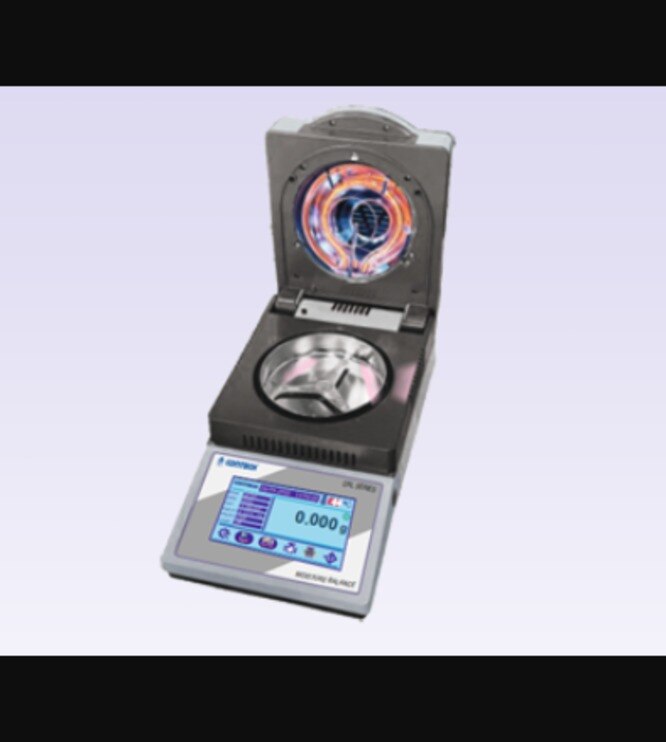
The purchase makes sense only when faster in-house testing, repeatable results, and lower outside-laboratory costs outweigh method-development, maintenance, and sample-handling demands. By comparing the measurement principle, suitable materials, competing methods, Mumbai operating conditions, and your actual test workload, you can make a defensible buy-or-outsource decision.
Key takeaways
- Calculate break-even tests using annual ownership cost and per-test savings.
- Choose drying temperature, time, and sample size for the material—not convenience.
- Record sample handling, method settings, and results to support defensible moisture analysis.
- Verify power, ventilation, calibration, service, and installation space before purchase.
When does an in-house moisture balance pay for itself?
A moisture analysis balance in Mumbai pays for itself when avoided outsourcing, courier charges, reporting delays, and operator time exceed its total annual ownership cost. Calculate break-even tests as: annual ownership cost ÷ (external test cost + courier and delay cost − in-house cost per test).
Include the purchase price, installation, operator time, consumables, calibration, maintenance, failed or repeated tests, and downtime—not the purchase price alone.
List your monthly tests, current laboratory fee, average reporting time, and the value of a same-shift process decision. Then run the same representative material through the proposed balance and the accepted reference method during dry and monsoon seasons, using different operators and repeat days. Record bias, repeatability, test time, failed runs, and consumable use.
- Buy when test volume is high, material is consistent, and production decisions cannot wait for an external report.
- Keep outsourcing or an existing oven for occasional tests, highly variable samples, or regulated results requiring independent laboratory confirmation.
- Treat Karl Fischer or another reference method as the safer comparison when heating causes decomposition or volatile loss.
| Option | Cost position | Best fit |
|---|---|---|
| External laboratory | Fee, courier, delay per test | Occasional or independently confirmed moisture analysis in Mumbai |
| In-house balance | Ownership cost plus low test cost | Frequent, consistent samples needing same-shift results |
| Existing oven | Labour and slower turnaround | Established methods with modest sample volume |
A readability of 0.001 g or 0.0001 g does not establish moisture-result accuracy; sample preparation, temperature, endpoint, and chemistry control it. A side-by-side trial is more reliable than catalogue specifications.
How does a moisture measurement balance calculate moisture?
A moisture measurement balance reports mass lost during heating, not water detected selectively. Its test sequence is:
- Place the empty drying pan on the balance and tare it.
- Add a known mass of the sample; this is the initial mass.
- Heat the sample under the selected temperature programme.
- Drying removes mass as water and other evaporated substances.
- The instrument weighs the residue and calculates the difference between initial mass and final dry mass.
Wet-basis moisture = (initial mass − final dry mass) ÷ initial mass × 100
Dry-basis moisture = (initial mass − final dry mass) ÷ final dry mass × 100
A sample with 10% wet-basis moisture has 11.11% dry-basis moisture. Put the reporting basis on specifications and quality records, because the two percentages are not interchangeable.
This is thermogravimetric loss-on-drying, not selective water measurement. Volatile oils, solvents, carbon dioxide, subliming compounds, and decomposition products can evaporate and appear as moisture.
The automatic endpoint is only a stopping rule: it might stop when the mass-loss rate falls below a threshold for a defined interval, or after a fixed drying time. It does not prove that all water has left the sample.
Digital moisture instruments also need two separate checks:
- Verify mass calibration with traceable weights.
- Verify heater and temperature performance separately.
A balance calibration cannot show that the heater, sensor, lid, or temperature distribution produced the correct drying conditions.
Which samples and methods produce a defensible result?
Loss-on-drying is defensible for powders, granules, food products, chemicals, polymers, paper, textiles, ceramics, and sludge when the material tolerates the selected heating programme. It is not a selective water test: solvents, oils, subliming compounds, or decomposition products also appear as moisture.
Prepare the sample carefully:
- Homogenise the batch and take a representative portion.
- Record the initial mass, then spread it in a thin, even layer.
- Keep the pan clean; contamination changes the final mass.
- Transfer the portion quickly from a sealed container to prevent moisture gain.
- Use a fibre pad or inert carrier for pastes and liquids that splatter or form a skin.
Large particles, poor mixing, overloaded pans, and thick layers trap water, lengthen drying, and produce irreproducible results. A moisture determination balance is therefore only as reliable as its preparation method.
| Option | Strength | Limitation |
|---|---|---|
| Oven plus analytical balance | Slower, familiar, and useful as a reference | Requires separate weighing and longer turnaround |
| Infrared or halogen heating | Shortens routine tests | More sensitive to temperature, sample loading, and endpoint settings |
| Karl Fischer titration | Selectively measures water at low concentrations or among other volatiles | Requires reagents, handling, and method-specific expertise |
| Outsourced laboratory testing | Adds independent confirmation | Costs shipping time and delays the result |
Use a moisture measurement balance only after checking thermal behaviour. Do not heat flammable solvents, explosive dusts, or samples releasing toxic or corrosive vapours without a documented safety assessment covering the instrument, ventilation, and site.
How should you develop a method for Mumbai conditions?
A repeatable reading can still be wrong if the sample changes during weighing. Develop the method from an accepted oven method or a controlled comparison, not from the factory preset.
Set these variables for each product:
- Heating temperature and ramp
- Sample mass and layer thickness
- Fixed drying time or endpoint criterion
- Number of repeat measurements
Excessive heat can cause crusting, splattering, caramelisation, oxidation, or decomposition. The instrument then reports a falsely high apparent moisture value.
| Check | Comparison | Warning sign |
|---|---|---|
| Endpoint | Automatic endpoint versus fixed-time oven result for each new matrix | Results disagree materially |
| Drying curve | Mass loss over the full programme | No plateau, sudden decomposition, or late moisture release |
| Repeatability | Repeated runs under the same method | Results vary after sample handling is controlled |
For moisture analysis in Mumbai, control exposure to humid coastal air and monsoon conditions. Hygroscopic powders, salts, paper, polymers, and foods can gain or lose water during weighing and transfer, so use sealed containers, short exposure times, and a documented conditioning procedure.
Check the laboratory’s air-conditioning, ventilation, direct airflow, and position near doors or exhausts. Air movement can disturb weighing, while changing room humidity can alter the sample before heating.
Ask the supplier for the digital moisture instruments’ specified operating temperature and humidity limits, then compare them with actual site conditions. Plan stable power or suitable protection so an interruption cannot stop a drying cycle. Record the sample season, room conditions, operator, programme, and whether the result is wet-basis, dry-basis, or apparent moisture.
What should you verify before buying and installing one?
Buy a moisture analysis balance in Mumbai only after it passes a trial on your materials, not because its catalogue lists a fine readability or wide moisture range. Test representative dry-season and monsoon samples against your accepted reference method, using different operators on repeat days.
Record these trial results:
- Bias against the reference method
- Repeatability on your own sample
- Test time, failed runs, and consumable use
- Wet-basis or dry-basis reporting
- Safe operation without splattering, decomposition, or harmful vapour release
A moisture determination balance needs two separate performance checks:
| Check | Evidence to request | Why it matters |
|---|---|---|
| Mass measurement | Calibration with traceable test weights | Confirms weighing accuracy |
| Heating system | Temperature test or documented manufacturer calibration procedure | Confirms heater, sensor, lid, and temperature performance |
| Method suitability | Written method-development support and comparison with the accepted method | Shows that the endpoint and temperature suit your matrix |
| Records | Certificates traceable to national or international standards | Makes results auditable |
Ask about local preventive maintenance, replacement pans and filters, and response time during monsoon or high-throughput periods. Confirm whether the supplier supports your intended method and whether customers or regulators accept loss-on-drying for your specific matrix.
Also identify who provides independent confirmation: the instrument supplier or a separate accredited laboratory. CONTECH INSTRUMENTS LTD. can be included in the Mumbai comparison for equipment evaluation, method setup, calibration records, and service access.
Ownership remains worthwhile when the trial shows acceptable bias and repeatability, the method is safe, and avoided outsourcing fees and delays exceed purchase, calibration, maintenance, and consumable costs.
Related product
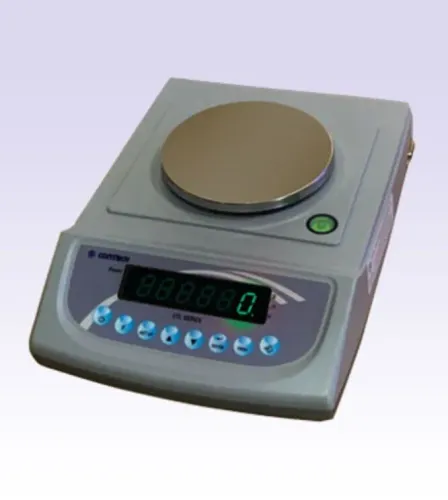
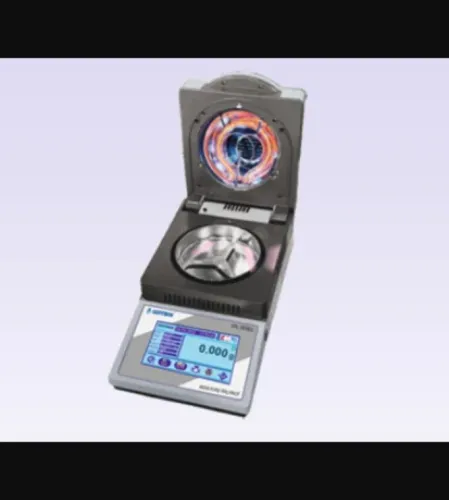
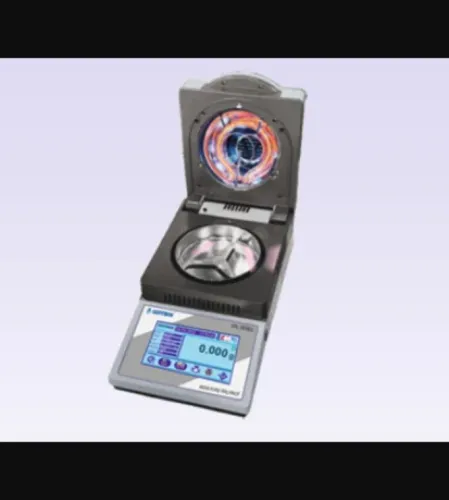
 | Moisture Balances Moisture Balances (CAL Series) (0.001 g to 180 g) Moisture Balances (CAL Series) (0.001 g to 180 g) The CONTECH CAL Series Moisture Balances are advanced moisture analyzers designed for fast,... View product → |
Frequently asked questions
When does an in-house moisture balance pay for itself?
Calculate break-even tests by dividing annual ownership cost by external test cost plus courier and delay costs minus in-house cost per test. Buy when your expected test volume exceeds that figure and you can maintain reliable results.
How does a moisture measurement balance calculate moisture?
It weighs the sample, heats it to remove moisture, and weighs it again. The instrument calculates moisture loss as a percentage of the original sample mass, using the selected temperature, drying endpoint, and method settings.
Which samples and methods produce a defensible moisture result?
Use a representative, well-mixed sample and document its mass, preparation, temperature, drying endpoint, and repeatability. Validate the method against a reference procedure or an independently tested result before using it for decisions.
How should you develop a moisture balance method for Mumbai conditions?
Control sample storage and handling, then test drying temperature, sample quantity, spreading thickness, and endpoint settings. Record ambient conditions when humidity affects the sample and confirm results with repeat tests.
What should you verify before buying and installing a moisture balance?
Check weighing capacity and readability, temperature range, repeatability, calibration options, power requirements, ventilation, bench stability, service support, consumables, and the space needed for safe operation.