
A CAL Series balance measures mass; it does not establish that lost mass was water. To obtain a defensible result, you need a controlled loss-on-drying procedure, suitable sample preparation, a validated heating endpoint, and records that distinguish moisture from other volatile losses.
Key takeaways
- Use LOD only when heating loss represents water.
- Weigh a representative sample quickly in a sealed workflow.
- Set temperature and endpoint from the material’s behaviour.
- Repeat measurements and document the calculation and method settings.
Choose LOD only when mass loss represents water
Choose loss on drying (LOD) only when the mass lost during heating has been shown to represent water. A CAL Series balance measures mass; it does not identify what evaporated. Therefore, a moisture analysis method for cal series balance in navi mumbai requires controlled heating, cooling, repeat weighing, and a defined endpoint—not balance-only weighing.
| Method | What it measures | Use it when |
|---|---|---|
| Loss on drying | Total mass lost during a validated drying cycle | Water is the principal volatile component, and the material does not decompose or release solvents, fragrance, or other volatiles |
| Karl Fischer titration | Water specifically | The specification is water content, or non-water volatiles make LOD non-selective |
| Balance-only weighing | Sample mass | Never as a moisture result; it provides no evidence that lost mass was water |
Validate LOD against the material’s known behaviour. A high temperature can cause decomposition, crust formation, splattering, or loss of non-water compounds; a low temperature can leave bound moisture behind. If either occurs, the reported “moisture” is misleading.
In Navi Mumbai’s humid coastal air, a hygroscopic sample can regain water during cooling and weighing. Use sealed containers, dry preconditioned pans, a covered balance area, and consistent transfer times. If the LOD result changes with handling or fails comparison with Karl Fischer, choose the water-specific method.
Prepare and weigh a representative sample without moisture gain
Use a portion that represents the whole lot, not the easiest material to reach. Mix the container thoroughly, divide it using a consistent sampling plan, and take the test portion immediately. Record whether the result is based on wet mass, dry mass, or total sample mass.
1. Close the original container as soon as you remove the portion. Keep hygroscopic materials in a sealed vessel and minimise exposure to room air.
2. Homogenise the portion before weighing. Grind or mill coarse material only when the validated method requires it; use the same equipment and duration each time because grinding can warm the sample and drive off water.
3. Break up clumps and remove large particles that could trap a wet interior beneath a dry surface. Do not selectively discard fines, skins, or other fractions that belong to the product.
4. Place the clean, dry sample pan on the balance, centre it, allow the reading to stabilise, and tare it. Confirm that the displayed zero remains stable before adding material.
5. Add the prescribed sample mass promptly. Spread it as a thin, even layer across the pan rather than leaving a mound; use the same mass and layer thickness for every replicate.
6. Close the balance chamber, wait for a stable reading, and record the initial mass, sample identity, batch, pan ID, and time. Start the moisture measurement without delay.
7. If using an oven with a conventional balance, transfer the sample to the oven promptly. Cool the pan in a desiccator before the final weighing; never weigh a hot pan or leave a hygroscopic sample exposed on the bench.
Set temperature and endpoint for the material, not by habit
Choose the lowest validated temperature that removes water without altering the sample. A higher setting shortens drying but can cause decomposition, crust formation, splattering, or loss of non-water volatiles; a lower setting reduces those risks but can leave internal moisture behind.
| Material type | Temperature strategy | Endpoint and time |
|---|---|---|
| Heat-sensitive, sugar-rich, or volatile samples | Start low and increase only after checking for browning, bubbling, or mass loss unrelated to water | Constant mass; use a longer cycle |
| Powders and finely divided solids | Use a moderate validated setting and spread a thin, even layer | Constant mass; confirm the surface has not crusted |
| Granules, flakes, or viscous materials | Use a lower setting or staged heating to prevent a dry surface over a wet interior | Reheat and reweigh until stable |
| Mineral or thermally stable solids | A higher validated setting can reduce drying time | Fixed time only after repeat tests show equivalent results |
For a moisture determination analyzer, define sample mass, pan type, layer thickness, temperature, and the initial drying period together. During method development, compare the analyzer result with the laboratory reference method across the expected moisture range; one matching sample proves little.
Prefer a constant-mass endpoint when lots vary. Reheat for a documented interval, then check two successive masses; accept the result only when their difference is within the pre-set tolerance. Record temperature stability, reheat interval, tolerance, and whether the endpoint is moisture percentage or dry matter.
If the signal keeps drifting, investigate decomposition, splattering, poor mixing, or a wet interior before extending the moisture analysis indefinitely.
Calculate, verify, and document the moisture result
Use wet-basis moisture unless your specification states otherwise:
Moisture (%) = [(initial sample mass − dried sample mass) ÷ initial sample mass] × 100
Dry matter (%) = (dried sample mass ÷ initial sample mass) × 100
For a dry-basis moisture result, calculate [(initial mass − dried mass) ÷ dried mass] × 100. Never interchange wet-basis and dry-basis values; the same sample can produce very different percentages.
Check repeatability with replicate portions from the same homogenized sample, using identical sample mass, layer thickness, temperature, and endpoint. Record each result, then calculate the mean, range, and, where required, standard deviation. Set the acceptable repeatability limit before routine testing. A moisture determination analyzer that reports several decimal places does not prove good repeatability.
Investigate inconsistent results in this order:
- Re-mix the material and check for particle-size or clumping differences.
- Confirm the sample did not gain moisture during cooling or weighing.
- Check pan centering, balance stabilization, calibration, and working-range performance.
- Review temperature stability, drying time, and endpoint behavior.
- Compare the analyzer result with the laboratory reference method using replicate portions.
Document the sample identity, preparation, initial and final masses, program temperature, endpoint criterion, replicate results, mean, calculation basis, instrument identification, date, and any deviation. A defensible result statement names the method and basis, for example: “Moisture: 8.42% wet basis by loss on drying at 105°C to constant mass; mean of three determinations.”
Validate the method before choosing an analyzer for Navi Mumbai use
A moisture analysis method for CAL Series balance in Navi Mumbai must survive a side-by-side trial with your laboratory reference method before routine use. Test the actual product, not a substitute material, across low, typical, and high moisture levels, using replicate portions from the same homogenized batch.
| Comparison | What to record | What failure means |
|---|---|---|
| Reference method versus moisture determination analyzer | Moisture result, dry-matter result, bias, and replicate spread | Agreement on one sample is not method equivalence |
| Drying time and endpoint | Time to stable mass, final mass change, and endpoint repeatability | A short cycle may stop before the wet interior dries |
| Sample preparation | Sample mass, particle size, layer thickness, grinding time, and transfer time | Preparation, not readability, is driving variation |
| Instrument performance | Repeatability, eccentric-load error, linearity, and traceable-weight checks | A precise-looking percentage may rest on faulty weighing |
| Environmental control | Temperature, relative humidity, sealed storage, and pan exposure time | Coastal humidity is changing the sample before heating |
Set acceptance limits before testing, including allowable bias, repeatability, maximum cycle time, and rounding. Record whether results are percent moisture or total solids, the sample basis, temperature program, endpoint, and replicate policy.
In Navi Mumbai, use sealed containers, preconditioned dry pans, a covered weighing area, and consistent transfer times. If you trial a CAL Series instrument through CONTECH INSTRUMENTS LTD., require the same documented protocol and raw results that your laboratory will use after installation.
Related product
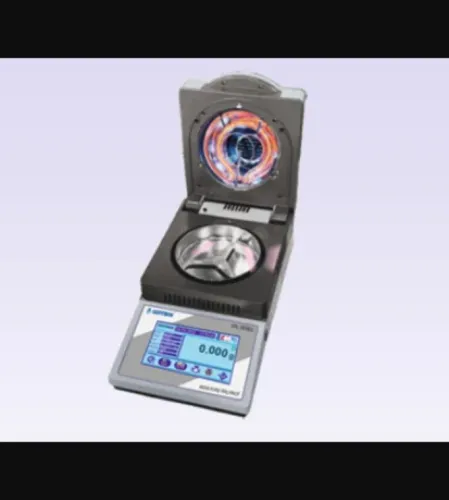
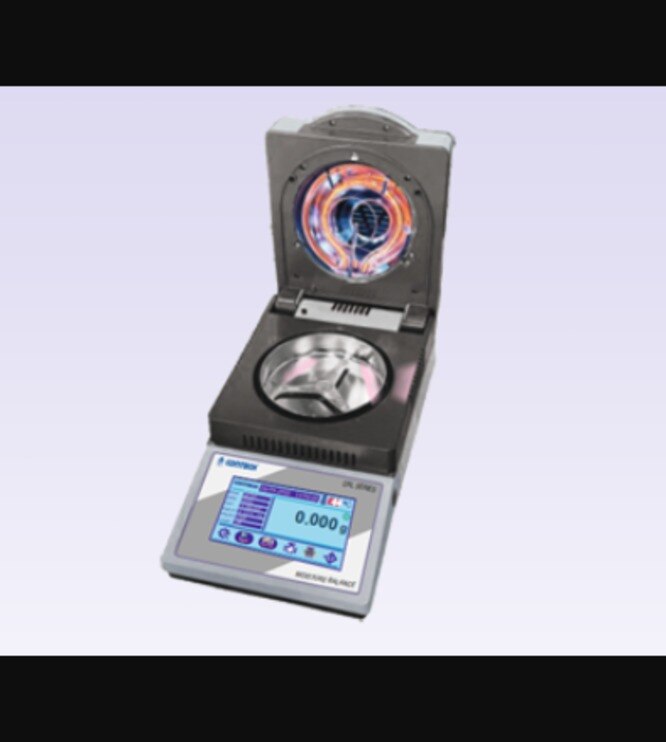
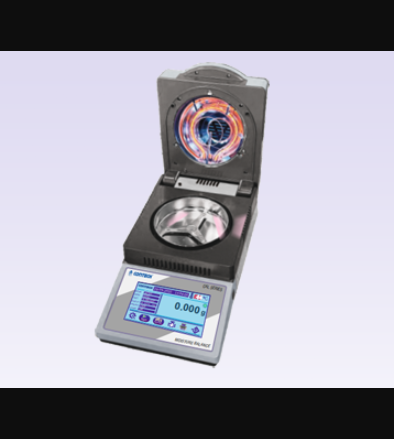 | Moisture Balances Moisture Balances (CAL Series) (0.001 g to 180 g) Moisture Balances (CAL Series) (0.001 g to 180 g) The CONTECH CAL Series Moisture Balances are advanced moisture analyzers designed for fast,... View product → |
Frequently asked questions
When is loss on drying suitable for moisture analysis?
Use LOD when you have shown that the mass lost during heating represents water rather than solvents or other volatile components.
How do you prevent moisture gain during sample preparation?
Use a representative, well-mixed sample, minimise exposure to ambient air, and weigh it promptly in a covered or sealed workflow.
How should you choose the drying temperature and endpoint?
Choose a temperature that removes water without decomposing the material, then stop when repeated readings meet a defined constant-mass or time-based endpoint.
How do you verify and document a moisture result?
Calculate moisture from initial and final mass, repeat the test, compare results with your acceptance limit, and record sample details, temperature, endpoint, and balance settings.
What should you validate before choosing a moisture analyzer in Navi Mumbai?
Validate accuracy, repeatability, sample throughput, heating control, endpoint performance, ventilation needs, and suitability for the materials you will test.