
The right gold-testing method depends on whether you need a fast buying decision, a non-destructive inventory check, or a defensible measurement of bulk gold content. By comparing test methods, sample limitations, reporting formats, workflow demands and operating controls, you can specify equipment that fits your jewellery volume instead of paying for features you cannot use.
Key takeaways
- Choose XRF for rapid, non-destructive jewellery screening.
- Use repeatable sample placement and documented test settings.
- Match the analyzer to your testing volume, workspace, and staff.
- Escalate disputed or high-value results beyond one machine reading.
Start with the decision your test must support
Choose the method according to the decision your jewellery business must make: rapid, non-destructive screening for buying and selling, or a defensible measurement of bulk gold content for high-value settlement. A gold testing machine that suits a retail counter may be wrong for a supplier dispute.
| Method | What it supports | Best fit |
|---|---|---|
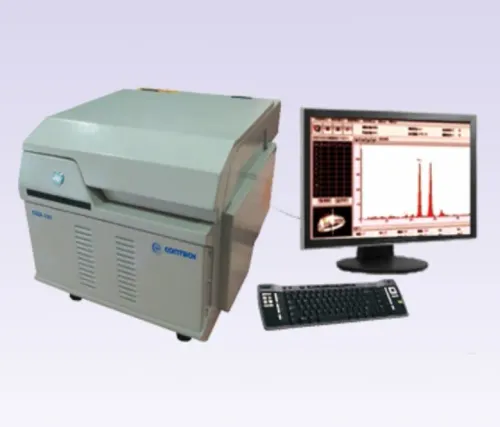
| XRF gold analyzer | Fast, non-destructive elemental screening | Receiving stock, purchase decisions, inventory checks and customer-facing verification |
| Touchstone and acid | Low-cost comparison against reference needles | Preliminary sorting when marks, abrasion and operator variation are acceptable |
| Electronic gold tester | Conductivity or related comparative readings | Quick secondary checks, not a standalone basis for disputed settlement |
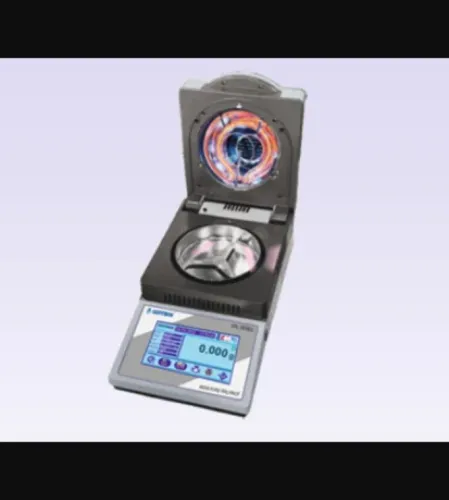
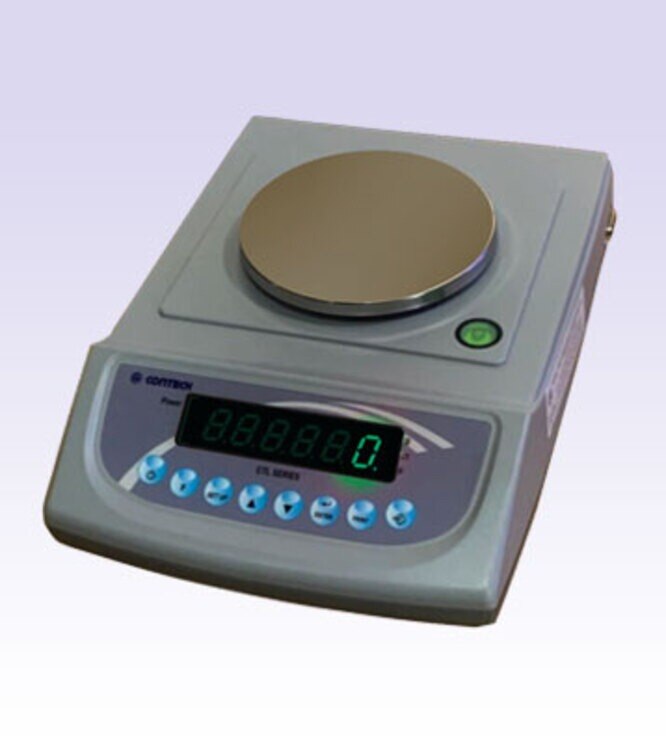
| Weighing and density checks | Mass and apparent density, not alloy purity alone | Supporting evidence alongside another test |
| Fire assay by cupellation | Destructive determination of bulk gold content | High-confidence settlement, arbitration or cases where preserving the item matters less than the result |
Select XRF when you need to test many pieces without damaging them, but do not treat every reading as the article’s complete composition. Plating, solder, dirt, fire-scale or a gold-rich surface can make the result differ from the core alloy.
Before buying a gold tester, list where decisions occur: supplier receiving, retail sales, stock control or settlement. If a reading can trigger a disputed payment, define the independent reference method and acceptance limit first; a tightly repeated result is not useful if the calibration is biased.
Understand what an XRF result actually measures
An XRF gold analyzer reports elemental composition from characteristic fluorescent X-rays emitted by the irradiated spot. It estimates gold and other elements in that sampled region, rather than weighing the article or proving the composition of its entire mass. A result such as 750‰ describes the measured area, not automatically every part.
| Condition | Why the reading can differ from the article’s true composition | What to do |
|---|---|---|
| Gold plating or wash | The beam samples a gold-rich outer layer while the core contains less gold | Measure several spots and escalate if the value matters |
| Soldered joins | Solder changes the local alloy and can produce a result unlike the main body | Test away from joins, then test the join separately |
| Dirt, lacquer or fire-scale | Contamination or oxidation sits between the beam and the alloy | Clean the surface and repeat the measurement |
| Heterogeneous construction | Different components, hollow sections or inserts have different compositions | Test each component instead of averaging one spot |
A gold purity tester can give tightly clustered readings and still be biased by unsuitable calibration. Check repeatability by measuring the same spot repeatedly; check bias against a certified reference material or an independent method.
For a disputed or high-value transaction, use XRF as screening, inspect multiple locations, and obtain a cross-sectional test or fire assay when the settlement requires a bulk result. Number of reported elements alone does not establish accuracy.
Build a repeatable testing routine
A consistent result requires the same preparation, position and verification sequence for every article. A gold testing machine can produce tightly clustered readings that are still wrong if its calibration does not suit the alloy or surface being tested.
1. Clean and dry the test area. Remove dirt, polishing compound, lacquer and loose plating without removing the metal you intend to measure.
2. Place the article flat and stable in the sample chamber or fixture. Centre the measurement spot, keep it away from stones, cavities, soldered joints and sharp edges, and use the same spot size and measurement time for comparable items.
3. Measure several locations, including the main body, a worn area and a join. Plating, vermeil and solder can make one surface reading look representative when the article is not homogeneous.
4. Repeat the same spot without moving the article. Tight agreement between repeated readings demonstrates short-term repeatability; it does not prove that the result is unbiased.
5. Check bias with a suitable certified reference material or an independent method. Record whether the gold analyzer reports elemental gold percentage, fineness in parts per thousand, karat-equivalent output or a pass/fail decision, including the measurement uncertainty and calibration basis.
6. Escalate articles with conflicting spots, visible wear, thin coatings or high dispute value to cross-sectional or destructive analysis. Do not accept a single XRF reading as proof of bulk composition.
Keep the article identity, location tested, readings, unit and operator in the same record. That history makes drift visible and keeps buying decisions comparable.
Match the equipment to your business scale and site
A small shop should buy for its daily queue, not for a laboratory it does not have. Specify the number of articles tested per day, acceptable test time, jewellery size, available bench space and whether the gold tester is for preliminary buying decisions or customer-facing reports.
1. Small shop: Choose touchstone-and-acid testing for low-cost preliminary sorting, but specify an XRF unit when you buy valuable articles, test plated items or need non-destructive records. Require a compact chamber, simple software, repeatable results and a service plan; acid alone leaves marks and depends heavily on operator judgement.
2. Growing retailer: Specify a benchtop XRF gold analyzer with a chamber that accepts bangles, chains and larger lots, multiple measurement spots, saved results and user access controls. Ask for calibration support, certified reference materials, training, maintenance intervals and a defined response time for breakdowns.
3. High-volume operation: Specify throughput, automatic or guided measurement routines, barcode or inventory integration, result export and enough sample-positioning capacity for receiving and settlement work. Keep fire assay available for disputes or transactions where bulk composition must be established.
4. Any site: Treat an XRF instrument as radiation-producing equipment, not simply a portable gold tester. Before purchase, obtain shielding and interlock details, applicable Indian regulatory documentation, operator-training records and installation requirements.
For a gold testing machine for jewellery businesses in Navi Mumbai, CONTECH INSTRUMENTS LTD. is one supplier to evaluate against those service, documentation and workflow requirements rather than detector labels alone. A low purchase price becomes expensive when calibration, repairs or radiation-safety paperwork are unclear.
Related products
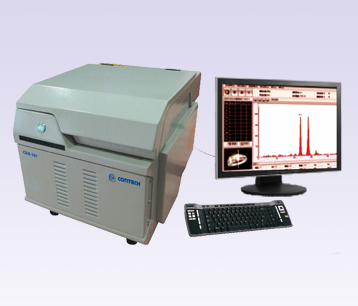 | X-RAY FLUORESCENCE SPECTROMETERS GOLD PURITY CHECKING INSTRUMENTS Gold Purity Checking Balance Gold Purity Checking Balance Manufacturer, Supplier & Exporter Our Gold Purity Checking Balance is designed for... View product → |
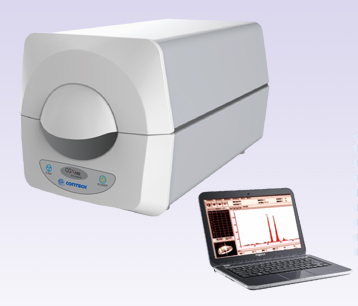 | X-RAY FLUORESCENCE SPECTROMETERS X-Ray Fluorescence Spectrometer – Gas Proportional XRF Detector CGX-101 / Silicon-PIN XRF Detector C GOLD PURITY CHECKING INSTRUMENTS X-Ray Fluorescence Spectrometer – Gas Proportional XRF Detector CGX-101 / Silicon-PIN XRF Detector CGX-102 X-Ray... View product → |
Know when to escalate beyond a machine reading
A single XRF result is not proof that a jewellery article is homogeneous. A gold analyzer measures characteristic fluorescent X-rays from the irradiated region, so plating, solder, fire-scale, dirt or a gold-rich outer layer can misrepresent the core alloy.
Escalate beyond routine screening when:
- The article is plated, visibly worn, repaired, soldered, lacquered or joined, especially near the test point.
- Two spots produce materially different results, or repeated readings cluster tightly but conflict with the hallmark, purchase record or expected alloy.
- The transaction is high-value, disputed or requires a defensible bulk-gold result.
Start by cleaning the surface and testing multiple locations, including joins and worn areas. If the inconsistency remains, use a surface-removal or cross-section procedure, or send the piece to an independent laboratory. Repeating one location checks repeatability; comparison with a certified reference material or independent method checks calibration bias.
A gold purity tester can be precise and still consistently wrong.
Choose fire assay by cupellation when settlement depends on total gold in the alloy rather than preserving the item. The laboratory separates and weighs the gold after cupellation and parting, giving a bulk result, but the process destroys the sample and is too slow for routine receiving or retail checks.
Use XRF for screening, then fire assay when the financial or dispute risk justifies destruction.
Frequently asked questions
What decision should guide your choice of gold testing machine?
Choose rapid, non-destructive screening when buying or selling jewellery; use a defensible bulk-content measurement for high-value settlement or disputes.
What does an XRF gold analyzer measure?
An XRF analyzer measures the elemental composition at the tested surface area, so the result can differ from the composition inside a plated, coated, soldered, or layered item.
How do you build a repeatable gold-testing routine?
Use consistent sample placement, clean the test area, record the item and result, and repeat readings when the result conflicts with the hallmark or transaction value.
When should you escalate beyond a machine reading?
Escalate when results conflict, the item has plating or repairs, the value is high, or a buyer and seller need defensible bulk gold content rather than surface screening.
Related products
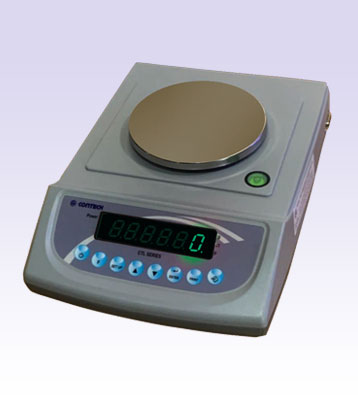 | GEM AND JEWELLERY BALANCES Gold Scales (0.01 g to 3 kg) The CONTECH Gold Scales are precision electronic weighing systems specially designed for accurate weighing of gold... View product → |
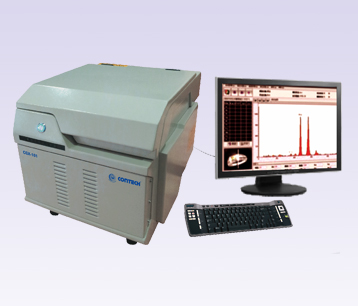 | X-RAY FLUORESCENCE SPECTROMETERS X-Ray Fluorescence Spectrometer – Gas Proportional XRF Detector CGX-101 X-Ray Fluorescence Spectrometer – Gas Proportional XRF Detector CGX-101 The X-Ray Fluorescence Spectrometer – Gas Proportional XRF Detector CGX-101... View product → |