
A 180 g maximum load does not tell you whether an analyser suits a 2 g powder, a foaming paste, or a bulky leaf sample. You will be able to select capacity from the actual wet portion, pan geometry, drying behaviour, environmental conditions, and validated result quality rather than from the largest number on a specification sheet.
Key takeaways
- Size capacity for the validated wet portion and total loaded weight.
- Match sample mass and pan area to the material’s drying behaviour.
- Separate moisture calculation errors from repeatability and ambient humidity effects.
- Specify the drying method before comparing moisture balance instruments.
Choose capacity from the validated wet portion, not the headline maximum
A 50 g wet portion can be the wrong choice even inside a 200 g moisture analyser. Select capacity from the largest validated routine portion, including the sample, pan or crucible, and any loading holder—not from the headline maximum.
| Rated capacity | Best fit | Main caution |
|---|---|---|
| About 50–54 g | Gram-scale validated portions | Do not overload the pan with bulky material |
| About 120 g | Larger vessels or low-density samples | More capacity does not improve small-sample results |
| About 200 g | Very bulky materials or heavy vessels | Large loads can dry slowly and unevenly |
Taring removes the displayed mass of the pan and holder; it does not protect an overloaded weighing cell. Ask the supplier to state both the maximum sample-plus-pan load and the tare range.
A roughly 50–60 g model suits most gram-scale validated portions, while 120 g or 200 g is justified when the method genuinely requires bulky, low-density material or heavier vessels.
Do not treat capacity as sample-preparation capacity. A larger analyser does not replace a separate balance used to portion samples accurately before heating. For an electronic moisture balance in Pune, specify the validated wet portion, pan geometry, maximum sample-plus-pan load, and tare range rather than asking only for the largest available model.
The usable portion must still spread thinly across the heated area; filling the pan near its limit can create crusting, temperature gradients, slow moisture diffusion, and a falsely early endpoint.
Set sample mass and pan area for the material’s drying behaviour
A 50 g wet sample is unsuitable even below the rated capacity if it expands, foams, splashes, forms a hard crust, or spills beyond the heated pan area. A deep load also creates temperature gradients and slows moisture diffusion, producing an early endpoint or uneven drying.
Use a portion that matches the material and the usable pan area:
- High-moisture samples: use a small, representative portion that remains contained during foaming or expansion.
- Low-moisture samples: use a larger validated portion to reduce the relative effect of evaporation and readability. Large loads still extend drying time and increase uneven heating.
- Powders: spread them broadly in a thin, even layer; do not create a deep central pile.
- Pastes and slurries: apply a controlled, repeatable thickness rather than filling the pan.
- Granules and food pieces: use consistent particle size so one portion does not dry faster than another.
- Leaves: cut or fold them under a validated method so they stay within the heated area.
- Chemicals: confirm pan compatibility and load them safely; reactions, corrosion, or splashing can invalidate the result.
With 1 mg readability, one balance increment represents about 0.10 percentage point at 1 g and 0.02 percentage point at 5 g, before repeatability and endpoint variation. More sample does not correct unrepresentative sampling.
Grinding can improve uniformity, but excess grinding heats the material or exposes hygroscopic surfaces to Pune air; include preparation and transfer time when validating a moisture balance instrument in Pune.
Separate moisture mathematics from repeatability and Pune’s ambient effects
A 0.001 g display does not guarantee a trustworthy moisture result. At a 1 g portion, one balance increment represents about 0.10 percentage point; at 5 g, about 0.02 percentage point. These are idealised figures, and repeatability, evaporation during loading, sample heterogeneity, and endpoint variation can be larger.
Wet-basis moisture = mass lost ÷ initial wet mass × 100. Dry-basis moisture = mass lost ÷ final dry mass × 100. Results reported on different bases cannot be compared without conversion.
| Factor | What to verify | Failure consequence |
|---|---|---|
| Repeatability | Replicate portions give similar results | A fine display masks unstable readings |
| Temperature | Stability throughout the programme | Changing heat alters mass loss |
| Heating uniformity | The whole sample receives comparable heat | Surface dries while the centre remains wet |
| Endpoint detection | The stated stop criterion repeats | Drying time, and result, drifts |
| Sample heterogeneity | Portions represent the batch | One test reflects an unusual particle or lump |
| Loading loss | Mass is stable between container opening and start | Evaporation becomes reported as moisture |
For a moisture analyzer balance in Pune, seal samples, equilibrate the instrument and sample, then open and load them in a controlled step. Monsoon humidity can add water to hygroscopic material; air-conditioning changes, drafts, static charge, and warm samples can shift the result. Use draft protection and static control, and document the collection-to-test interval.
Capacity cannot correct for water gained or lost before loading. If grinding is necessary, control heat, exposure time, and transfer speed; otherwise preparation itself changes the sample before weighing.
Choose the drying method before choosing the capacity
A thermogravimetric analyser measures total mass loss, not water alone. Volatile solvents, oils, chemically reactive samples, oxidising materials, or decomposing products can therefore create a false “moisture” result.
| Option | Appropriate choice | Wrong choice |
|---|---|---|
| Electronic or halogen moisture analyser | Fast routine LOD testing when heating and endpoint are validated | Samples that lose non-water components or lack a validated temperature programme and endpoint criterion |
| Infrared analyser | Rapid screening where infrared heating gives repeatable results for the specific matrix | Methods sensitive to uneven heating, crust formation, oxidation, or decomposition |
| Conventional oven plus balance | Established, slower reference methods when throughput matters less | Rapid release testing or samples that change during long heating and cooling |
| Karl Fischer titration | Water-specific measurement for suitable liquids or solids | Insoluble, reactive, poorly extractable, or chemically interfering samples without a validated procedure |
Choose Karl Fischer when the question is “how much water?” Choose oven drying when an established reference method matters more than speed. Reject every option that has no validated temperature programme and endpoint criterion.
At purchase, compare heating profile, temperature range and stability, repeatability, pan geometry, endpoint settings, and method memory alongside capacity. Two instruments with the same rated load can produce different results.
A buyer seeking a digital moisture balance in Pune can ask CONTECH INSTRUMENTS LTD. to match the configuration to the validated sample method, rather than selecting capacity alone. The method must define whether mass loss represents water before the instrument earns a place in routine testing.
Related product
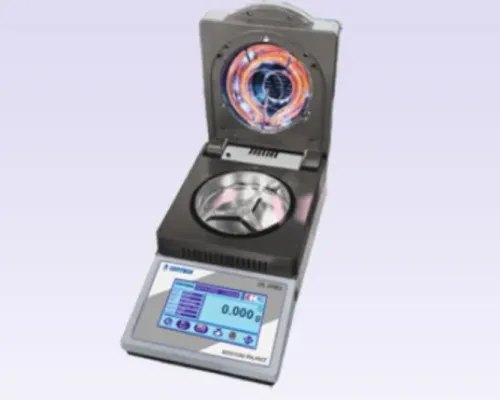
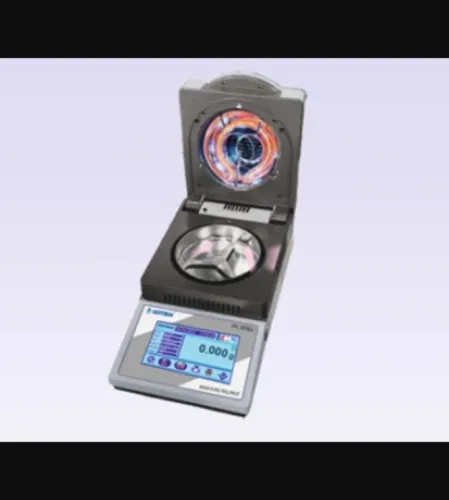
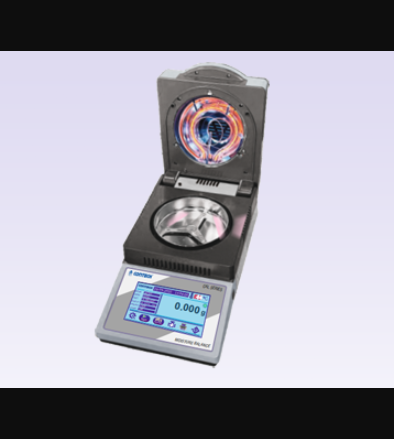 | Moisture Balances Moisture Balances (CAL Series) (0.001 g to 180 g) Moisture Balances (CAL Series) (0.001 g to 180 g) The CONTECH CAL Series Moisture Balances are advanced moisture analyzers designed for fast,... View product → |
Convert the decision into a Pune laboratory purchase specification
Write the quotation request as a measurable capacity-and-method specification, not “moisture balance, 180 g.” Require the supplier to state the maximum sample-plus-pan load, tare range, readable increment, repeatability, temperature range and stability, heating technology, pan diameter, usable spreading area, endpoint options, stored method capacity, and largest validated routine portion—not the largest amount that physically fits.
| Item | Supplier must state | Validation plan must record |
|---|---|---|
| Capacity | Sample-plus-pan limit, tare range, readable increment | Largest routine portion that passes |
| Heating | Technology, temperature range, stability | Programme and temperature uniformity |
| Pan | Diameter and usable spreading area | Thin, even coverage without crusting or overflow |
| Endpoint | Modes and settings | Endpoint time and numerical acceptance limit |
| Methods | Number of stored methods | Method identification and locked parameters |
Request replicate tests using the real powder, paste, granule, leaf, food, chemical, or slurry under normal Pune monsoon humidity and air-conditioning conditions. Compare results with the chosen reference method and record whether reporting is on a wet or dry basis.
Keep preparation, grinding, container opening, loading, and sample-to-test timing identical for every replicate. Define numerical acceptance limits for repeatability, reference-method difference, and endpoint time.
This specification stops high capacity from hiding poor sampling, evaporation during transfer, or unsuitable drying conditions.
Frequently asked questions
How should you choose an electronic moisture balance capacity?
Choose capacity from the largest validated routine load, including the sample, pan or crucible, and loading holder. Do not choose solely from the instrument’s headline maximum.
How do sample mass and pan area affect moisture results?
Set sample mass and pan area to produce an even, representative layer. A thick or uneven sample dries slowly and can reduce repeatability even when the balance capacity is adequate.
How do you separate moisture mathematics from repeatability problems?
Check the moisture calculation separately from repeatability. Confirm sample preparation, weighing performance and endpoint settings, then assess Pune’s ambient temperature and humidity as environmental influences.
Why choose the drying method before the moisture balance capacity?
Drying method controls how the sample behaves under heat. Select the method—such as timed drying, constant-weight drying or an endpoint based on moisture loss—before comparing capacity and other specifications.