
Chemical laboratories need more than a quick percentage on a display: they need a repeatable way to prepare, heat, weigh, and interpret each sample. By the end, you will be able to run a defensible moisture test, identify sources of error, and choose between a moisture balance, oven method, Karl Fischer titration, and thermogravimetric analysis.
Key takeaways
- Use the same sample mass, pan, heating programme, and endpoint every time.
- Grind or mix samples consistently; uneven preparation changes moisture measurement results.
- Confirm water loss with method development before treating mass loss as moisture content.
- Choose an analyzer by sample size, temperature range, endpoint control, and calibration records.
How to run a repeatable loss-on-drying test
A repeatable loss-on-drying test requires the same sample condition, heating programme, endpoint, and handling each time. A moisture balance measures initial mass and final dry mass; the moisture content determination is calculated as (initial mass − final dry mass) ÷ initial mass × 100.
1. Homogenise the sample and reduce large particles without grinding away moisture. Work quickly with hygroscopic powders, and record the sample identity, batch number, and preparation time.
2. Level the moisture balance on a stable, draft-protected bench. Allow it to warm up, use the same pan type, and confirm the balance and temperature checks are current.
3. Place a clean, dry pan in the chamber, close the heater, and tare it. Add a representative mass that gives a measurable signal without creating a deep layer; spread it evenly across the pan.
4. Select a temperature validated for the material. Use a lower temperature for heat-sensitive chemicals, polymers, or samples containing volatile solvents; a higher setting is suitable only when it does not cause decomposition, splashing, or crust formation.
5. Use a fixed drying time or an endpoint such as a mass change below a defined value over a set interval. Do not compare results produced by different criteria.
6. Let the pan cool in a covered, dry condition before final weighing if the instrument does not weigh hot. Prevent room-air moisture from re-entering the sample.
7. Record initial mass, final mass, temperature, drying time, endpoint, method ID, and result. Repeat the test and investigate a large difference rather than averaging unexplained failures.
How sample preparation and heating change the result
A representative sample mass gives a more reliable moisture measurement than maximum pan capacity. Use the validated mass for the material: too little magnifies weighing error, while too much forms a thick layer, slows drying, and creates temperature gradients.
Crush or homogenize coarse solids without warming them, then spread the sample evenly in a thin layer covering the pan without touching its rim.
Control preparation this way:
- Break agglomerates to a consistent particle size, but do not grind materials that lose moisture during handling.
- Tare the clean, dry pan, load quickly, and record the initial mass before the sample absorbs room humidity.
- Keep the layer shallow and continuous; exposed pan areas can overheat the sample, while piled material can retain internal moisture.
- Select temperature and drying time from the material’s reference method, not from a universal instrument setting.
- Use a gentle program for volatile chemicals and a staged or lower-temperature program for polymers and heat-sensitive compounds.
- Set automatic endpoint detection to stop only after the mass-change rate stays below the chosen threshold for the defined period.
| Material | Heating control | Endpoint warning |
|---|---|---|
| Inorganic salts | Use the validated temperature and hold time | Hydrates can release bound water slowly |
| Volatile solvents | Start at the lowest validated temperature | A rapid loss can include solvent, not water |
| Polymers or reactive powders | Use staged heating below decomposition onset | Prolonged heating can inflate apparent moisture |
A short endpoint leaves residual moisture; excessive heat or drying time causes decomposition and a falsely high result. Verify the program against the reference method using replicate samples, then record mass, temperature, time, endpoint setting, and observed result.
How to tell water loss from solvent loss or decomposition
Loss on drying represents water only when the material is stable at the selected temperature, water is the only significant substance leaving the sample, and the procedure has been verified against a water-specific reference method. Otherwise, the balance reports total heat-driven mass loss, not true moisture content.
Use these checks before accepting the result as a moisture content determination:
- Review the formulation and safety data sheet. Alcohols, acetone, residual reaction solvents, plasticisers, and hydrates can all lose mass during heating.
- Examine the drying curve. A sharp early drop suggests a volatile solvent; a late, continuing decline or sudden change can indicate decomposition rather than evaporation.
- Compare the method with a known reference result for that chemical, moisture range, sample mass, and temperature. Do not transfer a program from one powder or salt to another.
- Confirm suspected water with Karl Fischer titration when solvents, decomposition, hydrates, or low moisture levels could affect the moisture measurement. Select volumetric Karl Fischer for higher water loads and coulometric Karl Fischer for trace water when the sample dissolves or can be safely introduced.
- Use another technique when Karl Fischer is unsuitable. Gas chromatography can identify residual solvents, while thermogravimetric analysis can separate mass-loss steps by temperature.
A moisture analyzer is useful for rapid screening only after this comparison establishes what its mass loss represents. If the sample darkens, bubbles, crusts, or produces an odour during heating, treat the displayed percentage as apparent loss, not confirmed water.
Moisture balance versus oven and analytical balance in a Pune laboratory
For a small routine batch, a moisture balance usually delivers the result fastest: it heats the sample while continuously recording mass loss, so no separate cooling and analytical-balance weighing step is needed. Its speed does not remove validation work.
| Option | Speed and throughput | Flexibility and validation |
|---|---|---|
| Moisture balance | Fast for single samples and repeated routine tests; throughput is limited by one pan and each drying cycle. | Programmable heating and endpoint modes suit established methods. Validate sample loading, endpoint repeatability, mass calibration, and temperature at the pan. |
| Oven and analytical balance | Slow per sample because you must heat, cool in a desiccator, and weigh; batch ovens can process many pans together. | Handles larger samples and varied vessels. Validate oven temperature uniformity, drying time, desiccator cooling, balance performance, and analyst handling. |
| Thermogravimetric analysis | Produces a mass-loss curve during a controlled temperature ramp, but instrument time and preparation can restrict routine throughput. | Best for separating staged losses, such as water, solvent, and decomposition. Validate the heating rate, purge gas, pan, baseline, and interpretation against a reference method. |
A moisture balance is the practical choice when moisture measurement uses a stable, validated loss-on-drying method. It is not automatically water-specific: solvent evaporation or decomposition can appear as moisture. Use Karl Fischer titration when the specification requires water alone.
For purchasing, compare the validated method range, not only capacity. Check readability, repeatability, pan size, data export, calibration access, and local support for mass and temperature verification.
What to specify when choosing a moisture analyzer weighing balance in Pune
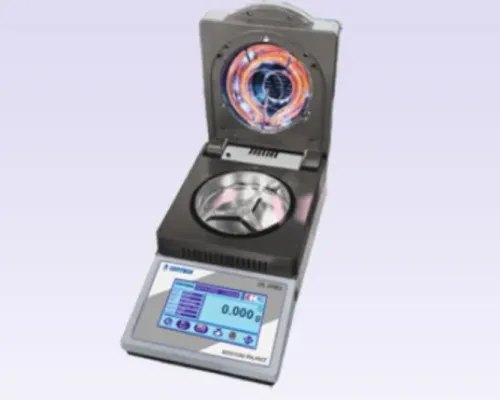
A displayed 0.001 g resolution does not guarantee usable moisture data. For a moisture analyzer weighing balance in Pune, specify the validated method range, sample mass range, heating program, endpoint rule, and reporting format before comparing maximum capacity.
| Specify or verify | Why it matters | Evidence to request |
|---|---|---|
| Readability and repeatability | Small samples magnify mass error in the moisture percentage | Repeatability data at your intended sample mass |
| Heating range and control | Excess heat can evaporate solvent or decompose chemicals | Documented temperature range, stability, and method limits |
| Endpoint modes | A fixed time and constant-weight endpoint suit different materials | Method examples and programmable endpoint settings |
| Pan size and sample capacity | Poor coverage creates uneven drying; excess mass extends the test | Pan dimensions and recommended loading range |
| Data export | Manual transcription hides rounding and identification errors | CSV, printer, USB, or laboratory software output |
| Calibration procedure | Balance and heater create separate risks | Instructions for certified test-weight checks and temperature verification |
Install the moisture balance on a level, vibration-free bench away from drafts, air-conditioner outlets, and direct sunlight. Allow warm-up, use the same pan position, and keep warm samples from entering the weighing chamber; heater convection can destabilise the reading.
Ask the Pune supplier about calibration access, service response, spare pans and heaters, method training, and traceable verification records. CONTECH INSTRUMENTS LTD. can be evaluated on whether its supplied system documentation covers these checks, rather than on capacity alone.
Related product
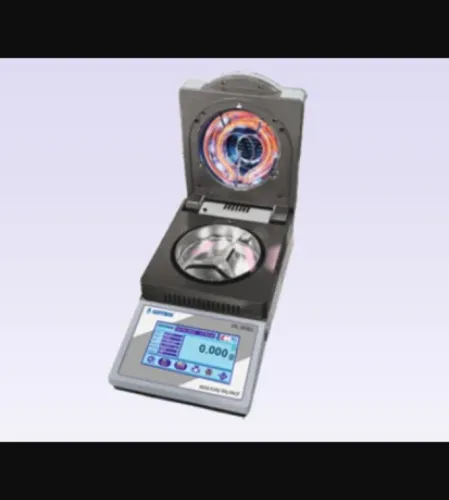
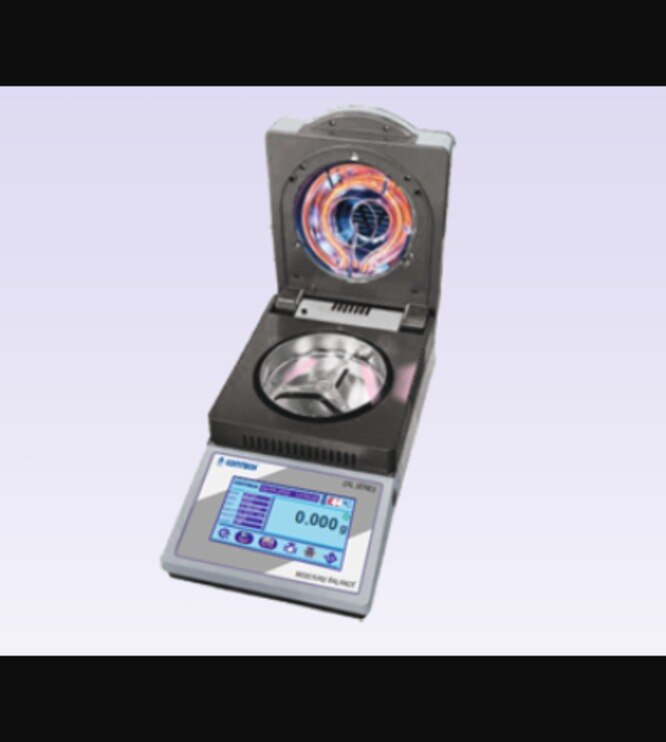
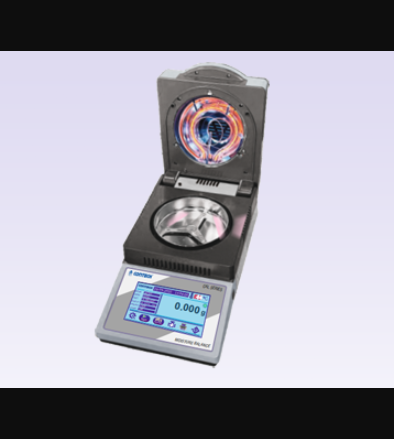 | Moisture Balances Moisture Balances (CAL Series) (0.001 g to 180 g) Moisture Balances (CAL Series) (0.001 g to 180 g) The CONTECH CAL Series Moisture Balances are advanced moisture analyzers designed for fast,... View product → |
Frequently asked questions
How do you run a repeatable loss-on-drying test?
Use a consistent sample condition and mass, tare the pan, apply the same heating programme, and record initial and final mass. Calculate moisture content as (initial mass − final dry mass) ÷ initial mass × 100.
How do sample preparation and heating change the result?
Particle size, mixing, sample thickness, pan loading, heating rate, and temperature affect drying. Use a documented preparation method and keep these conditions consistent between tests.
How can you tell water loss from solvent loss or decomposition?
Compare the result with the material’s formulation and thermal behaviour, then investigate unexpected loss using staged heating, an oven method, Karl Fischer titration, or additional analytical testing.
How does a moisture balance compare with an oven and analytical balance?
A moisture balance combines heating and weighing for faster routine tests. An oven with a separate analytical balance offers greater flexibility but requires more handling, cooling, and weighing steps.
What should you specify when choosing a moisture analyzer weighing balance in Pune?
Specify readability, capacity, temperature range, heating technology, endpoint settings, sample-pan size, calibration options, data export, service support, and the method your laboratory must follow.