
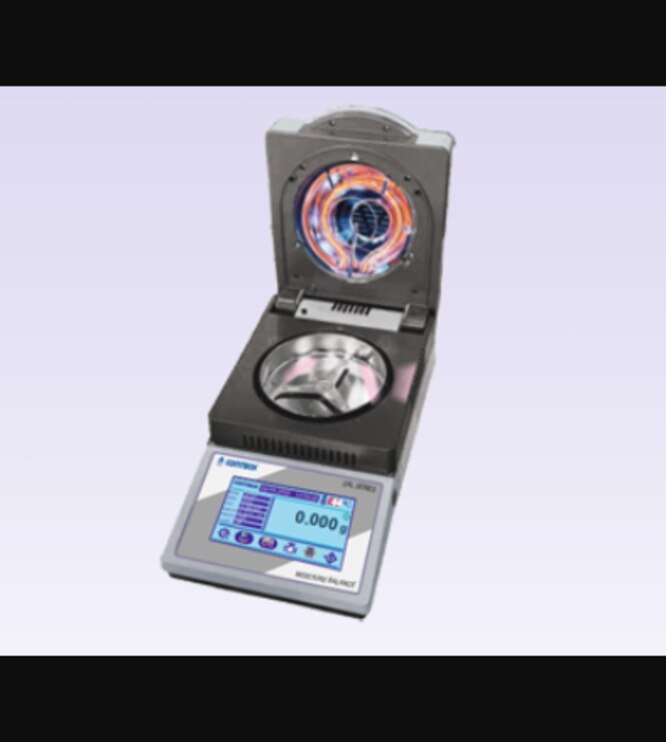
A digital moisture balance can help you control drying and process-material quality, but it cannot tell you whether a ring is 18-karat gold or whether an alloy meets its declared composition. By the end, you will know which jeweller materials to test, how to compare instruments and methods, and what to demand from an Ahmedabad supplier before placing an order.
Key takeaways
- Use moisture balance results to track mass loss during controlled heating.
- Standardise sample mass, temperature, test time, and endpoint before comparing results.
- Check readability, capacity, heating range, calibration, and repeatability data.
- Require installation, training, calibration support, and service terms from your supplier.
What a moisture balance tells a jeweller
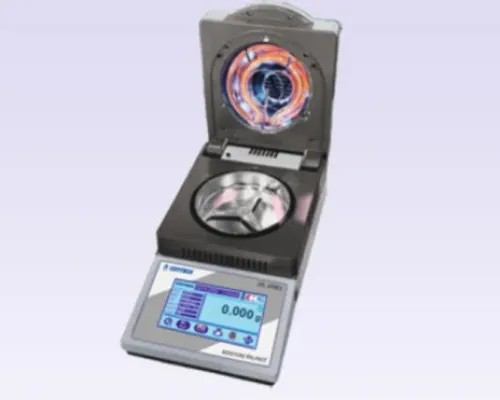
A digital moisture balance measures the reduction in a weighed sample’s mass during heating. It continuously records that loss and reports a percentage moisture result or residual mass, making it a combined balance-and-heating system rather than a room-humidity sensor.
A moisture determination balance does not selectively measure water: solvents, oils, plasticisers and decomposition products can evaporate and appear as “moisture.”
For jewellery production, it is useful when you need to compare drying behaviour, incoming batches or process consistency in materials such as:
- Polishing compounds and pastes
- Casting investment powders and prepared slurries
- Waxes and mould-making materials
- Plating chemicals and process residues
Use moisture measurement to find whether a material is unusually wet, has dried sufficiently, or varies from an accepted batch result. Spread a representative sample thinly on the pan, choose a defined heating programme, and record both the final result and drying time; a thick, uneven layer or contaminated pan can distort the answer.
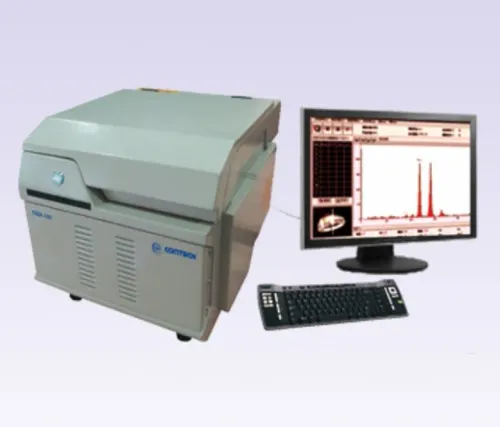
Do not use this instrument to verify gold, silver or platinum purity, karat value or fineness. Those questions require an assay method such as X-ray fluorescence or fire assay. XRF estimates elemental composition from characteristic X-rays, while a moisture balance reports mass lost during heating.
If you need water-specific analysis, Karl Fischer titration is the more appropriate method.
How to run a reliable test on workshop materials
A reliable result depends on treating the sample and drying programme as carefully as the digital moisture balance. Use the material exactly as it appears in production, not a generic water sample, and keep the test conditions unchanged between batches.
1. Mix or homogenise the workshop material so moisture is distributed evenly. Take a representative portion immediately, seal it until testing, and use the quantity specified for the instrument and material. A tiny sample can exaggerate one wet spot; an overloaded pan dries unevenly.
2. Tare a clean, dry pan, then spread the sample in a thin, even layer. Break up lumps without heating or squeezing them, and keep paste away from the pan rim. A thick layer can form a dry crust over wet material, while splashing can throw solids onto the heater.
3. Select a validated temperature, heating profile and endpoint. Use constant-mass detection when the material dries steadily; use a fixed drying time only after repeat tests show that the result has stabilised. Do not copy a programme for powder onto wax, slurry or investment material.
4. Close the heater, start the run, and avoid moving or touching the balance. Record sample mass, temperature, endpoint setting, final moisture percentage, residual mass and drying time.
5. Repeat the test on a second representative portion. Investigate a large difference before reporting an average; check spreading, splashing, crusting and sample delay first. Confirm the programme with the actual material before relying on supplier demonstrations or routine batch decisions.
Which specifications and validation checks matter
Choose a moisture determination balance by matching its pan capacity, minimum sample quantity, temperature range and temperature-control accuracy to each material, not by display readability alone. Request moisture-result resolution, repeatability data, endpoint options, data export and calibration procedures. Halogen heating is fast, but it can scorch a surface or remove non-water volatiles.
| Method | What it measures | Appropriate use |
|---|---|---|
| Moisture balance | Mass lost during programmed heating | Routine moisture measurement after method validation |
| Validated oven loss-on-drying | Mass lost under a controlled oven method | Independent comparison for powders, pastes and residues |
| Karl Fischer titration | Water specifically | Validation when solvents or other volatiles could distort the result |
Validate every material class separately. A polishing compound, investment powder and plating residue can produce different endpoints on the same instrument. Compare replicate portions from one homogenised batch with a validated oven method; use Karl Fischer when the result must represent water rather than total volatile loss.
Before approving the method, check these points:
- Record sample mass, layer thickness, temperature, endpoint rule, final result and drying time.
- Repeat the test with fresh portions and define an acceptable spread before routine testing.
- Confirm the balance with certified weights and verify the heating temperature according to the manufacturer’s procedure.
- Investigate scorching, skin formation, sudden mass loss or a long unstable endpoint instead of accepting the displayed value.
- Keep the approved programme and reference-method comparison with the material’s identification and batch number.
Neither method verifies gold, silver or platinum fineness; use X-ray fluorescence, fire assay or another validated purity method for that decision.
Where to buy and what to require from an Ahmedabad supplier
A low quotation can hide the cost of pans, heating elements, calibration visits, and delayed repairs. Ask every Ahmedabad supplier to state these items in writing before you compare prices.
For a digital moisture balance for jewellers in Ahmedabad, require answers to these supply and service questions:
- What voltage and frequency does the supplied unit require, and is installation included?
- Which calibration certificate accompanies delivery, and will the supplier calibrate the balance at your site?
- Are sample pans and replacement heating elements available locally, with quoted prices and lead times?
- Does the instrument export results through USB, RS-232, or software, and can it record sample identification, drying time, and final result?
- Who provides application training for investment powder, polishing compound, slurry, or residue testing?
- What does the warranty exclude, and who performs preventive maintenance?
- Where is the service team located, and what written response time applies to a breakdown in Ahmedabad?
Compare offers by ownership detail, not capacity alone.
| Supply route | Confirm before ordering | Warning sign |
|---|---|---|
| Ahmedabad stockist | Installation, local spares, application support, and response time | Stock is available but no named service team |
| Authorised regional channel | Manufacturer authorisation and calibration responsibility | “Factory support” has no contact or written terms |
| Manufacturer network | Service location, travel charges, and escalation process | Warranty exists but repair logistics are unclear |
If comparing CONTECH INSTRUMENTS LTD. with another moisture balance India supplier, request the same checklist from both. Also confirm that the quotation is for a moisture analyser, not an X-ray fluorescence purity instrument; the latter tests alloy composition, not drying loss.
Related product
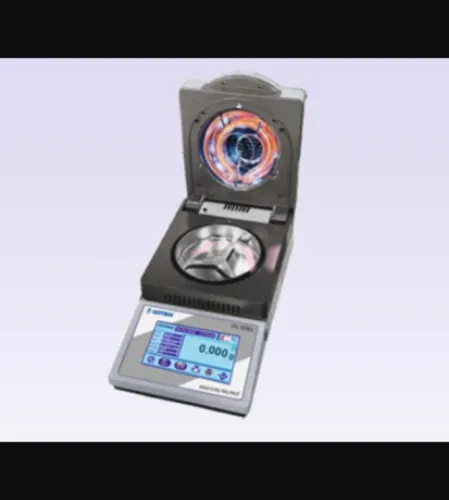
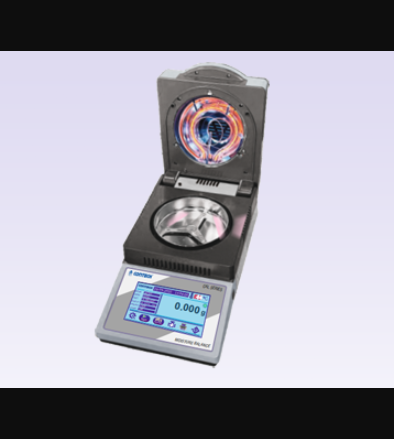 | Moisture Balances Moisture Balances (CAL Series) (0.001 g to 180 g) Moisture Balances (CAL Series) (0.001 g to 180 g) The CONTECH CAL Series Moisture Balances are advanced moisture analyzers designed for fast,... View product → |
Prepare the installation and ownership checklist
A stable, level bench is the first installation requirement. Keep the digital moisture balance away from vibration, air-conditioning vents, direct sunlight, water, and dust-producing workshop operations. Provide a grounded electrical outlet matching the quoted voltage and frequency, plus clearance around the heating unit for safe ventilation.
Before signing the order, confirm these points in writing:
- Record the supplied voltage and frequency, power rating, bench space, operating temperature range, and heat-clearance requirements.
- Ask for installation, operator training, a calibration certificate with traceability details, and an acceptance check using your material.
- Require the demonstrated drying programme, sample mass, endpoint, drying time, and method file or printed parameters so staff can reproduce the result.
- Confirm warranty duration, service location, local response time, preventive-maintenance terms, and the procedure for out-of-warranty repairs.
- List included consumables and spares, including sample pans, pan handles, seals, and spare heating elements; price replacements separately.
- Specify the software or data interface, result-export format, user access controls, and record-retention process if test records support production release.
- Add routine checks to your SOP: clean the pan and chamber, inspect the heating element, verify weighing performance with suitable test weights, and document failed checks.
Schedule recalibration after repair, relocation, or repeated verification failure. Keep the certificate, service reports, method version, and maintenance log beside the instrument.
Frequently asked questions
What does a digital moisture balance tell a jeweller?
It measures sample mass before and during heating, then reports mass loss as moisture percentage or residual mass. It is not a room-humidity sensor.
How can you run a reliable moisture test on workshop materials?
Use a consistent sample preparation method, sample mass, heating temperature, test duration, and endpoint. Record each condition with the result so tests remain comparable.
Which specifications matter when comparing moisture determination balances?
Compare weighing capacity, readability, heating range, heating control, endpoint settings, calibration options, repeatability, and the documentation supplied with the instrument.
What should you require from an Ahmedabad moisture balance supplier?
Ask for a written quotation, specifications, installation guidance, operator training, calibration support, warranty terms, service response details, and a clear list of included accessories.