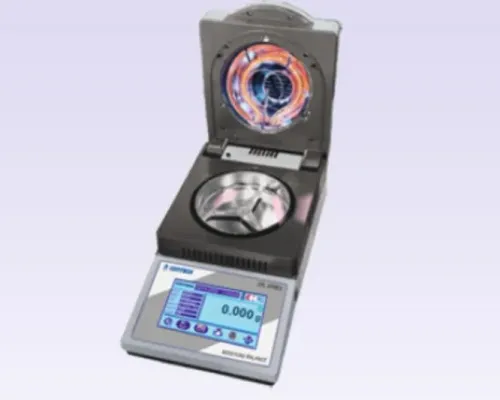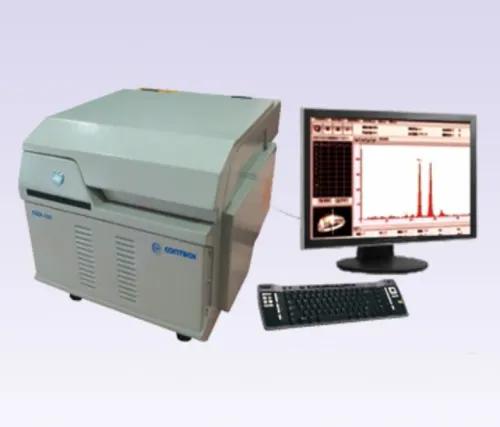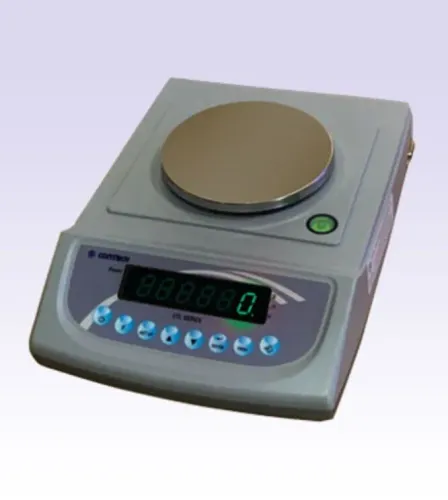

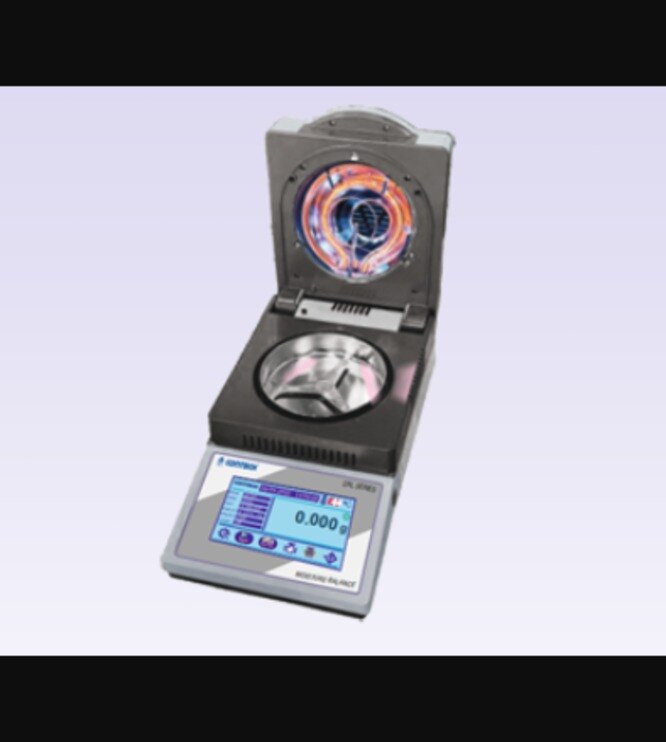
A low purchase price does not guarantee low-cost moisture testing. You need to compare the balance, heater, sample requirements, method-development work, calibration, consumables and service before choosing equipment for your laboratory. By the end, you will be able to compare a dedicated moisture balance with an oven-and-balance setup and identify the method controls that protect your results.
Key takeaways
- Compare total cost, not only the purchase price.
- Match resolution and heating range to your sample method.
- Define whether results report wet basis, dry basis or loss on drying.
- Check repeatability with your own samples before routine use.
What makes a moisture balance genuinely affordable?
A genuinely affordable moisture balance is the one that meets your method at a defensible total cost, not the one with the lowest invoice. For an affordable moisture balance in Bengaluru, separate the purchase decision into:
- Weighing resolution, heater type, maximum sample load and pan size.
- Display and software functions, including automatic mass monitoring and endpoint settings.
- Calibration support, installation, operator training and service response time.
- Disposable pans, replacement halogen lamps or heaters, balance verification, temperature checks and method-correlation work.
Compare the two practical routes before deciding:
| Option | Cost advantage | Trade-off |
|---|---|---|
| Conventional drying oven plus analytical balance | Lower equipment cost for low-throughput work | Manual transfers, longer runs and a validated reference procedure |
| Dedicated moisture balance | Faster handling through automatic monitoring | Consumables, service, verification and method-correlation costs |
Build a comparison sheet with these entries:
- Instrument price, Bengaluru delivery and installation charges.
- Annual service cost, calibration charges and consumables.
- Expected replacement-part availability and the cost of repeat tests.
Ask each supplier for a written quote separating those items. Also request the heater-temperature verification procedure, balance calibration options, software endpoint settings, local service coverage, installation scope and training charges. A cheap moisture balance for research laboratories in Bengaluru is affordable only when those recurring costs remain manageable.
Will the instrument suit your samples and required resolution?
A stated 0.001 g to 180 g range does not prove that an instrument suits your samples or required resolution. Confirm the minimum practical sample mass, pan loading limit and mass needed to produce a measurable moisture change before buying.
1. Calculate the effect of balance resolution. A 1 mg mass change equals 0.10 percentage point at a 1.000 g sample, but only 0.02 percentage point at 5.000 g. The larger sample improves mass resolution only when it heats uniformly and does not overload the pan.
2. Match the method to the material: liquid, powder, paste, granule or solid; homogeneous or variable; narrow or very high expected moisture. Clumped powder and coarse solids can dry unevenly, while viscous pastes and liquids can splash. Fine powders can form a surface crust before internal moisture escapes.
3. Ask for a sample trial, or run a side-by-side test against your established oven method. Record sample mass, particle size, layer depth, drying temperature, endpoint and replicate results. For moisture measurement in Bengaluru, also control exposure time for hygroscopic powders, using sealed containers or conditioning when the method requires it.
4. Treat a 0.01% moisture display as readability, not 0.01% accuracy. Repeatability, temperature stability, sample uniformity and agreement with the reference method determine suitability. These checks matter more than the advertised range when choosing an affordable moisture balance in Bengaluru.
How does LOD testing produce a moisture result?
An LOD run starts with a clean, dry pan and a known initial sample mass. Weigh the prepared sample, heat it at a documented temperature and heating profile, monitor the mass as volatile material leaves, and stop at the method’s endpoint. The analyzer calculates mass loss from the initial and final masses.
| Endpoint or heating choice | What it measures | Main risk or use |
|---|---|---|
| Rate-of-mass-loss endpoint | Stops when weight loss falls below a set rate | Can stop early while moisture remains inside a thick sample |
| Fixed-time endpoint | Stops after a specified duration | Gives comparable results only after testing proves the time is adequate |
| Halogen or infrared heating | Transfers heat quickly and shortens runs | Can overheat the surface, form a crust or decompose poorly conducting samples |
LOD is not automatically water content. Evaporated solvent, residual reagent and other volatile components are included unless the method demonstrates that the loss corresponds to water. Choose temperature and sample mass from the material method, not a universal factory setting; excessive heat can decompose pharmaceuticals, polymers, biological materials, sugar-rich products and formulated chemicals.
Compare the analyzer with the product standard, established oven method or vacuum-oven procedure before using results for release or research. That comparison is essential for moisture content determination in Bengaluru and defensible moisture measurement in Bengaluru.
What controls test time and sample preparation?
A run can take far longer than the heater’s rated speed. Preparation, initial mass, particle size, layer thickness, heating rate, endpoint stability, cooling and repeat measurements all affect moisture measurement in Bengaluru.
1. Prepare a representative sample. Grind or homogenize it when the method permits, mix powders thoroughly, and spread the material in a thin, even layer. Large particles, clumps and thick layers can dry at the surface while moisture remains inside.
2. Control exposure before weighing. Weigh hygroscopic powders promptly after opening the container because Bengaluru’s humidity can change their mass during transfer. Follow the method’s sealed-container requirement, maximum exposure time or sample-conditioning step. Reduce splashing in liquids and pastes with a suitable sample mass and heating profile.
3. Control the drying profile. Avoid an aggressive temperature ramp when the surface forms a crust before the interior dries. A rate-based endpoint can shorten easy runs but may stop early during slow internal drying; use a fixed-time endpoint only after validation establishes that the time gives stable results.
4. Write every control into the method so operators do not change preparation or settings. Include cooling and duplicate or triplicate measurements in the schedule. CONTECH INSTRUMENTS LTD. can be asked to document endpoint settings and method controls for comparison.
5. Compare average result, replicate range and total hands-on time against an oven-and-balance method. A fast single reading is not efficient if failed repeats undermine moisture content determination in Bengaluru.
Related product
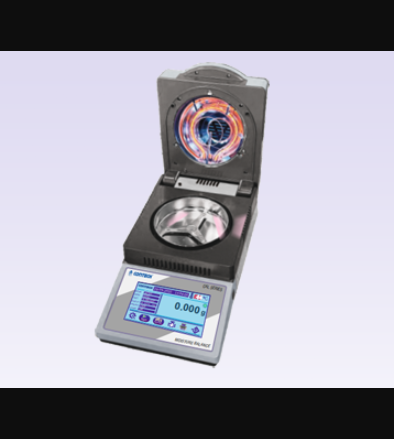 | Moisture Balances Moisture Balances (CAL Series) (0.001 g to 180 g) Moisture Balances (CAL Series) (0.001 g to 180 g) The CONTECH CAL Series Moisture Balances are advanced moisture analyzers designed for fast,... View product → |
Which result basis and quality checks does your method require?
Report the basis before comparing instruments or publishing results: wet-basis moisture is measured water or mass loss divided by original sample mass, while dry-basis moisture divides it by dry solids. Total solids is the material left after drying, expressed against original mass.
Put the equation, basis, rounding rule, and whether the result is LOD or demonstrated water content in the method. A cheap moisture balance for research laboratories in Bengaluru is defensible only when that definition is fixed.
| Basis | Equation | Reports |
|---|---|---|
| Wet basis | (Initial mass − final mass) ÷ initial mass × 100 | Moisture or LOD percentage |
| Dry basis | (Initial mass − final mass) ÷ final mass × 100 | Moisture percentage relative to dry solids |
| Total solids | Final mass ÷ initial mass × 100 | Material remaining after drying |
Verify the balance with traceable mass checks and verify heater temperature separately; a correct weighing result does not prove uniform heating. Establish repeatability with replicate samples, then compare results with an established oven or vacuum-oven reference method. Record environmental conditions, calibration records, sample-conditioning controls and endpoint settings.
Under ISO/IEC 17025, no particular brand or instrument type is required, but you must show that the method and equipment are fit for purpose.
For defensible moisture content determination in Bengaluru, do not heat samples containing flammable solvents or combustible vapours unless the instrument and method explicitly permit them. A fume hood does not make unsuitable heated equipment safe. These controls distinguish a valid result from a fast number.
Frequently asked questions
What makes a moisture balance genuinely affordable?
A genuinely affordable instrument meets your method’s sample, resolution and reporting requirements without adding avoidable costs for preparation, repeat tests, calibration or operator time.
How do you know whether a moisture balance suits your samples?
Compare the instrument’s sample capacity, readability, heating range and test procedure with your sample type, expected moisture level and required result resolution.
How does loss-on-drying testing produce a moisture result?
The instrument weighs the sample, applies controlled heat, measures the mass decrease and calculates the lost mass as moisture under the chosen method conditions.
What controls moisture-balance test time and sample preparation?
Test time depends on sample composition, particle size, sample mass, heating programme and the endpoint used to decide that drying is complete.
Which result basis and quality checks should a laboratory use?
Specify wet-basis or dry-basis reporting, document the heating and endpoint conditions, and verify repeatability, balance performance and results against a suitable reference method.