
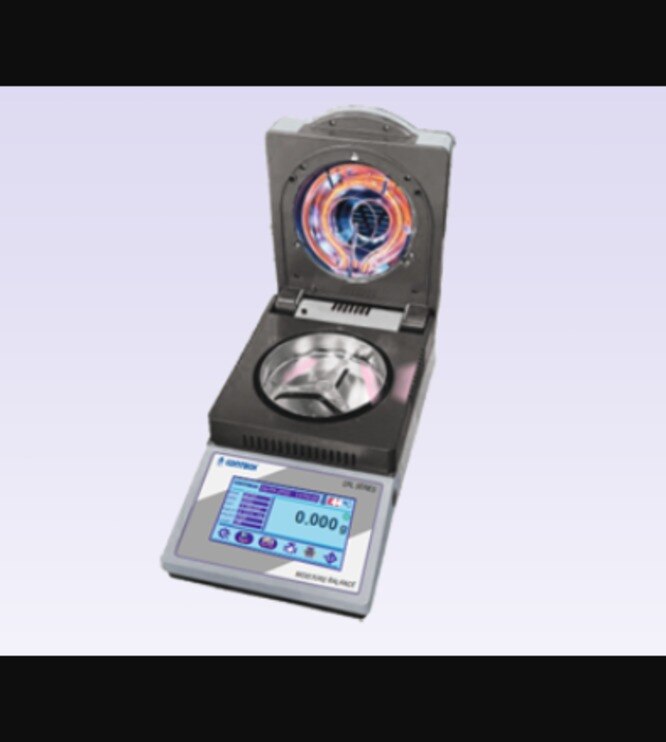
Humidity, monsoon air, dust, drafts and power interruptions can change a moisture result before a fault appears on the display. A controlled daily and weekly routine, separate mass and temperature checks, and a verified drying method will help you identify whether an error comes from the instrument, the sample or the procedure.
Key takeaways
- Use a rigid, level bench away from vibration, drafts and direct sunlight.
- Clean the pan and chamber with lint-free materials; keep moisture away from electronics.
- Verify test mass and temperature separately, and retain calibration evidence.
- Check sample preparation and drying settings before blaming the instrument.
Set up the balance for stable readings in Bengaluru conditions
Place the moisture determination balance for maintenance in Bengaluru on a rigid, level bench away from windows, doors, ceiling vents, ovens, compressors and centrifuges. Direct sunlight and vibration shift the displayed mass; air-conditioning cycling and monsoon humidity create temperature changes that make moisture measurement less stable.
1. Keep the balance in a low-traffic area with its draft shield closed during readings. Do not place it beside a sink or on a bench that receives splashes. Record room temperature and relative humidity at the start of work, and investigate sudden changes rather than relying on the building’s air-conditioning display.
2. Connect the instrument to a stable power supply. Use a suitable UPS where power interruptions or voltage dips occur, because an interrupted heating cycle can leave a sample partly dried and produce a misleading result.
3. Switch on the balance and allow the manufacturer’s specified warm-up period before verification or testing. Keep the pan empty, close the chamber, and wait until the zero display remains steady; moving the unit between air-conditioned and warmer areas requires a further equilibration period.
4. Handle hygroscopic samples quickly in sealed containers. Open one only when the balance and sample are ready, weigh the required portion promptly, and close the container immediately. A humid Bengaluru morning or damp monsoon air can change the sample before heating begins.
Stop if the display drifts continuously, the chamber temperature overshoots, condensation appears, or dust enters the enclosure. Correct the environment before trusting the result.
Clean the pan, chamber and weighing mechanism without causing damage
Clean a moisture determination balance only after the heater has cooled, the instrument is switched off, and the power connection is safe. Never wipe a warm heater or pour cleaner into the chamber.
Use this schedule:
- Daily: Remove the sample pan and pan support. Wipe both with a lint-free cloth, clean visible powder from the chamber and draft shield, and check that no residue can touch the pan, sensor, or heating element.
- Weekly: Remove accessible chamber parts, inspect the reflector and viewing window, and check that the temperature sensor is straight, clean, and firmly positioned. Look beneath the pan support for particles that could cause unstable readings.
- After a spill: Stop testing, cool the heater, remove loose material, and clean the affected surfaces before restarting. If liquid entered the weighing mechanism, sensor area, or heater assembly, keep the balance out of service until it has been inspected.
Lift residue with a soft brush or lint-free cloth; do not scrape with metal tools. Use only a small amount of cleaning solution approved for the instrument on the cloth, never directly on the balance. Avoid abrasive powders, soaking, and compressed air, which can drive dust into the weighing system.
Do not bend the sensor or touch the heater coil and reflector. In Bengaluru’s humid, dusty conditions, dry every cleaned part completely before reassembly; trapped moisture can shift readings and promote residue buildup.
Verify mass and temperature separately, then record the evidence
Treat mass and heat as separate acceptance decisions. A passing weight check does not prove that the heater reaches the programmed sample temperature, and a temperature check does not prove accurate weighing.
- Repeatability: place the same test weight on the centre of the pan, remove it, and repeat the reading at least six times under unchanged conditions. Record the individual readings, not only the average; excessive spread indicates vibration, drafts, contamination or an unstable weighing mechanism.
- Display stability: with the pan empty, watch the zero display for a fixed observation period, then watch a loaded reading. Record drift, flicker or unexplained changes after the stability indicator appears.
- Weighing accuracy: verify several points across the working range using current, traceable weights. Compare each indication with the weight’s certified value and the laboratory’s written tolerance; do not treat a single-point check as a full verification.
- Heating temperature: place a calibrated temperature probe at the sample position, run each selected method temperature, and record the probe reading after the chamber reaches equilibrium. Compare actual and programmed temperatures, including overshoot, steady-state deviation and recovery after opening the chamber.
For moisture determination balance for maintenance in Bengaluru, record date, instrument ID, operator, room temperature, relative humidity, power interruption or unusual vibration, weight IDs and certificates, raw readings, probe ID and calibration status, programmed and measured temperatures, tolerances, pass/fail decision, cleaning performed and corrective action. Attach printouts or electronic files, then sign the review.
Label failed checks before releasing results.
Check the drying method before blaming the instrument
Set the method before running the sample: define mass, preparation, spreading, temperature, endpoint and maximum duration. A moisture determination balance measures mass lost during heating, not water alone; solvents can evaporate and decomposition can inflate the result.
1. Use the specified sample mass and weigh it consistently. Record whether grinding, mixing or preconditioning is allowed. Recheck the moisture analysis method after changing mass, particle size, pan type or preparation.
2. Spread the sample in a thin, even layer across the pan. Too much material or a thick centre dries at the surface first while the interior remains wet, producing a slow endpoint and a falsely low result.
3. Set the programmed temperature and heating profile specified by the method. Verify temperature at the sample location separately from mass accuracy; passing a weight check does not prove that the heater reaches the programmed temperature.
4. Use a defined endpoint, such as a stated mass-loss rate over a stated interval, rather than stopping when the display merely appears stable. Set a maximum test duration and investigate a run that reaches it without meeting the endpoint.
5. Record sample mass, temperature, endpoint, duration, replicate policy and preconditioning with every result. State wet-basis or dry-basis moisture; these quantities are not interchangeable without conversion.
If the purpose is microbial or shelf-life control, do not substitute water activity for moisture content. Recheck the method after any procedural change because old and new results are not automatically equivalent.
Use failure records to decide when calibration or service is needed
Quarantine results when a traceable-weight check or sample-location temperature check fails its predefined acceptance limit. Do not recalibrate and continue automatically: assess results back to the last passing verification, identify affected batches, and document whether release, retesting or rejection is justified.
A passing mass check does not prove correct heating, and a passing temperature check does not prove accurate weighing.
Shorten the verification interval after relocation, repair, heater or sensor replacement, repeated failures, unusual drift, contamination, high-humidity exposure or a power event. Extend an interval only after historical data show stable performance under comparable Bengaluru conditions.
Obtain technical support when readings remain unstable after cleaning, drying is incomplete or slow, temperature overshoots, or failures recur after adjustment. CONTECH INSTRUMENTS LTD. can help determine whether the fault lies in the heater, weighing system, temperature sensor or method setup.
Link every moisture measurement to its maintenance history:
- Balance identification and software or method version
- Mass and temperature calibration status, reference-device certificate and acceptance decision
- Set temperature, measured temperature and stabilization time
- Environmental conditions, cleaning, repair and verification dates
- Out-of-tolerance assessment and affected result range
Recheck the method history after changing sample mass, grinding, pan type, temperature, endpoint or software. Compare old and new procedures before combining their results; different drying kinetics can make moisture values non-equivalent even on the same balance.
Related product
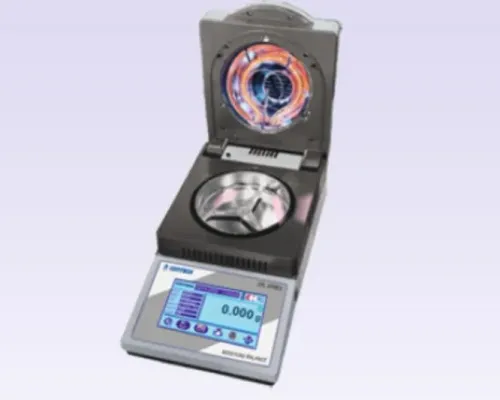
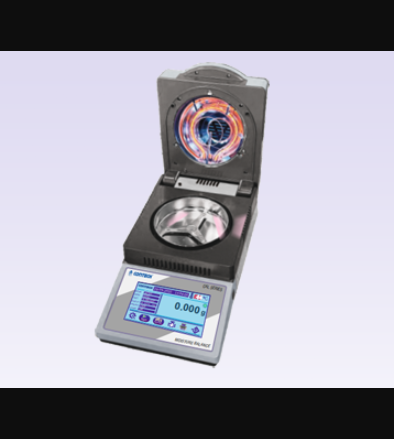 | Moisture Balances Moisture Balances (CAL Series) (0.001 g to 180 g) Moisture Balances (CAL Series) (0.001 g to 180 g) The CONTECH CAL Series Moisture Balances are advanced moisture analyzers designed for fast,... View product → |
Frequently asked questions
Where should you place a moisture determination balance in a Bengaluru laboratory?
Place it on a rigid, level bench away from windows, doors, ceiling vents, ovens, compressors, centrifuges, direct sunlight and vibration. Control exposure to air-conditioning cycles and monsoon humidity.
How do you clean a moisture determination balance without damaging it?
Remove residue from the pan and chamber with suitable lint-free materials, following the manufacturer’s cleaning instructions. Prevent liquid from reaching the weighing mechanism, sensors or electronics.
How should you verify a moisture determination balance?
Verify mass with a suitable certified test weight and check temperature separately with a traceable reference. Record the date, standards used, readings, operator and any adjustment.
What should you check before blaming the instrument for unstable moisture measurement?
Review the moisture analysis method, sample mass, sample spreading, drying temperature, heating time, endpoint setting and sample homogeneity. Confirm that the sample is not losing moisture before the test starts.
When does a failure record indicate calibration or service is needed?
Escalate repeated failed checks, drifting mass or temperature readings, abnormal drying times, damaged seals, error codes and results outside acceptance limits for calibration or service.