
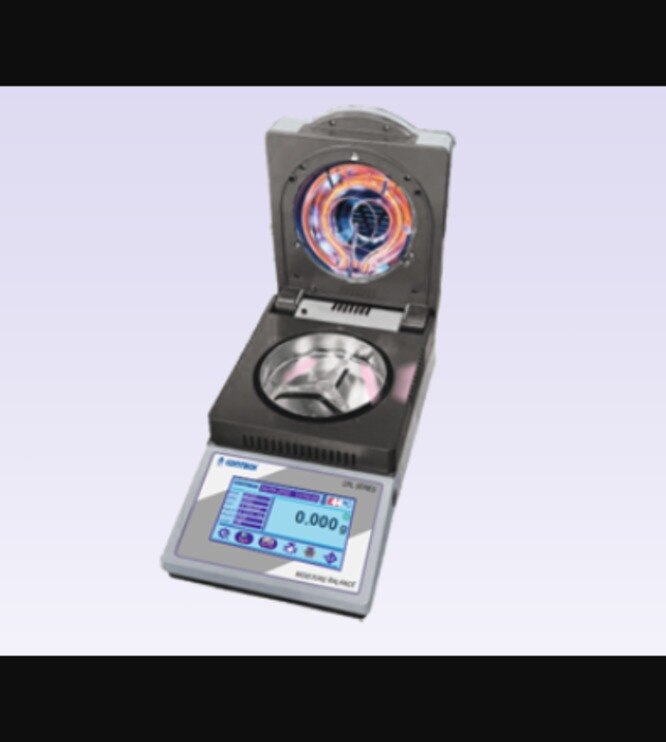
A Bengaluru quotation for a “balance analyzer” can describe three different instruments: a moisture analyzer, an analytical balance, or a balance built into another analyzer. You will be able to specify the right instrument, test it with your material, and confirm installation and acceptance requirements before placing an order.
Key takeaways
- Choose a moisture analyzer when the test requires heating and drying.
- Record sample mass, drying temperature, endpoint, and repeatability during method setup.
- Use an oven and separate balance when your method requires reference-standard conditions.
- Specify accuracy, temperature range, data export, calibration, and acceptance tests before purchase.
What instrument do you actually need?
Ask one question before requesting a quotation: must the instrument heat and dry the sample, or only weigh it? The phrase moisture balance and balance analyzer in bengaluru is ambiguous; a quotation can describe three different instruments.
| Option | Function | What it tells you |
|---|---|---|
| Conventional laboratory balance | Measures mass | It cannot calculate moisture without a separate drying method |
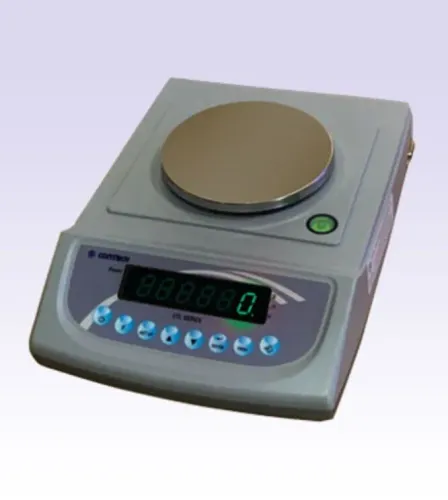
| Analytical balance | Measures mass, often with 0.1 mg readability | High resolution does not make it a moisture tester |
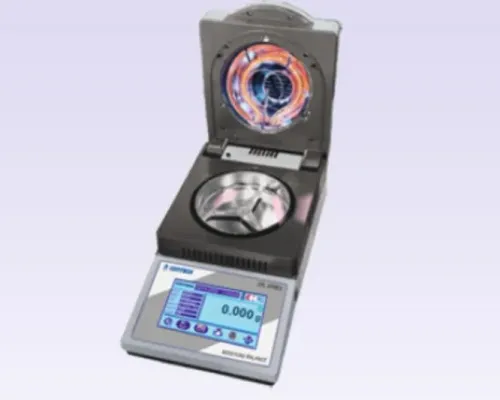
| Moisture balance | Weighs, heats with halogen or infrared energy, and calculates mass loss | It directly reports moisture from initial and final sample mass |
A moisture analysis balance is the third option. Its result depends on drying conditions, not only displayed resolution, so do not compare models on readability alone.
Write these points into your quotation request:
- State that the instrument must heat and dry samples, then report moisture percentage from mass loss.
- Ask for repeatability at a stated sample mass, minimum sample weight, temperature range and accuracy, heating profile, endpoint rule, and data-export format.
- Specify the material you will test and request a demonstration using it; a model that performs well on powders may give poor results on pastes or oily samples.
If you need only defensible mass readings, buy a conventional or analytical balance and use a separate drying method instead.
How should you set up a moisture test for your material?
Use a representative sample, spread it thinly, apply a documented temperature programme, and stop only at a predefined stable-mass endpoint. The instrument’s readability alone cannot make moisture content analysis defensible.
- Homogenise the material without heating or exposing it to humid air. Grind agglomerates if that does not create heat or drive off volatiles.
- Weigh the amount required by the validated method; 3–10 g is a practical starting range when the instrument and material permit it. Record the initial mass.
- Spread the sample evenly across the pan in a thin layer. A thick bed or surface crust traps water and produces a low result.
- Select temperature from the material’s reference method. Use 105°C only for heat-stable solids for which that condition is appropriate; use a lower temperature for heat-sensitive materials and never exceed the decomposition or solvent-boiling risk.
- Record the heating profile, temperature, sample mass, and total drying time. A pilot run can establish whether 10, 20, or 60 minutes is needed.
- Define the endpoint before testing, such as a mass change below 1 mg during 60 seconds, then confirm that repeated runs meet the same rule.
Calculate moisture percentage as (initial mass − final dry mass) ÷ initial mass × 100. Repeat at least three preparations and compare the mean and spread with your existing reference method. Loss-on-drying also counts solvents and decomposition losses, so document exactly what the moisture measurement represents.
When is a moisture balance the wrong method?
Choose Karl Fischer titration when the specification requires water content, not simply mass lost during heating. A moisture analysis balance is the wrong method when your sample contains volatile solvents, decomposes below the selected drying temperature, or forms a crust that traps water.
| Option | What it measures | Choose it when |
|---|---|---|
| Moisture balance | Mass lost during controlled heating | You need rapid routine moisture measurement and the lost mass represents water |
| Hot-air oven plus separate balance | Mass lost after a specified oven temperature and time | Your standard method requires a fixed drying schedule, larger samples, or an auditable reference procedure |
| Karl Fischer titration | Water specifically, through a chemical reaction | You need water-specific results, low-level measurement, or a sample containing other volatile substances |
A hot-air oven takes longer because you dry the sample separately, cool it in a desiccator, and weigh it on a calibrated balance. That extra handling can improve method comparability, but it also creates transfer and cooling errors.
Use a moisture balance for fast screening only after confirming that its temperature and endpoint reproduce your reference method. A high setting can decompose polymers, food ingredients, or chemicals and report decomposition as moisture.
Ask for a demonstration with your actual material, not a vendor’s unrelated powder. Compare the analyzer result with the agreed oven or Karl Fischer result, using the same sample preparation and acceptance limit. Stop only after mass stabilises; a premature endpoint produces a falsely high moisture result.
Where can you evaluate a supplier in Bengaluru?
A search for moisture balance and balance analyzer in Bengaluru will return unlike instruments. State in your enquiry that you need controlled heating and mass-loss calculation for moisture content analysis, not an analytical balance that only weighs samples.
| Supplier evidence | Compare across quotations | Reject or query |
|---|---|---|
| Repeatability | Result at a stated sample mass, minimum sample weight, temperature accuracy, and endpoint rule | Readability alone, such as 0.1 mg |
| Method capability | Heating range, halogen or infrared profile, stabilisation criterion, and data export | “Fast drying” without test conditions |
| Local service | Installation, method-development support, preventive maintenance, pan and filter availability | No named Bengaluru service contact |
| Calibration | Calibration documents and access to an ISO/IEC 17025-accredited service where required | Certificate details promised only after purchase |
Ask each shortlisted supplier to demonstrate the same material you will test in production or the laboratory. Bring a representative sample and your current reference result; require the supplier to record sample mass, layer thickness, temperature, heating profile, drying time, endpoint, repeatability, and any visible crust or decomposition.
CONTECH INSTRUMENTS LTD. belongs on your comparison list only after it provides those test records and service terms in writing.
Before issuing a purchase order, confirm these delivery details:
- Delivered-to address, lead time, packing protection, and responsibility for transit damage.
- On-site installation, levelling, operating training, method setup, and a signed handover record.
- Calibration at installation, software or data-export setup, preventive-maintenance interval, response time, and loaner or repair arrangements.
- Availability of pans, filters, and other consumables, with contact details for post-installation support.
A supplier who will not test your material or document installation is difficult to evaluate, regardless of the displayed resolution or quoted price.
Related product
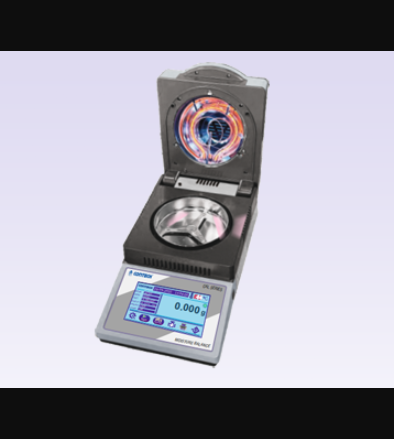 | Moisture Balances Moisture Balances (CAL Series) (0.001 g to 180 g) Moisture Balances (CAL Series) (0.001 g to 180 g) The CONTECH CAL Series Moisture Balances are advanced moisture analyzers designed for fast,... View product → |
What should the purchase specification and acceptance check include?
Put these requirements in the purchase specification, not in an informal quotation: the instrument must heat, weigh, and calculate moisture content analysis for your named material and method.
| Area | Require | Acceptance evidence |
|---|---|---|
| Performance | Weighing range, readability, repeatability, temperature range, heating profile, endpoint options, and sample-pan size | Test report using your material |
| Calibration | Separate balance calibration and heating-system calibration | Traceable mass verification plus temperature verification across the working range |
| Method comparison | Agreed sample preparation, temperature, endpoint, and reference method | Results compared with your oven, Karl Fischer, or other approved method |
| Compliance and service | Electrical and EMC declarations, warranty, response time, preventive maintenance, spares, and Bengaluru service coverage | Supplied documents and written service terms |
The acceptance check must test more than zero and display operation. Require repeatability from repeated weighings, stable readings during drying, correct endpoint calculation, printer or software output, and secure storage of method and result records.
- Confirm that mass calibration uses traceable weights and that temperature checks cover the temperatures you will actually use.
- Run your real sample, not a supplier’s demonstration material. Record moisture measurement results against the agreed reference method.
- Obtain the user manual, calibration procedure, maintenance schedule, installation report, software licence, accessories list, and training record at handover.
- Reject or investigate results that count solvent loss, decomposition, or bound-water reactions as “moisture” when your specification requires water specifically; use Karl Fischer as the comparison where appropriate.
Frequently asked questions
What instrument do you actually need for moisture content analysis?
Choose a moisture analyzer when the instrument must heat, dry, and weigh the sample. Choose a laboratory balance when you only need mass measurement and will dry samples separately.
How should you set up a moisture measurement test?
Define the sample mass, drying temperature, heating profile, endpoint, pan type, repeat count, and reporting units. Record initial and final mass for each test.
When is a moisture balance the wrong method?
Use a drying oven and separate balance when your validated method specifies oven drying, requires a reference standard, uses large samples, or could be affected by rapid surface heating.
Where can you evaluate a moisture balance supplier in Bengaluru?
Ask suppliers to demonstrate your material and method, provide calibration documents, explain service coverage, and state spare-part and software support in writing.
What should a purchase specification and acceptance check include?
Specify weighing capacity, readability, temperature range, heating technology, endpoint settings, repeatability, calibration method, data export, warranty, and a test using your own material.