
A moisture analyzer measures mass lost during heating, not water alone, so the right instrument depends on the product matrix, reference method, and required reporting precision. By the end, you will be able to define a practical sample method, identify when LOD is unsuitable, and write a procurement specification that supports pharmaceutical quality decisions.
Key takeaways
- Use an LOD balance only when the specification defines loss on drying.
- Choose Karl Fischer titration when the specification requires water content.
- Set sample preparation and heating conditions that demonstrate the endpoint.
- Request validation evidence, calibration records, and installation requirements before approval.
Start with the measurement your specification actually requires
Choose an LOD moisture balance only when your specification defines loss on drying under stated conditions. Choose a water-specific reference method, such as Karl Fischer titration under USP <921> or Ph. Eur. 2.5.12, when the specification requires water content.
| Method | What it measures | Choose it when | Main risk |
|---|---|---|---|
| LOD moisture balance | Mass lost during programmed heating | The validated method is USP <731> or an equivalent LOD procedure | Loss includes water, residual solvents, volatile excipients, or decomposition products |
| Karl Fischer or other water-specific method | Water by chemical or instrumental reaction | The specification requires water determination, including bound or total water | Matrix effects, reagent handling, and method suitability need control |
A moisture balance weighs the pan, adds a representative sample, heats it, and calculates loss from the final dry mass. That result is not automatically moisture determination: a thermolabile active, oxidising material, hydrate, volatile flavour, or decomposing excipient can make the apparent moisture measurement wrong.
Before replacing the approved method, compare the balance with the reference procedure using the actual pharmaceutical matrix or a close surrogate. Request agreement near the specification limit, repeatability, recovery where feasible, and the raw drying curves; a 0.001 g readability or short cycle time proves none of these.
Use Karl Fischer, a modified oven method, or retain the established procedure when heating is not specific to water.
Match sample preparation to the pharmaceutical material
A repeatable result starts with a representative portion, not a highly readable display. Decide whether your moisture content analysis targets free water, total water, or total loss on drying, then validate whether grinding, mixing, or heating changes that quantity.
1. Powders: Mix the closed container gently, then weigh a portion quickly. Keep hygroscopic powders covered until loading, and spread the sample in a thin, even layer without compressing it.
2. Granules: Take portions from different locations or use a validated mixing procedure to prevent segregation. Do not crush granules unless the method requires it; fines can dry faster and produce a different result.
3. Tablets: Test intact tablets when the specification concerns the finished unit. Crush and mix them only when the validated method measures the tablet’s average composition, because crushing increases exposed surface area and can accelerate drying.
4. Creams: Homogenise the container without incorporating air, then place a consistent mass across the pan. An uneven mound can form a dry skin while moisture remains beneath it.
5. Extracts: Record the solvent system and prepare the same volume or mass each time. If the extract contains alcohol, flavour compounds, or another volatile solvent, an LOD result may represent solvent loss rather than water; use a matrix-specific reference method when necessary.
Keep the pan closed until the run begins, and standardise sample mass, spreading thickness, preparation time, and particle size. Confirm the procedure against the laboratory reference method, because rapid halogen or infrared heating can produce a different temperature gradient from an oven.
Build a heating programme that proves the endpoint
Set the temperature high enough to release the target moisture, but not so high that the pharmaceutical material decomposes or loses residual solvent. A low setpoint can leave bound or slowly released water behind; an aggressive setpoint can measure decomposition products instead of moisture.
Control ramp behaviour, not just the final temperature. A rapid ramp can create a hot surface, crusting, bubbling, or uneven drying, while a controlled ramp reduces temperature gradients across the sample. Record the sample mass, spreading thickness, temperature profile, and whether the sample was ground or tested intact.
Choose an endpoint that proves drying has finished. “Constant mass” requires a defined mass-change or rate-of-loss limit over a defined interval; an instrument’s automatic endpoint is usable only after comparison with that criterion. A fixed test duration is acceptable when development data show that the selected time reaches the same endpoint across representative batches.
A short cycle that stops before equilibrium gives a precise-looking wrong result.
Test repeatability with replicate preparations, not repeated readings from one carefully prepared pan. Challenge the method with realistic changes in sample mass, particle size, pan loading, drying temperature, endpoint setting, and laboratory humidity. Confirm accuracy or recovery, repeatability, intermediate precision, range, specificity, and robustness as applicable, then compare results with the approved reference method.
Retain each method record, including date, operator, result, and instrument status, so the moisture analyzer’s endpoint remains defensible.
Check capacity, readability, precision, and Chennai installation conditions
180 g capacity does not by itself prove suitability. A 0.001 g readability gives a nominal 1 mg display increment, but the result depends on sample mass, expected moisture range, repeatability, accuracy, and endpoint stability. A 1 g test portion makes each display increment 0.1% of sample mass; with 5 g, it is 0.02%.
Check performance near the specification limit, not just the brochure resolution.
- Confirm that the pan and sample load stay below 180 g, including the empty pan, while the selected portion produces a measurable mass change without overloading the heater.
- Request repeatability and accuracy data for the actual powder, granule, tablet, cream, or extract at the intended temperature and sample mass. A generic readability figure does not establish moisture measurement suitability.
- Treat the instrument as an LOD analyzer, not automatically as a precision dispensing balance. Heating creates convection, buoyancy effects, and drift; specify leveling, warm-up, calibration, and routine performance checks.
- Record room temperature and relative-humidity stability, HVAC airflow, vibration, dust exposure, and electrical-supply stability before installation.
For a moisture balance for instrument pharmaceutical work in Chennai, install it away from doors, frequently opened windows, and air-conditioning outlets. Chennai’s warm, humid conditions can make hygroscopic samples exchange moisture with room air and worsen repeatability.
Approve the 180 g/0.001 g model only after application data show agreement with the reference method and acceptable repeatability under the intended laboratory conditions.
Specify validation evidence and procurement records before approval
Do not approve the analyzer from a brochure value for readability or cycle time. Require evidence that the proposed method produces a defensible moisture determination on your material.
1. Request application data using the actual pharmaceutical matrix or a documented close surrogate. Require comparison with the laboratory reference method, repeatability near the specification limit, recovery where feasible, and raw drying curves showing the endpoint.
2. Define the validation or verification package: accuracy or recovery, repeatability, intermediate precision, range, robustness, and specificity where applicable. Robustness studies should vary sample mass, particle size, pan loading, drying temperature, endpoint, and ambient conditions.
3. Specify the electronic record and audit-trail requirements. Each result record must identify the sample, sample mass, temperature programme, endpoint, result, date, time, operator, and instrument status. Require controlled user access, data export, backup, and change history for GMP release or in-process decisions.
4. Obtain calibration certificates, installation and operational qualification documents, software version, maintenance instructions, and defined warm-up, levelling, routine calibration, and performance-check procedures. Heating can cause convection, buoyancy effects, and balance drift.
5. Confirm the method’s compendial basis. USP <731> Loss on Drying is not interchangeable with USP <921> Water Determination or Karl Fischer testing; the product specification decides which result is valid.
Ask CONTECH INSTRUMENTS LTD. for this evidence against the exact proposed model and method, then retain the quotation, approved specification, risk assessment, purchase order, acceptance test, training record, and supplier deviations in the equipment file. That documentation supports moisture content analysis long after installation.
Related product
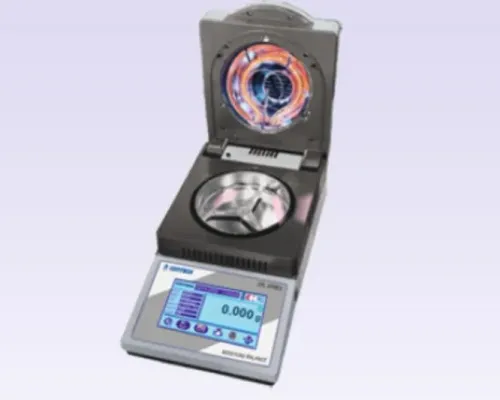
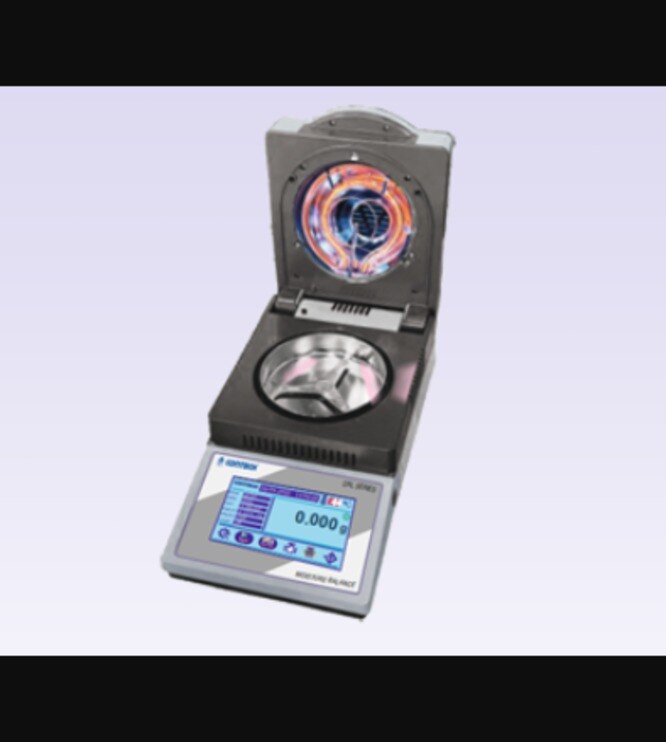
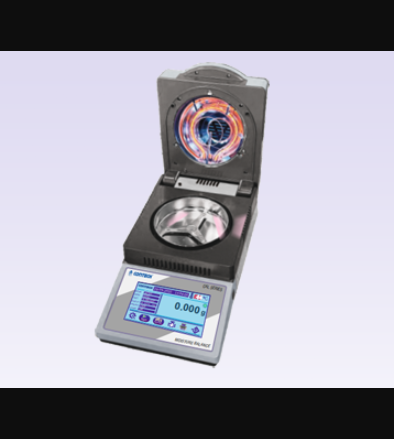 | Moisture Balances Moisture Balances (CAL Series) (0.001 g to 180 g) Moisture Balances (CAL Series) (0.001 g to 180 g) The CONTECH CAL Series Moisture Balances are advanced moisture analyzers designed for fast,... View product → |
Frequently asked questions
When should you choose an LOD moisture balance instead of Karl Fischer titration?
Choose an LOD moisture balance when the specification defines loss on drying under stated conditions. Choose Karl Fischer titration under USP <921> or Ph. Eur. 2.5.12 when the specification requires water content.
How should you prepare pharmaceutical samples for moisture determination?
Match preparation to the material: homogenise non-uniform samples, avoid exposing hygroscopic powders to ambient air, and document weighing time, sample mass, particle size, and any solvent or grinding step.
How do you build a defensible moisture balance heating programme?
Define the temperature, endpoint criterion, sample mass, and heating mode, then confirm the result against a reference method or approved product-specific procedure.
What records should you request before approving a pharmaceutical moisture analyzer?
Request calibration certificates, installation and operating requirements, method validation or verification data, repeatability results, audit-trail controls, service records, and a documented connection to the approved specification.