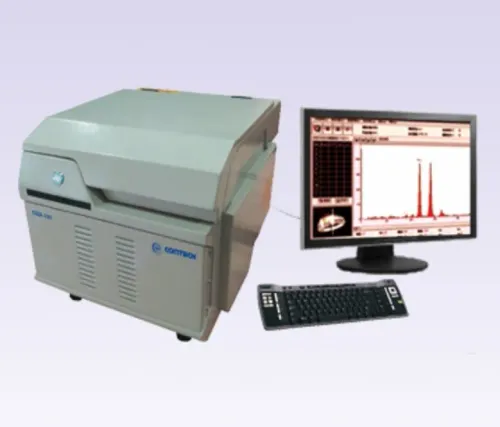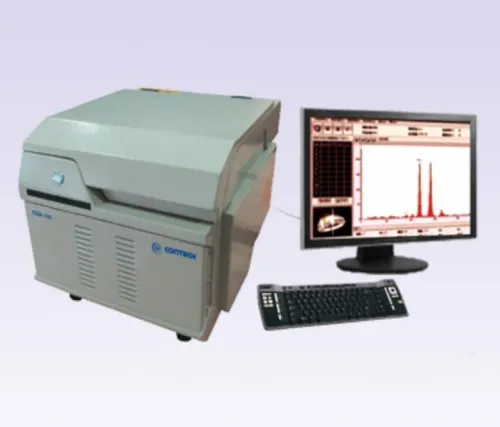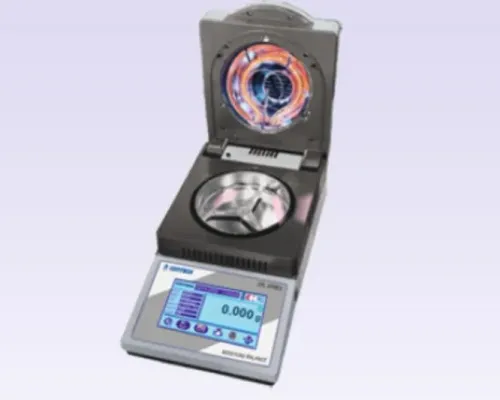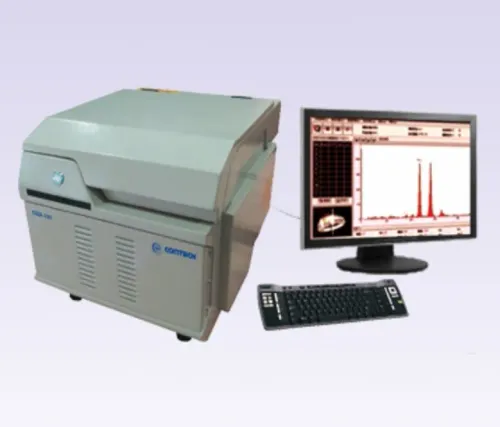

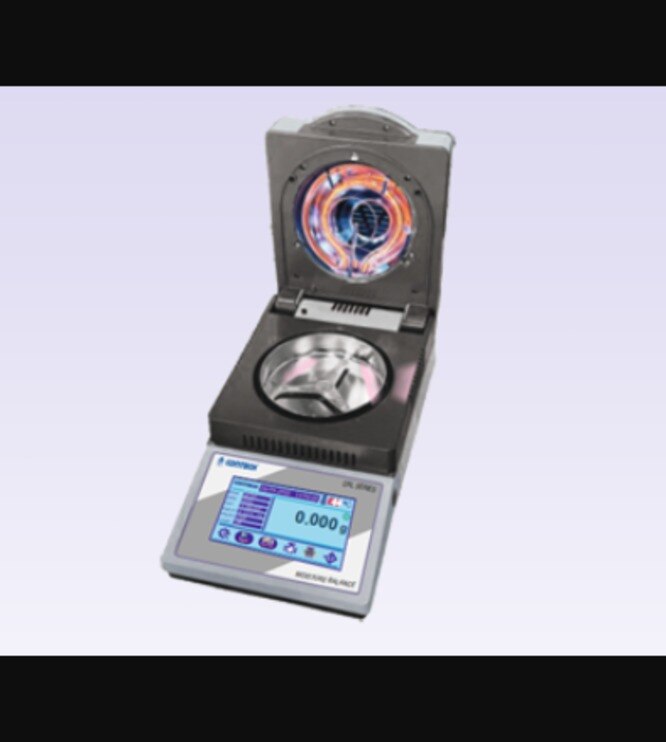
A moisture balance can produce a result in minutes, but its reading represents mass lost under a particular heating program—not automatically water alone. By the end, you will know how to run the test, select conditions for different materials, compare the result with reference methods, and judge whether an instrument is suitable for your Chennai laboratory.
Key takeaways
- LOD reports mass lost during heating, not water content alone.
- Record sample mass, temperature, time, and endpoint for repeatable results.
- Use a reference method when volatile solids or decomposition affect LOD.
- Verify calibration, temperature control, repeatability, and service support in Chennai.
What a moisture balance actually measures
A laboratory moisture balance weighs a sample, heats it with a halogen, infrared, or similar source, and weighs the residue. Its Loss on Drying (LOD) result is mass lost during the selected program, reported as apparent moisture; it does not identify water specifically.
- Record the initial wet sample mass as m₀.
- Heat until the chosen time or constant-mass endpoint is reached, then record the residual mass as mᵣ.
- Calculate mass loss as m₀ − mᵣ. Moisture percentage normally means wet-basis moisture: (m₀ − mᵣ) ÷ m₀ × 100.
- Calculate dry-basis moisture as (m₀ − mᵣ) ÷ mᵣ × 100. Use this basis only when the specification states it, because the number is higher than the wet-basis result.
- Treat residual mass as the material left after heating, including nonvolatile solids and any water or other material the program did not remove.
A high LOD value does not always mean high water content. Solvents, aromas, plasticizers, and volatile additives also reduce mass; loosely held crystallization water can do the same. Conversely, strongly bound water or water trapped inside intact particles can remain in the residue.
Therefore, moisture measurement is method-dependent. Temperature, heating time, air movement, sample thickness, particle structure, and endpoint determine what leaves the pan. An oven result and a moisture-balance result can differ even when both use LOD, so validate the balance against the specified reference method before treating its percentage as interchangeable.
How to prepare and run a repeatable test
Use the same pan type, sample mass range, spreading technique, temperature, and endpoint for every comparison. A thin, even layer gives the moisture balance a repeatable heating path; a heap or overloaded pan creates a wet centre and a dry surface.
1. Close the empty pan chamber, confirm the pan is clean and dry, and tare it. Add a representative sample, then record the initial mass shown by the instrument.
2. Reduce large particles to a consistent, method-approved size without warming or drying the material during grinding. Spread the sample evenly across the pan in a thin layer, avoiding the rim and the instrument’s maximum practical load.
3. Select the drying temperature and endpoint: use a fixed time or constant-mass-loss criterion defined by your method. Do not choose a high temperature solely to shorten moisture measurement; rapid heating can crust the surface while trapping moisture below it.
4. Start the cycle and keep the chamber closed. Halogen and infrared sources heat quickly, while other sources may heat more gradually; faster heating increases the risk of splattering, oxidation, caramelization, or decomposition in wet, sugary, oily, or volatile samples.
5. Handle hygroscopic powders quickly in Chennai humidity. Keep the container closed between actions, control exposure time, and document laboratory humidity when uptake affects the result.
6. At completion, record the displayed final moisture and residual mass. If the sample needs weighing after the run, cool it in the closed pan or a controlled environment, then close the container promptly; uncontrolled cooling can allow moisture reabsorption.
Choosing temperature and settings for each material
Use a starting temperature as a trial condition, not a universal setting. Raise it only after checking recovery, drying time, visible decomposition, and agreement with a reference method.
| Material | Starting approach | Main risk |
|---|---|---|
| Food and grain | Begin near the temperature in the product or cereal method; match grinding and layer thickness | Crusting, caramelization, or a non-comparable result |
| Soil | Start low-to-moderate and extend time for bound or slow-releasing water | Residual moisture or loss of volatile matter |
| Chemicals | Follow the substance specification and screen for solvent release | Decomposition, oxidation, or boiling |
| Pharmaceuticals | Use the validated monograph or internal method | Loss of solvent or heat-sensitive ingredients |
| Plastics | Start below the softening or decomposition range | Melting, bubbling, or plasticizer loss |
| Sludge | Use a thin layer and controlled heating | Splattering, crust formation, or blocked vapour paths |
Run paired trials at different temperatures and endpoints, then compare the result with oven drying, Karl Fischer, or another approved reference. A faster reading is not better if recovery falls or decomposition changes the mass.
For method transfer, check that moisture balances provide:
- A suitable temperature range and increments
- Timed and constant-mass-loss endpoints
- Stored test programs
- Display resolution, weighing accuracy, and repeatability
- Maximum sample mass and minimum practical mass
- Ventilation and vapour handling
- Cleaning access for sticky, corrosive, or dusty residues
A laboratory moisture balance with fine readability still needs a representative sample and stable heating. Record the chosen program, sample mass, endpoint, and cleaning procedure so another operator can reproduce the result.
When a moisture balance is not the right reference method
A rapid moisture balance is not the right reference when the specification defines a different procedure. Oven and moisture-balance Loss on Drying results are not interchangeable if temperature, air movement, sample thickness, heating time, or endpoint differs; each condition can remove a different mix of water, solvents, aromas, or other volatiles.
| Method | Best use | Limitation |
|---|---|---|
| Moisture balance | Fast routine screening in minutes | Reports apparent mass loss; temperature, sample spreading, and endpoint control strongly affect bias |
| Oven-and-balance LOD | Specified gravimetric reference | Slower, but follows defined time, temperature, airflow, and weighing conditions |
| Karl Fischer titration | Water-specific specifications | Reagent reactions, incomplete extraction, insolubility, and bound water can impair recovery |
| Infrared moisture testing | Rapid surface or production-line checks | Requires matrix-specific calibration and may not represent the full sample |
| Thermogravimetric analysis | Separating mass-loss stages and detecting decomposition | Costs more and still requires interpretation of each transition |
Choose Karl Fischer when the requirement concerns water specifically and the sample also contains volatile solvents. Choose TGA when bound water, staged release, or decomposition makes a single drying endpoint ambiguous. A heat-sensitive material can degrade before its water leaves, making both oven LOD and balance results misleading.
USP <731> and ASTM E1131 define established loss-on-drying or thermogravimetric approaches, while cereal products can have product-specific grinding, temperature, and drying-time methods. Replacing any specified procedure with a moisture balance requires validation or demonstrated equivalence for each important matrix. That is the basis for defensible laboratory moisture balance moisture for measurement in Chennai.
How to verify an instrument before buying or approving it in Chennai
Approve a laboratory moisture balance only after it passes your method, not its brochure. In Chennai, compare repeatability at the actual moisture range and bias against the required oven, vacuum-oven, Karl Fischer, or other validated reference method using intended matrices—not only flour.
- Test temperature uniformity separately from weighing. A calibrated mass check verifies the balance, not whether the heater reaches or holds the selected temperature.
- Check balance linearity, minimum practical sample mass, maximum sample mass, and repeatability across low, medium, and high moisture levels.
- Confirm endpoint stability using both timed drying and constant-mass-loss settings where relevant. Record whether the result drifts after the displayed endpoint.
- Review the temperature range and increments, ventilation and vapour-handling path, cleaning access, and risk of condensation or carryover.
- Require audit trails, user access controls, result locking, time stamps, export formats, and backup provisions if data integrity matters.
- Set calibration and verification intervals from risk, workload, drift, and control-chart trends rather than a fixed calendar alone.
| Check | Evidence to request | Failure consequence |
|---|---|---|
| Reference bias | Paired results on each intended matrix | Fast results that disagree with the approved method |
| Heating performance | Independent temperature check at operating settings | A correct mass reading from an incorrectly heated sample |
| Service support | Response times, spare parts, and local technician coverage | Unplanned downtime and unresolved method drift |
Ask CONTECH INSTRUMENTS LTD. for documented specifications, demonstrations on representative samples, and support for method comparison. Choose neither a moisture balance instrument nor other moisture balances solely for nominal readability or advertised speed.
Related product
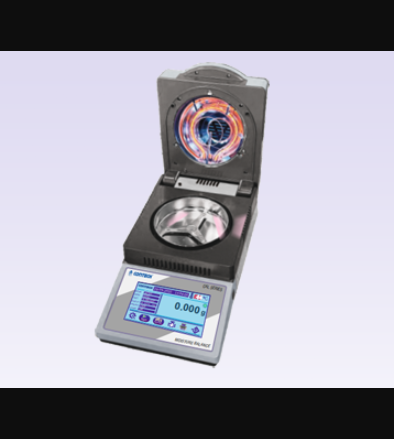 | Moisture Balances Moisture Balances (CAL Series) (0.001 g to 180 g) Moisture Balances (CAL Series) (0.001 g to 180 g) The CONTECH CAL Series Moisture Balances are advanced moisture analyzers designed for fast,... View product → |
Frequently asked questions
What does a laboratory moisture balance actually measure?
It measures Loss on Drying: the mass a sample loses during a selected heating program. The result is apparent moisture, not water identified specifically.
How do you prepare and run a repeatable moisture test?
Homogenise the sample, use a consistent mass and pan arrangement, record the program settings, and repeat tests until results agree within your laboratory’s acceptance limit.
How should you choose temperature settings for different materials?
Start with a conservative temperature that avoids scorching, spattering, or decomposition, then compare results with an established reference method before setting routine parameters.
When is a moisture balance not the right reference method?
Use another method when volatile compounds, decomposition, bound water, or heat-sensitive ingredients make mass loss different from actual water content.
How can you verify a moisture balance before buying or approving it in Chennai?
Check documented weighing and temperature performance, repeatability data, calibration procedures, suitable test programs, local service capability, and access to spare pans and consumables.