
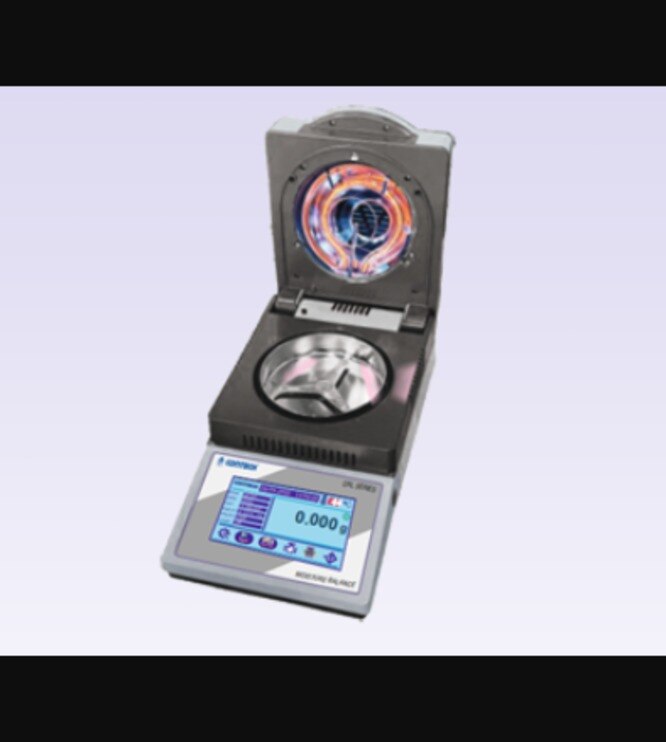
A displayed moisture percentage is only useful when the sample, heating program, endpoint rule, and reference method are controlled. By the end, you will know how to prepare samples, choose and validate an LOD method, interpret the result, and compare analyzer specifications before buying or using equipment in a Hyderabad laboratory or factory.
Key takeaways
- Separate moisture detection from quantitative measurement and validated determination.
- Spread samples evenly and record mass, temperature, time, and program settings.
- Match drying temperature and endpoint criteria to the material’s moisture behaviour.
- Validate displayed results against a reference method before release decisions.
Know whether you need detection, measurement, or determination
Detection, measurement, and determination answer different questions. Detection only indicates that moisture is present. Measurement gives a quantity, such as percentage mass loss. Determination uses a defined, validated method with stated conditions and acceptance limits. For moisture detection in Hyderabad, do not treat a positive indication as a quantitative result.
| Type | Meaning | Result |
|---|---|---|
| Detection | Confirms moisture is present | Yes or no |
| Measurement | Quantifies a measured property | % moisture or % mass loss |
| Determination | Quantifies moisture under a defined method | Validated, reproducible result |
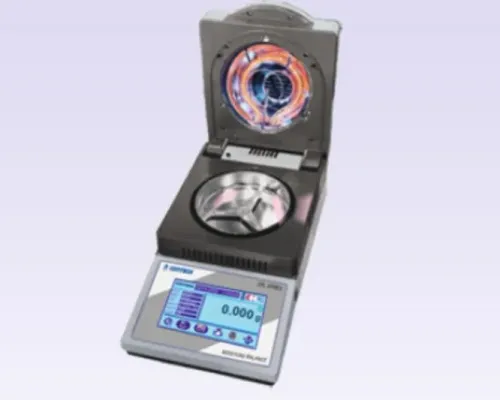
A display moisture analyzer performs loss-on-drying (LOD): it weighs the initial sample, applies controlled heat, measures the final mass, and calculates wet-basis moisture as (initial mass − final mass) ÷ initial mass × 100. Dry-basis moisture is (initial mass − final mass) ÷ final dry mass × 100.
Do not compare results reported on different bases.
LOD suits powders, grains, food products, chemicals, pharmaceuticals, slurries, pastes, and plastics when heating removes only the intended moisture. The mass loss can also include volatile solvents, additives, or other thermally lost components, so it is not automatically a water-specific result. USP General Chapter <731> describes general loss on drying, not a universal water assay.
Use Karl Fischer titration when water alone must be measured or solvents could distort LOD. Correlate grain and cereal methods with ISO 712. For plastics, compare the method with ASTM D6980 and investigate additive or volatile loss at the selected temperature. For moisture measurement in Hyderabad, specify the basis and method before comparing displayed percentages.
Prepare and run a sample without creating the error
Collect a portion that represents the batch, mix it thoroughly, and grind it only when the method requires smaller particles. Grinding creates heat and can drive moisture from volatile or hygroscopic materials, so grind in a closed container and control the time from opening to transfer.
1. Handle a clean, dry pan by its rim or with forceps. Tare it in the analyzer before adding material; fingerprints, residue, or a warm pan alter the starting mass.
2. Add the specified sample mass at the centre. An overloaded pan increases drying time and can produce a crust; too little sample increases weighing variation.
3. Mix the portion until it is homogeneous, then spread it as a thin, even layer. Coarse particles, clumps, and thick areas dry at different rates and can leave moisture trapped below the surface.
4. Select the approved program for that material, including heating method, temperature profile, and endpoint rule. Do not accept a factory default without method comparison.
5. Start heating only after the pan is correctly positioned. Watch for foaming, splashing, charring, or crust formation; these signs indicate that the program is too aggressive or unsuitable.
6. Let the analyzer stop by the specified fixed time or mass-change criterion. An automatic endpoint is a stopping algorithm, not proof that every component has dried.
7. Cool inside the analyzer when the method permits it; otherwise transfer the pan to a sealed container immediately. Hygroscopic material requires a defined container-opening and transfer time.
8. Record sample identity, batch number, sample mass, temperature profile, endpoint rule, test duration, displayed percentage, and replicate number. A display moisture analyzer in Hyderabad supports moisture determination only when these conditions accompany the result.
Choose a drying program that matches the material
Do not accept the factory default: set temperature, ramp, drying time, and endpoint for the material and compare the result with a validated reference method. Rapid halogen heating gives a quick result; infrared and conventional hot-air heating transfer energy differently, so compare them before choosing.
| Heating method | Strength | Main risk |
|---|---|---|
| Halogen | Fast, concentrated heating | Decomposition, charring, crust formation, or water migration before the interior dries |
| Infrared | Direct radiant heating | Uneven surface heating and premature endpoint |
| Conventional hot-air | Gradual, surrounding heat | Longer tests and slower response |
Use a fixed time, a permitted mass change per unit time, or a two-stage temperature program only after comparison with the reference method. An automatic endpoint is a stopping algorithm, not proof that all removable moisture has left.
For moisture determination in Hyderabad, develop the program with replicate tests at low, middle, and high moisture levels, then define acceptance limits for bias and repeatability.
For a starting mass mi of 10.00 g and final mass mf of 8.00 g, wet-basis moisture is (mi − mf) ÷ mi × 100 = 20.0%; dry-basis moisture is (mi − mf) ÷ mf × 100 = 25.0%. State the basis explicitly. Extra decimal places on the display do not prove equivalent accuracy.
Include temperature stability and uniformity, balance drift, buoyancy, sample mass, and sample-to-sample endpoint variation in uncertainty. Verify both weighing and heating systems; a balance check alone cannot validate the method.
Compare analyzer specifications before choosing a Hyderabad supplier
A display moisture analyzer in Hyderabad should be compared by the method it runs, not by its display label.
For moisture determination in Hyderabad, ask each supplier for the operating temperature range, temperature accuracy, heating technology, balance readability, repeatability data, maximum sample mass, display resolution, test-program storage, USB or other export functions, and raw test conditions.
- Request sample mass, temperature profile, endpoint rule, test duration, number of replicates, and correlation with the laboratory’s reference method.
- Treat a stated range such as 0.001 g to 180 g carefully: it can pair balance readability at one end with maximum sample weight at the other, or describe separate model configurations. It does not state the minimum sample size or moisture accuracy.
- Ask the supplier to test your actual powder, grain, food, chemical, pharmaceutical, slurry, paste, or plastic. A convenient demonstration sample proves little.
Compare results on the same basis:
| Comparison point | What to match | Why it matters |
|---|---|---|
| Sample mass | Same mass and loading pattern | Changes drying behaviour |
| Temperature profile | Same setpoint, ramp, and heating method | Affects decomposition and drying rate |
| Endpoint rule | Fixed time or permitted mass change | Changes when the test stops |
| Duration | Total drying time | Exposes premature endpoints |
| Replicate results | Repeat tests at low, middle, and high moisture | Shows repeatability |
| Reference correlation | Analyzer versus the laboratory method | Tests bias, not just plausibility |
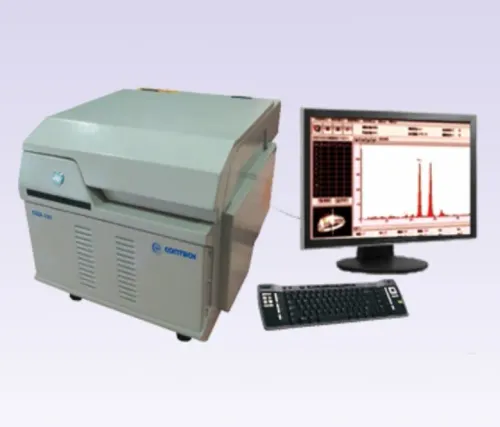
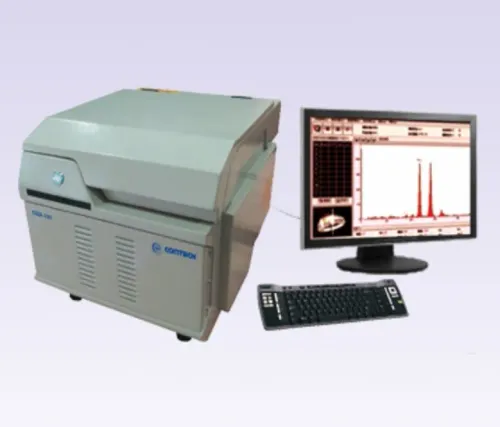
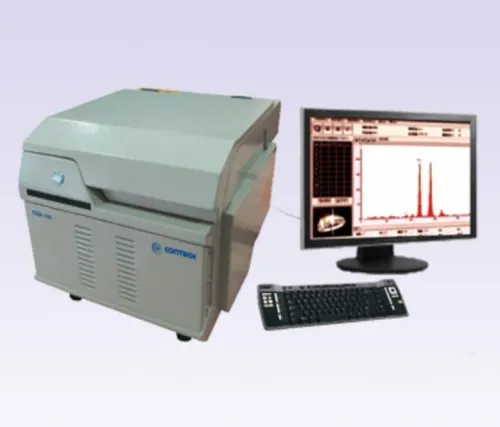
CONTECH INSTRUMENTS LTD. can be considered when evaluating equipment, but match its configuration to the material, method, documentation, and data workflow rather than selecting from the display label alone.
Related product
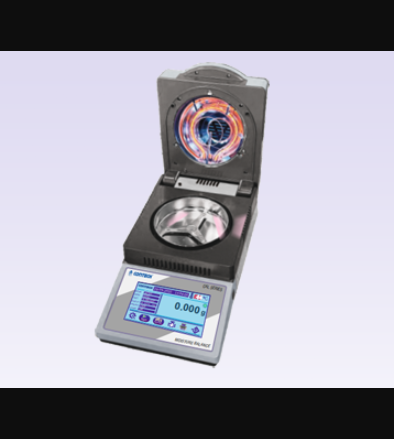 | Moisture Balances Moisture Balances (CAL Series) (0.001 g to 180 g) Moisture Balances (CAL Series) (0.001 g to 180 g) The CONTECH CAL Series Moisture Balances are advanced moisture analyzers designed for fast,... View product → |
Validate the displayed result before using it for release decisions
A displayed percentage becomes defensible only after you verify both measurement systems. Check the weighing system with suitable traceable masses, then check heating temperature accuracy or uniformity. Balance calibration alone does not validate the moisture method.
| Check | Evidence to retain | Why it matters |
|---|---|---|
| Weighing | Traceable-mass verification | Detects balance error |
| Heating | Temperature accuracy or uniformity check | Confirms the sample receives the stated program |
| Method | Replicates at low, middle, and high moisture levels | Shows repeatability across the working range |
| Reference | Comparison with the applicable reference method | Reveals method bias |
Set written acceptance limits for bias and repeatability before release testing. A fast result from moisture measurement in Hyderabad is not comparable with another instrument unless you also compare sample mass, temperature profile, endpoint rule, duration, replicate count, and reference-method correlation.
Keep the preparation instruction beside the instrument. Specify particle-size treatment, mixing, pan loading, layer thickness, transfer time, cooling, and endpoint selection; otherwise operators can follow the same method name and produce different results.
Investigate operator disagreements by checking:
- Reabsorption during transfer or cooling
- Heat generated during grinding
- Pan cleanliness
- Surface crust formation
- Incomplete drying
Export or transcribe records that preserve sample identity, method name, temperature program, endpoint criterion, start mass, final mass, result basis, and test date. These controls also distinguish moisture detection in Hyderabad from a validated moisture determination: a plausible display is not evidence of complete drying or accurate release data.
Frequently asked questions
What is the difference between moisture detection, measurement, and determination?
Detection indicates that moisture is present; measurement reports a quantity such as percentage mass loss; determination uses a validated method with defined conditions and limits.
How do you prepare a sample for a moisture analyzer?
Homogenise the sample, use a representative portion, spread it evenly, minimise exposure to ambient air, and record the starting mass before drying.
How do you choose a drying program for a material?
Select the temperature, heating profile, sample mass, and endpoint criteria according to the material’s volatility, heat sensitivity, and drying behaviour.
How can you validate a displayed moisture result before release?
Compare analyzer results with a defined reference method, check repeatability using replicate samples, review the calibration status, and document acceptance limits.