
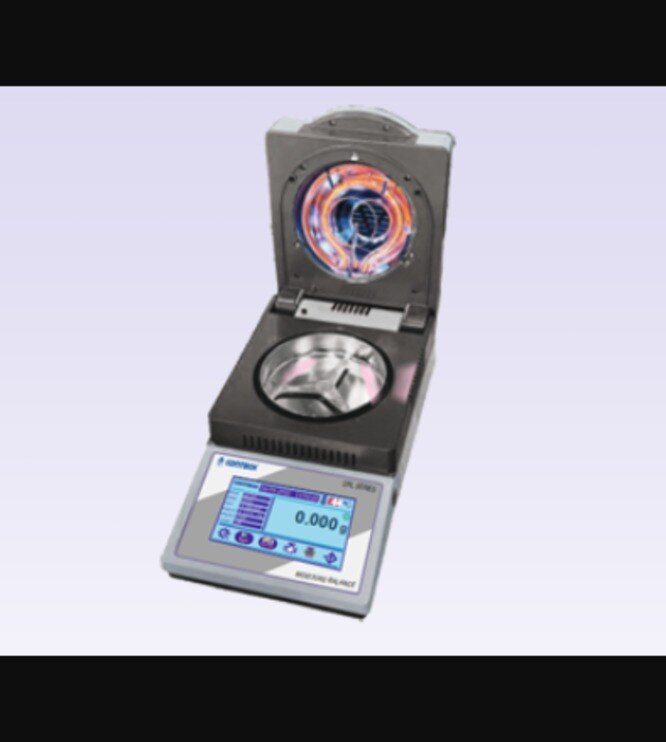
A Hyderabad buyer needs more than a quotation to establish that an IR moisture analyzer is available: local stock, delivery timing, installation, method suitability, and service support all affect the purchase. By the end, you can separate an immediately available unit from an imported or order-based option and specify the test method needed for dependable results.
Key takeaways
- Ask where the instrument is physically stocked and request a written dispatch date.
- Define sample mass, drying temperature, endpoint, and repeatability before testing.
- Compare analyzer results with an approved reference method and your specification limit.
- Treat supplier demonstrations as evidence only when they use your material and test method.
What “available” means when you buy in Hyderabad
A quoted IR moisture analyzer is not immediately available until the supplier names its physical stock location and gives a dispatch date to your Hyderabad site. For ir moisture for analyzer availability in hyderabad, distinguish these options:
| Option | What it means | When it applies |
|---|---|---|
| Local stock | Unit is stored in Hyderabad or nearby | You need rapid delivery and service access |
| India-wide dispatch | Unit ships from another Indian warehouse | Delivery depends on transport and dispatch timing |
| Demonstration | Supplier provides a unit for testing | You need to test your own material before buying |
| Rental | Unit is supplied temporarily | You are developing a method without committing to purchase |
| Import | Unit is sourced from outside India | Lead time, customs, and service arrangements need confirmation |
Ask for written confirmation of:
- Delivery date, installation, operator training, and calibration support covering Telangana
- Required electrical supply, software, printout, and data-export functions
- Spare sample pans, heating elements, and preventive-service response time
- Infrared heating, emitter type, temperature range, ramp control, and endpoint options
A demonstration is valuable when your own material determines suitability. Rental can support method development, but it may not provide the purchased instrument’s service coverage or data controls.
Ask whether the ir moisture analyzer uses infrared heating. Loss on Drying describes the measurement principle, not the heat source, so an LOD description alone does not prove that a CAL Series instrument uses infrared. Compare quotations by total time to usable results, not instrument price alone.
What an IR moisture analyzer measures—and where it fits
An IR moisture analyzer measures mass loss, not water itself. It weighs a sample, heats it with radiant infrared energy, weighs it again, and reports the difference as moisture. Alcohols, solvents, and other volatile compounds that evaporate during the cycle will also appear in that result.
Food products, grains, powders, chemicals, pharmaceuticals, plastics, sludge, and textiles suit the method when the heating profile matches a validated reference procedure. Do not test material that decomposes, oxidises, boils violently, splatters, ignites, or forms an impermeable crust at the selected temperature.
A wet sample can dry at the surface while retaining moisture below, causing an early endpoint and a falsely low result. Grind or mix heterogeneous solids, then spread a thin, even layer across the pan. For liquids, pastes, splattering samples, or samples that form a skin, use a glass-fibre or cellulose pad.
The pad improves distribution, but adds consumable cost, tare handling, and possible blank error. These preparation controls matter across moisture analyzers because sample mass, particle size, layer thickness, temperature, and endpoint selection change the result.
| Emitter type | Compare | Why it matters |
|---|---|---|
| Halogen infrared | Heating rate and ramp control | Fast heating can scorch or crust samples |
| Ceramic infrared | Uniformity and control range | Slower, steadier heating may improve repeatability |
| Other radiant sources | Temperature stability and repeatability | Performance depends on the validated method, not the label “IR” alone |
Match the instrument to your reference procedure rather than choosing by emitter name or display resolution.
How to develop a repeatable test for a new material
Begin by homogenising the material and preparing the pan or glass-fibre or cellulose pad. Place the empty pan on the balance, close the chamber, tare it, then add a thin, representative layer without touching the rim.
A moderate sample mass should dry through without splashing; a large load lengthens the test and encourages crusting, while a very small load magnifies weighing and handling error.
Record these details for every trial:
- Sample identity, batch number, initial mass, temperature, ramp, endpoint, elapsed time, and operator.
- Temperature selected from the reference method or the material’s stability limit.
- Any sign of decomposition, oxidation, boiling, spattering, or surface crusting.
| Endpoint | Strength | Development risk |
|---|---|---|
| Fixed drying time | Easy comparison between runs | Can stop before the sample is dry |
| Constant weight | Confirms mass has stabilised | Takes longer and needs a stability criterion |
| Rate of change | Automates routine testing | Can stop during the first stage of a multi-stage curve |
For a new material, compare all relevant endpoint options and document the chosen criterion in the standard operating procedure. Run at least three replicates, then define the acceptable spread. Use a staged temperature programme when one high temperature creates a dry skin.
A moisture balance instrument or moisture determination analyzer reports mass loss, not water selectively, so volatile solvents can appear as moisture.
Choose wet-basis reporting as water loss divided by original mass, or dry-basis reporting as water loss divided by final dry mass. Cool the pan and chamber before handling, then clean residue from the pan area and sensor surfaces to prevent cross-contamination.
How to prove the result is fit for your specification
A 0.01% display does not prove 0.01% accuracy. Prove fitness by comparing the moisture determination analyzer with the method your laboratory already trusts, using the same homogenised material and a documented wet-basis or dry-basis calculation.
1. Name the reference: use the product standard, compendial method, or laboratory procedure in your specification. For grain, ASTM E871 is a recognised oven-based reference. Match sample preparation, sample mass, particle size, layer thickness, replicate count, and reporting basis.
2. Run matched replicates by both methods, then calculate bias and repeatability. Investigate disagreement instead of accepting it because the analyzer reads 0.001 g. Evaporation before weighing, uneven heating, sample heterogeneity, endpoint selection, and a drying crust can dominate uncertainty.
3. Check weighing with an external balance or certified test weight. Check method performance separately with a suitable moisture-content or loss-on-drying reference material. A balance check cannot prove that heating or endpoint calculation is correct.
4. Compare fixed-time drying with constant-weight or rate-of-change endpoints during validation. Automatic endpoints can stop during a multi-stage drying curve, producing a biased result; record the selected criterion in the standard operating procedure.
Hot-air oven loss on drying takes longer but aligns with established reference procedures. An IR or halogen balance is faster, destructive, and method-dependent. Karl Fischer titration selectively measures water and fits specifications requiring water determination; capacitance meters suit rapid, material-specific screening. Microwave methods need controlled power, vessel design, and validation.
Count labour, consumables, repeats, and rework—not only electricity.
How to shortlist a Hyderabad supplier without assuming stock
A credible quote gives you a defensible route from delivery to a validated result, not merely a short drying time. Build one row per Hyderabad supplier and complete this five-column comparison sheet.
| Stock status | Technical fit | Method support | Service coverage | Total acquisition time |
|---|---|---|---|---|
| Supplier: __; local warehouse, live demonstration, rental, India-wide dispatch, or import lead | Electrical supply, software, printout, data export, emitter, temperature range | Sample demonstration or plan for mass, temperature, ramp, endpoint, cooling, cleaning, reporting basis | Installation, calibration, spare pans, heating elements, Telangana contact | Written delivery date plus time to installation, training, and first validated result |
Ask each supplier to state whether the moisture balance instrument is physically in a local warehouse. “In stock” is incomplete without a stock location and dispatch date.
Request these details in writing:
- Delivery date, installation scope, operator training, calibration arrangements, preventive-service response time, spare sample pans, and heating elements.
- Rental terms, live demonstration availability, India-wide dispatch conditions, and import lead time.
- A demonstration using your sample, or a method-development plan covering sample mass, temperature, ramp, endpoint, cooling, cleaning, and wet-basis or dry-basis output.
For IR moisture analyzer availability in Hyderabad, confirm service coverage in Telangana and the required electrical supply before comparing prices. If you are assessing the CAL Series from CONTECH INSTRUMENTS LTD., request documentation identifying the heat source, emitter type, temperature range, drying-profile controls, endpoint logic, validation support, and local service terms.
Its published LOD description does not establish those points.
Related product
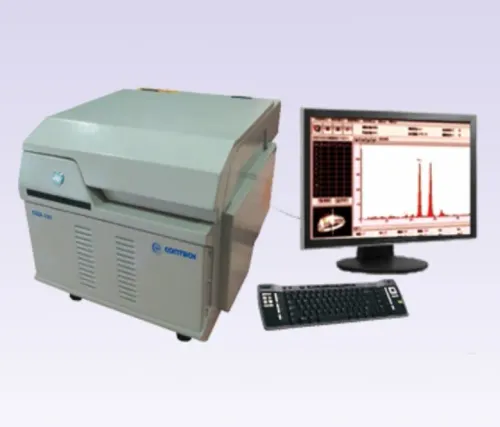
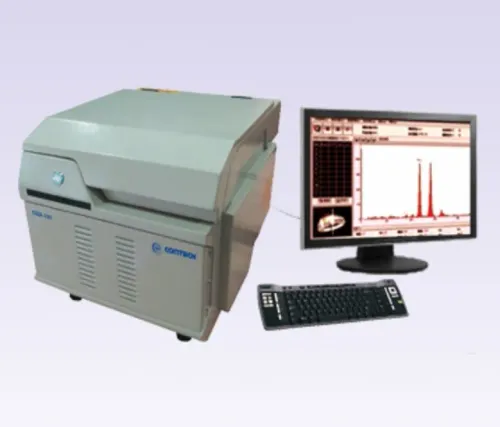
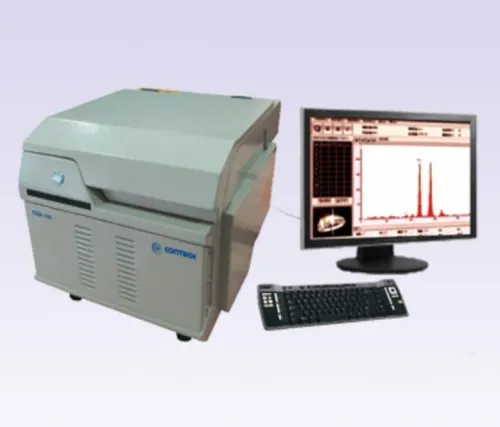
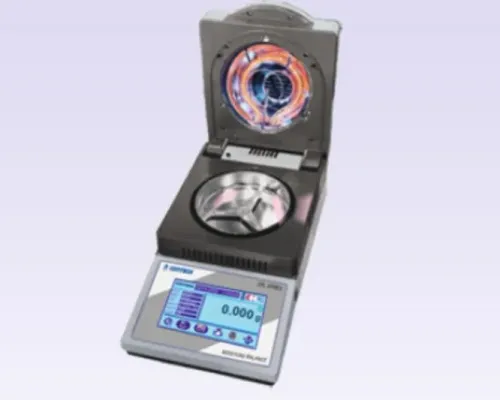
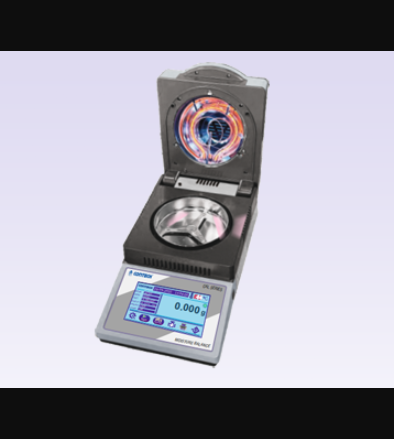 | Moisture Balances Moisture Balances (CAL Series) (0.001 g to 180 g) Moisture Balances (CAL Series) (0.001 g to 180 g) The CONTECH CAL Series Moisture Balances are advanced moisture analyzers designed for fast,... View product → |
Frequently asked questions
What does availability mean when buying an IR moisture analyzer in Hyderabad?
Availability means the supplier identifies the instrument’s physical stock location and provides a dispatch date to your Hyderabad site. A quotation alone does not prove immediate availability.
What does an IR moisture analyzer measure?
An IR moisture analyzer estimates moisture loss by weighing a sample, heating it with infrared energy, and calculating the mass reduction. It fits routine moisture determination when the heating method suits the material.
How do you develop a repeatable test for a new material?
Set and record the sample mass, preparation method, drying temperature, heating profile, endpoint, pan type, and number of replicates. Keep these conditions unchanged while comparing results.
How can you prove an IR moisture result fits your specification?
Compare analyzer results with an approved reference method, test representative samples across the specification range, and document repeatability, bias, and acceptance limits.
How should you shortlist a Hyderabad supplier without assuming stock?
Ask for the stock location, dispatch date, model and configuration, demonstration conditions, calibration documents, installation support, and service response terms before comparing suppliers.