
A new benchtop XRF unit in Mumbai may cost about ₹5 lakh–₹20 lakh before GST, while a low advertised price can exclude installation, standards, software, shielding, or service. By comparing the full ownership cost, detector, test method, and operating limits, you can decide whether the equipment suits your jewellery counter or whether another assay method is safer.
Key takeaways
- Budget ₹5 lakh–₹20 lakh before GST for a new benchtop XRF analyzer.
- Add GST, calibration standards, installation, training and service to the equipment budget.
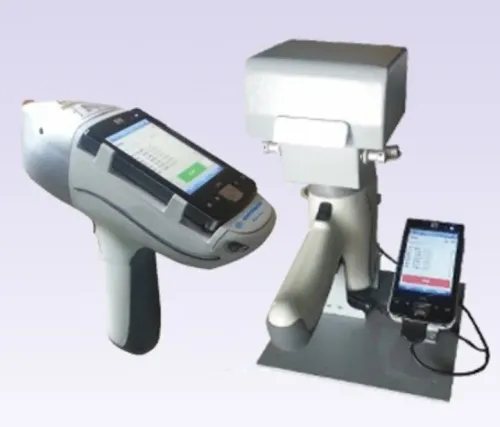
- Choose handheld XRF for mobility; choose benchtop equipment for controlled repeat testing.
- Test multiple points because plating, solder and coatings can distort surface readings.
What price should you budget for an XRF gold purity analyzer in Mumbai?
A realistic Mumbai budget for a new benchtop XRF gold purity analyzer is ₹5 lakh–₹20 lakh before GST. The final figure depends on the detector, X-ray tube, small-spot options, software, calibration standards, enclosure and service coverage.
The phrase gold purity for analyzer price in mumbai often produces misleading online comparisons. A low listing may show only the basic instrument, exclude GST and freight, or omit the software and reference standards needed for jewellery testing. A handheld xrf gold purity analyzer usually requires a substantially higher budget.
Ask every supplier for a delivered quotation that separates:
- Instrument model, detector, tube warranty and effective analysed spot size
- GST, freight, installation, commissioning and operator training
- Software licence, updates, database functions and reporting features
- Calibration, certified reference standards and verification procedure
- Radiation-safety documentation, enclosure, UPS and computer requirements
- Preventive maintenance, Mumbai response time and replacement tube or detector cost
| Offer detail | Comparable wording to request | Why it changes the decision |
|---|---|---|
| Detector | Gas proportional, silicon-PIN or SDD, with resolution stated | Changes speed, light-element performance, price and service burden |
| Spot size | Effective analysed area, not only optical or collimator diameter | A large beam can miss thin chains, prongs or solder seams |
| Warranty | Tube, detector, electronics and labour listed separately | A “one-year warranty” may exclude the costliest parts |
| Service | Visits, calibration frequency, standards and turnaround time | Determines usable ownership cost after installation |
| Tax and delivery | GST, freight and import charges shown separately | Prevents an artificially low landed price |
Which costs sit outside the analyzer’s invoice?
A ₹5 lakh–₹20 lakh Mumbai quotation for a new benchtop gold purity analyzer is usually before GST, and the lowest figure often excludes ownership essentials. Compare the complete delivered cost, not the instrument line alone. For a handheld unit, add battery replacement, charging or docking hardware, software licensing, radiation-safety controls, and annual verification.
Include these items in your purchase worksheet:
- X-ray safety enclosure or shielding, UPS, computer, printer, installation, delivery, and operator training
- Certified reference standards, calibration or verification, software updates, and radiation-safety documentation
- Detector and X-ray-tube warranty periods, Mumbai response time, preventive-maintenance charges, and calibration fees
- Replacement cost and lead time for the X-ray tube, detector, battery, and other service parts
- GST, annual maintenance, and any software subscription or licence renewal
Detector choice changes both the invoice and the service risk:
| Detector | Price and performance effect | Service burden |
|---|---|---|
| Gas proportional | Lower purchase price; usable sensitivity but lower spectral resolution and slower testing | Requires detector gas, regulators, leak checks, and gas-related servicing |
| Silicon-PIN | Mid-range cost; compact, stable, and suitable for routine jewellery screening | No detector gas, but cooling electronics and detector replacement remain service concerns |
| SDD | Highest price; better resolution, faster counting, and stronger separation of close elemental peaks | No gas supply; budget for specialist electronics service and a costlier replacement detector |
Ask CONTECH INSTRUMENTS LTD. to quote these inclusions separately, so you can compare gold purity equipment on ownership cost rather than brochure price.
Related products
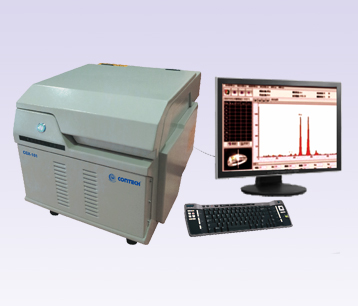 | X-RAY FLUORESCENCE SPECTROMETERS GOLD PURITY CHECKING INSTRUMENTS Gold Purity Checking Balance Gold Purity Checking Balance Manufacturer, Supplier & Exporter Our Gold Purity Checking Balance is designed for... View product → |
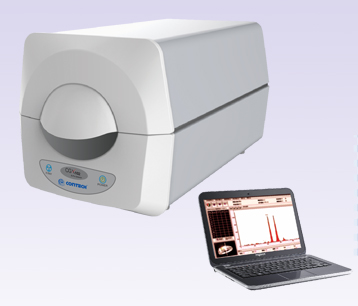 | X-RAY FLUORESCENCE SPECTROMETERS X-Ray Fluorescence Spectrometer – Gas Proportional XRF Detector CGX-101 / Silicon-PIN XRF Detector C GOLD PURITY CHECKING INSTRUMENTS X-Ray Fluorescence Spectrometer – Gas Proportional XRF Detector CGX-101 / Silicon-PIN XRF Detector CGX-102 X-Ray... View product → |
Should your jewellery business buy a handheld or benchtop instrument?
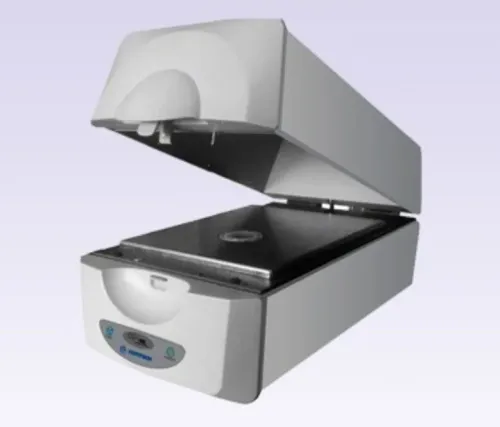
Choose a benchtop unit for a fixed counter, workshop, refinery, or assay laboratory; choose handheld only when you need to move between lots, stores, or customer locations. A new benchtop xrf gold purity analyzer in Mumbai commonly falls around ₹5 lakh–₹20 lakh before GST, while a handheld purchase adds battery, docking, radiation-safety, and calibration costs.
| Format | Best fit | Main advantage | Demand from the quotation |
|---|---|---|---|
| Benchtop | Jewellery counter, workshop, refinery, assay laboratory | Stable positioning, controlled measurement, better repeatability | Enclosure, spot-size options, detector type, software, standards, UPS, service |
| Handheld | Pawn operation, buying desk, stockroom, field inspection | Tests awkward or mobile items quickly | Battery life, interlocks, docking station, charging system, calibration, radiation controls |
Specify outputs for Au, Ag, Cu, Zn, Ni, Pd, and Pt, plus Rh or other solder-related elements relevant to your alloys. Do not accept “gold percentage” alone; require elemental results in weight percent, alloy identification, measurement time, spot diameter, resolution, repeatability, calibration method, and report export.
Gold purity checking instruments read the irradiated surface, not the entire object. Plating, solder, dirt, or a gold-rich surface can mislead a handheld or benchtop result, so retain fire assay or controlled destructive testing for disputes and high-value certification.
When can a surface XRF result misrepresent the jewellery?
A surface XRF result can misrepresent jewellery whenever the irradiated spot is not representative of the article’s bulk. The gold purity analyzer reads a shallow surface layer, so plating, vermeil, rhodium, solder, polishing compound, dirt, or a gold-rich skin can report higher fineness than the underlying metal.
Shape creates a second trap. Curved bangles, chains, wires, angled pieces, hollow construction and thin sections change the material seen by the beam. Solder joints can read as a different alloy, while a small spot can miss the joint entirely.
Clean the surface, measure flat areas where possible, and repeat at separated locations; repetition does not prove bulk composition.
Escalate beyond non-destructive gold purity equipment when:
- Use fire assay for settlement disputes, statutory evidence, or high-value batch certification. It measures the bulk gold content through a controlled destructive process.
- Use representative sampling before testing a mixed lot, especially when articles differ in colour, construction, plating, soldering, or declared fineness.
- Use density testing to screen solid, uniform pieces for obvious discrepancies. It cannot reliably expose thin plating, hollow interiors, or mixed-metal construction by itself.
- Use destructive melt analysis when plating, hidden solder, hollow construction, or conflicting XRF readings could change the commercial decision.
- Obtain an assay-office certificate when a buyer, court, insurer, export process, or contract requires independent traceable evidence rather than an in-house screening result.
What operating and acceptance procedure makes the result defensible?
Accept a result only after the instrument, sample, and operator have passed a repeatable check.
1. Clean and dry the jewellery, remove dirt and polishing compound, and place a flat area firmly against the window. Record the item number, alloy claim, test location, spot size, and surface condition.
2. Verify the instrument with certified reference materials covering the expected fineness before the shift and after any service, software change, or relocation. Stop testing when the check falls outside the manufacturer’s stated tolerance.
3. Measure at least three separate points on each item. Use a smaller collimator for prongs, narrow bands, chains, engraved areas, and solder-free sections; never treat one large-spot reading as the whole article.
4. Repeat any result near a buying, selling, hallmark, or rejection limit. Save every spectrum and report the mean, spread, gold percentage, fineness equivalent, alloy elements, operator, date, instrument serial number, and test locations.
5. Interpret surface XRF as a surface measurement. Escalate to sampling, density testing, destructive melt analysis, fire assay, or an assay-office certificate when readings disagree, plating is suspected, or the item’s construction prevents representative contact.
Put these acceptance terms into the purchase specification: measurable gold, silver, copper, zinc, nickel, palladium, platinum, and solder-related elements; effective analysed spot size; certified standards; repeatability tolerance; rounding rules; exported records; training; calibration; and service response. Do not compare gold purity for analyzer price in Mumbai on the headline number alone.
Gold purity checking instruments need documented commissioning and a written pass/fail protocol.
Frequently asked questions
What price should you budget for an XRF gold purity analyzer in Mumbai?
Budget ₹5 lakh–₹20 lakh before GST for a new benchtop XRF gold purity analyzer. The detector, X-ray tube, small-spot options, software, calibration standards, enclosure and service coverage affect the final price.
Which costs sit outside the analyzer’s invoice?
Include GST, installation, operator training, calibration standards, preventive maintenance, software or service coverage, and any site requirements when calculating the total cost.
Should a jewellery business buy a handheld or benchtop instrument?
Choose handheld equipment when you need mobility and on-site checks. Choose benchtop equipment when you need a controlled setup, repeat measurements and a stable testing workflow.
When can a surface XRF result misrepresent jewellery?
A surface result can misrepresent the underlying metal when jewellery is plated, coated, soldered or made from layered materials. Test several points and record the item’s construction before accepting the result.
What procedure makes an XRF gold purity result defensible?
Use a documented procedure covering item identification, surface preparation, instrument checks, calibration, measurement location, repeated readings, results and operator sign-off. Keep the instrument settings and supporting records with the report.
Related product
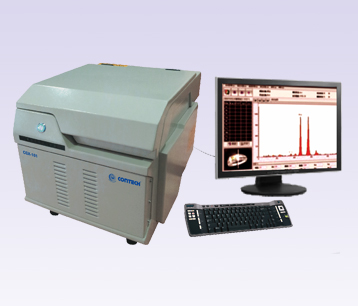 | X-RAY FLUORESCENCE SPECTROMETERS X-Ray Fluorescence Spectrometer – Gas Proportional XRF Detector CGX-101 X-Ray Fluorescence Spectrometer – Gas Proportional XRF Detector CGX-101 The X-Ray Fluorescence Spectrometer – Gas Proportional XRF Detector CGX-101... View product → |