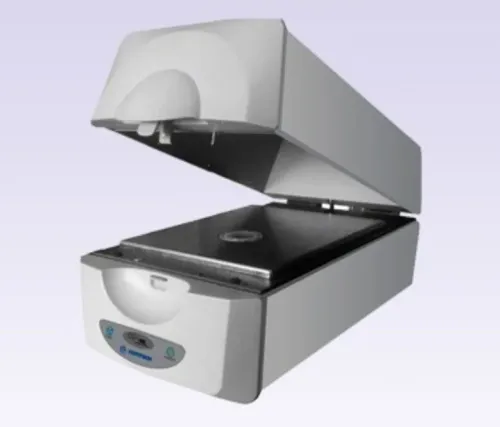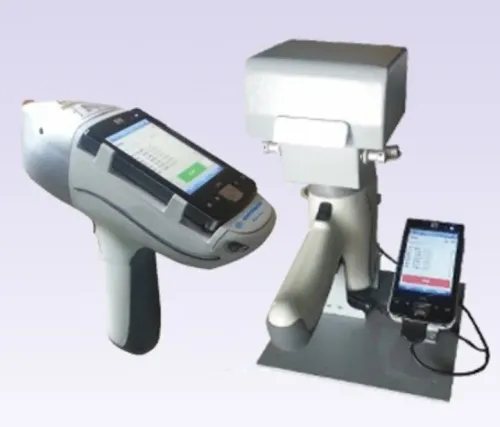

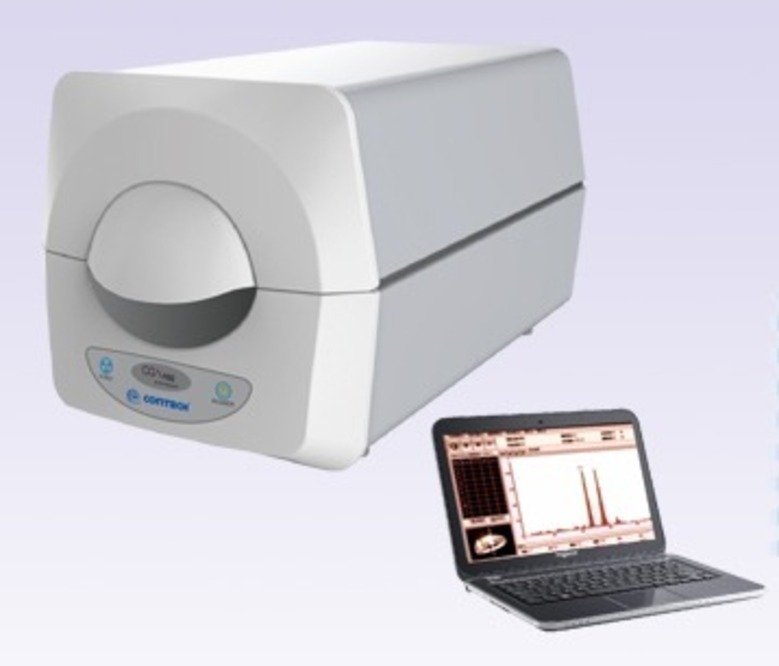
Gold buyers, jewellers, manufacturers, refiners, and testing laboratories frequently need to determine the composition of precious metal items without cutting, scraping, or chemically altering them. An XRay Fluorescence Gold Detector provides a non-destructive approach by analysing the characteristic X-rays emitted by elements present in a sample.
For businesses operating in Mumbai, Maharashtra, where jewellery manufacturing and precious metal trading are significant commercial activities, quick and consistent material analysis can support everyday quality-control and verification processes.
How XRF Analysis Works
X-ray fluorescence, commonly known as XRF, is an analytical technique used to identify and quantify elements in a material. During testing, the sample is exposed to controlled X-rays. The atoms within the sample respond by emitting secondary or fluorescent X-rays.
Different elements produce characteristic signals. The instrument measures these signals and processes them to estimate elemental composition.
In a gold alloy, the analysis may identify gold along with other detectable elements used in the alloy, depending on the instrument configuration and sample.
Why Non-Destructive Testing Matters
Traditional testing methods can sometimes require contact with chemicals, surface rubbing, or removal of a small quantity of material. These approaches may be unsuitable when the item being evaluated is finished jewellery or another valuable object.
XRF testing has several practical advantages:
- The sample generally remains intact during analysis
- Results can be obtained relatively quickly
- Multiple items can be screened efficiently
- Elemental composition can be evaluated
- Routine quality-control workflows become easier to standardise
This is especially useful when a business handles valuable inventory throughout the day.
What Can Influence an XRF Reading?
Using an XRF detector does not mean every sample should be approached identically. Surface condition, sample geometry, coating, plating, contamination, and measurement position can influence results.
A clean, reasonably flat measurement area generally provides a more representative testing surface. For irregular jewellery, operators may need to select the measurement point carefully.
It is also important to understand that XRF primarily analyses the region exposed to the X-ray beam. If the surface composition differs substantially from the underlying material, interpretation requires appropriate care.
Applications Across the Gold Industry
An XRay Fluorescence Gold Detector can support a variety of applications, including jewellery manufacturing, incoming material inspection, precious metal trading, quality control, and alloy verification.
Mumbai's jewellery and precious metal ecosystem includes manufacturers, wholesalers, retailers, testing operations, and other businesses that may need dependable analytical equipment.
Understanding the technology before selecting an instrument helps buyers evaluate specifications more meaningfully. CONTECH INSTRUMENTS LTD. operates in the instrumentation sector and provides solutions relevant to such measurement requirements. Ultimately, an XRF system should be assessed not simply as a gold detector, but as an analytical instrument whose usefulness depends on suitable configuration, correct operation, and proper interpretation of results.