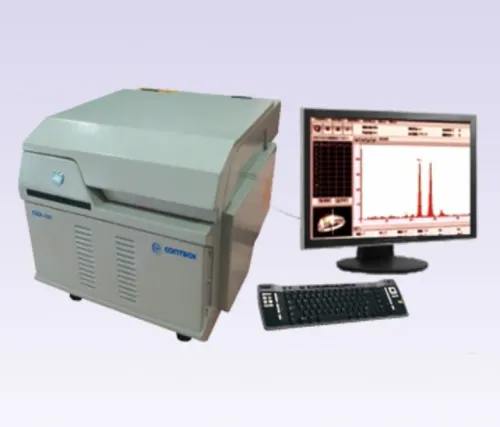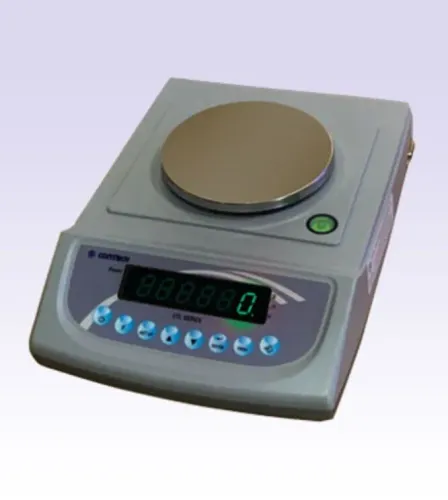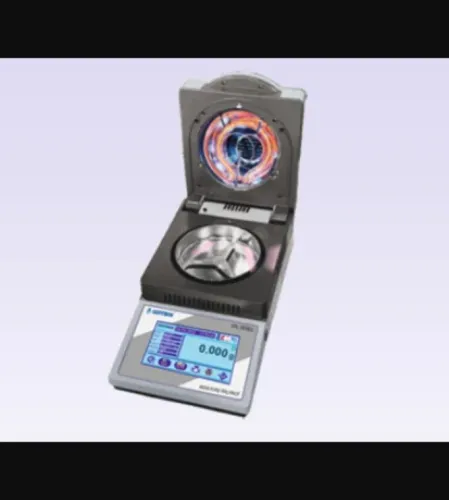

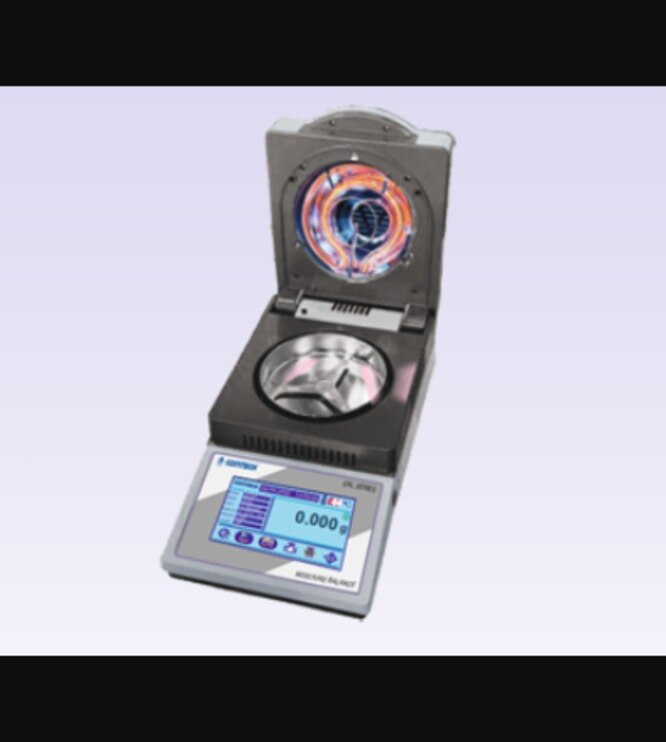
Choosing the right instrument starts with the method, not the catalogue name: loss on drying, Karl Fischer titration, oven drying, and rapid thermal analysis do not answer identical questions. By the end, you will know how to compare suppliers, specify sample and temperature requirements, and test whether a proposed analyzer produces results you can defend.
Key takeaways
- Confirm whether the analyzer measures mass loss or uses a direct water method.
- Use a representative, evenly distributed sample and record its initial mass.
- Compare heating range, readability, capacity, endpoint control, and calibration support.
- Ask for calibration documents, installation, warranty, service terms, and a complete quote.
What a Moisture Determination Analyzer Actually Measures
An analyzer usually measures mass loss, not water directly. In moisture content analysis, you place a representative sample on a tared pan, record its initial mass, heat it, and monitor mass until the selected endpoint shows that drying has stabilised. It calculates moisture percentage as (initial mass − final mass) ÷ initial mass × 100.
This is Loss on Drying (LOD), a gravimetric moisture measurement.
LOD is suitable when the material’s lost mass is a validated proxy for water and the sample withstands the chosen temperature without decomposition, charring, crust formation, or case hardening. It works well for routine quality control after you establish temperature, sample size, endpoint, and repeatability against a reference method.
Too low a temperature creates long, incomplete runs; too high a temperature can drive off more than water.
That distinction matters: solvents and other volatile compounds also count as loss, so moisture analysis can read high even when actual water content has not changed. Use Karl Fischer titration when you need water specifically, especially in a formulation containing volatile solvents or when LOD causes decomposition.
Hygroscopic samples can gain or lose water during transfer, so homogenise them and minimise exposure before weighing. An analyzer automates weighing and endpoint control, but compare replicate low-, mid-, and high-moisture samples before replacing an established oven method.
How to Prepare and Run a Sample Correctly
A reliable run starts with a representative, homogeneous sample and a documented method. Poor preparation can create more variation than the analyzer itself, especially with hygroscopic powders that gain or lose moisture during transfer.
- Mix or reduce the sample without heating it, then break up lumps. Keep the container closed until weighing.
- Select a clean, dry pan and record its tare. Use the same pan type and sample mass range used during method development.
- Spread the sample in a thin, even layer. A thick pile can form a dry crust while moisture remains inside.
- Place the pan on the balance, close the heating chamber, and allow the analyzer to record the initial mass before heating.
- Use a temperature program established with representative low-, mid-, and high-moisture samples. Excessive heat can cause charring, decomposition, or case hardening.
- Choose an endpoint such as constant mass or a defined rate of mass change. Do not stop solely because the display looks stable.
- Let the analyzer cool the sample or pan under the stated method conditions before removing it. Cooling an exposed hygroscopic sample can change the moisture measurement.
- Check the final mass and record the result basis, elapsed time, temperature program, endpoint rule, sample identification, operator, date, and instrument identification.
Repeat prepared replicates to assess precision. If loss on drying includes solvents or other volatile components, confirm that the result represents the intended moisture content analysis rather than total volatile loss.
Which Instrument Specifications Matter Before You Compare Prices
Compare the measurement workflow, not just displayed readability. A moisture determination balance in Mumbai combines weighing, controlled heating, and endpoint calculation; a laboratory balance only weighs, while an oven requires heating, cooling, and a separate weighing step. For moisture analysis, ask whether the faster workflow produces equivalent results.
| Option | What it does | Specifications or limitation |
|---|---|---|
| Moisture determination analyzer | Weighs before and after heating and calculates loss on drying | Compare repeatability, linearity, sample capacity, temperature range, heating uniformity, endpoint rule, and stated uncertainty at your sample mass |
| Laboratory balance | Provides accurate mass for manual loss-on-drying calculations | It cannot control heating or detect the endpoint; operator timing and cooling conditions add variation |
| Drying oven plus balance | Heats multiple samples under a defined temperature and requires manual final weighing | Useful for an established reference method, but slower and dependent on oven uniformity, desiccation, and weighing discipline |
Require a product-specific method stating sample mass, homogenisation, temperature profile, endpoint, result basis, and acceptance limits. Test equivalence with replicate low-, mid-, and high-moisture samples; one matching sample proves little. Halogen or infrared heating does not make results interchangeable with oven drying or Karl Fischer, and non-water volatiles can inflate loss-on-drying results.
Specify reporting fields before requesting prices: sample ID, method version, initial and final mass, temperature program, endpoint, elapsed time, operator, date, and instrument ID. If the instrument will support a legally controlled transaction, verify national metrology approval separately; laboratory status alone is not legal-for-trade approval.
Where to Buy in Mumbai and What the Supplier Quote Must Include
Before paying a deposit, ask for a line-item quotation for the moisture determination analyzer in Mumbai, not a price for the instrument alone. The quote should show what arrives, what must be purchased later, and what the supplier will do on site.
1. List the sample pans, including the quantity, material, and whether the system uses reusable or disposable pans. State prices and lead times for replacement pans and other consumables.
2. Identify the calibration weights, their nominal values, certificates, and recalibration responsibility. Include temperature-verification equipment and the procedure for checking the heater, not just the balance.
3. Specify the printer or data interface, included software, export formats, user access controls, and whether results can be transferred without manual transcription.
4. State local delivery, installation, method setup, operator training, travel charges, warranty exclusions, response time, and Mumbai service arrangements.
5. Print the performance figures: repeatability, linearity, temperature range and control tolerance, heating uniformity, maximum sample capacity, endpoint options, and uncertainty or tolerance at your intended sample mass. Do not select a moisture determination balance in Mumbai by readability alone.
Ask whether the quoted instrument is laboratory-use only. If the balance will support a legally controlled sale or purchase, confirm approval under the applicable Indian legal-metrology requirements; laboratory status does not make it legal for trade.
CONTECH INSTRUMENTS LTD. should be asked to separate instrument specifications from installation, verification, and training deliverables so competing quotes can be compared on the same basis.
Related product
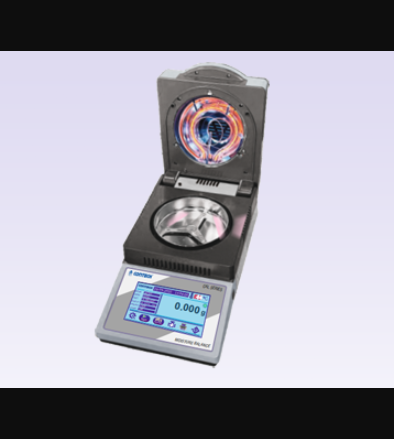 | Moisture Balances Moisture Balances (CAL Series) (0.001 g to 180 g) Moisture Balances (CAL Series) (0.001 g to 180 g) The CONTECH CAL Series Moisture Balances are advanced moisture analyzers designed for fast,... View product → |
How to Validate, Document, and Maintain the Method
Prove fitness by validating the complete method, not just checking the display. Confirm that Loss on Drying suits the material; solvents and other volatile substances inflate the reported result, so Karl Fischer may be needed for water-specific moisture measurement.
1. Define the intended use, sample range, acceptance limits, endpoint rule, sample mass, heating temperature, and calculation before testing. Write these into the controlled method.
2. Compare the moisture determination analyzer in Mumbai with the established oven method or reference procedure using replicate tests at low-, mid-, and high-moisture levels. A single matching sample proves very little.
3. Record repeatability, weighing linearity, temperature verification, heating uniformity, endpoint behaviour, sample capacity, and uncertainty or tolerance at the actual sample mass.
4. Keep raw readings, printed or electronic results, sample and batch identifiers, operator, date, method version, deviations, calculations, and approval signatures. This evidence supports audits and method transfer.
5. Schedule balance checks with traceable calibration weights, temperature checks with traceable equipment, cleaning, pan inspection, and preventive service. Record every failure and corrective action.
If an accredited laboratory reports the results, link calibration certificates and service records to suitable national or international standards and include the instrument in ISO/IEC 17025 equipment-control and measurement-uncertainty procedures. A laboratory instrument is not automatically legal for trade; check national metrology rules separately before using its moisture measurement in a controlled transaction.
Frequently asked questions
What does a moisture determination analyzer actually measure?
It measures mass loss during heating and calculates moisture percentage from the initial and final sample masses. It does not directly identify water unless it uses a separate chemical or spectroscopic method.
How should you prepare a sample for moisture analysis?
Mix the material, take a representative portion, spread it evenly across the tared pan, and avoid exposure to air that changes its moisture content before weighing.
Which specifications matter when comparing moisture analyzers?
Compare weighing capacity, readability, heating range, heating technology, temperature control, endpoint settings, repeatability, data storage, calibration options, and service availability.
What should a Mumbai supplier include in the quotation?
Request the instrument model, capacity, readability, accessories, software, calibration documents, installation, training, warranty, delivery terms, taxes, and after-sales service charges.
How do you validate and maintain a moisture analysis method?
Define the sample mass, temperature profile, endpoint, and reporting format; compare results with a reference method; document calibration checks; and clean the pan, chamber, and weighing system regularly.