
A Mumbai buyer needs more than a catalogue name: the right analyser depends on sample size, alloy mix, surface condition, reporting format, service response, and radiation-safety arrangements. By the end, you will have a practical checklist for comparing demonstrations, quotations, and local support before you purchase.
Key takeaways
- Choose a benchtop analyzer for repeatable jewellery-counter testing.
- Use a handheld analyzer for large, installed, or irregular metal objects.
- Demand live testing on jewellery, bullion, plating, and known alloys.
- Define when fire assay or laboratory analysis must confirm XRF results.
Choose the analyser format and detector for your work
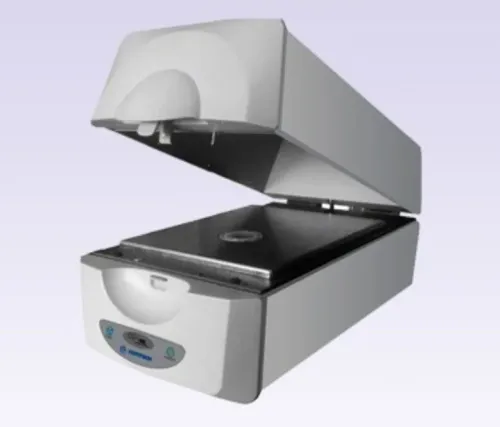
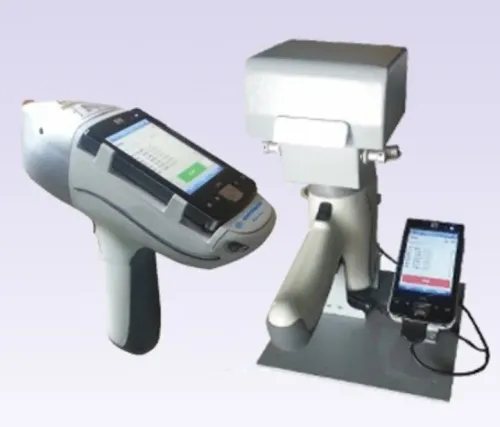
A jewellery counter or bullion desk usually benefits from a benchtop xray gold testing analyzer: its enclosed chamber fixes the sample distance and angle, improving repeatability between staff members. Choose a handheld unit for large objects, installed metalwork, or irregular pieces that cannot enter a chamber; operator positioning and surface condition then affect the result.
| Format | Detector | Best fit |
|---|---|---|
| Benchtop | SDD | Jewellery counters and laboratories needing higher resolution, faster counts, and separation of nearby elemental signals |
| Benchtop | Silicon-PIN | Routine gold checks where compact size and lower cost matter more than maximum resolution |
| Benchtop | Gas-proportional | Basic precious-metal screening when the supplier demonstrates adequate sensitivity for your alloys |
| Handheld | SDD | Workshops, bullion inspection, large articles, and incoming goods that cannot be placed in a chamber |
For a laboratory, select an SDD benchtop instrument when you must distinguish gold from silver, copper, zinc, palladium, or nickel in complex alloys. Ask for certified reference materials matching your karat range; pure-gold standards alone do not validate jewellery results.
A gold purity analyzer measures the exposed surface, not automatically the whole article. Test several locations on plated, soldered, repaired, hollow, or mixed pieces, and require a demonstration on known plated samples before trusting a single reading. Compare spot size, chamber dimensions, supported elements, and whether results appear as fineness, karat, or weight percent.
Test the specifications that separate useful instruments from sales claims
A quotation found through “xray fluorescence gold purity for analyzer in mumbai” is useful only when it names measurable performance. “Gold purity analyzer” alone does not tell you whether the xray gold detector can separate the grades or alloys you actually buy.
1. Demand the instrument specification sheet. It must state the detector type—gas-proportional, silicon-PIN, or SDD—plus X-ray tube target and anode, measurement spot size, operating atmosphere, sample-chamber dimensions, minimum sample size, supported elements, analysis range, and typical analysis time.
2. Ask how results are reported: fineness, karat, weight percent, or all three. Require stated accuracy, repeatability, detection limits, and purity resolution at the grades that matter, rather than accepting “high precision.”
3. Require a live demonstration using certified reference materials near 750, 916, and 999 fineness. The report for each sample must show the measured value, error, and repeatability; one test on a 999 sample proves very little about grade separation.
4. Check the calibration certificate and its reference materials. Standards containing only pure gold cannot show whether the method compensates for silver, copper, zinc, palladium, or nickel in jewellery alloys.
5. Make the seller test known plated and filled articles. XRF measures the exposed surface, so plating can produce a falsely high result unless the method, spot size, and limitations are demonstrated.
Also request sample reports, software export formats such as CSV or PDF, and the exact warranty exclusions for the tube and detector before signing.
Match the test method to jewellery, bullion, plating, and alloy problems
One reading from a clasp cannot represent an entire piece of jewellery. Use this procedure so your gold purity analyzer measures the material you intend to buy:
1. Clean and dry the test area. Remove dirt, polishing compound, oil, and loose surface deposits without filing away metal. Record whether the article is hollow, repaired, soldered, stone-set, or suspected of plating.
2. Place a flat, solid area directly over the measurement window. Keep the surface flush and perpendicular to the beam; an angled or badly seated article changes the exposed volume and can distort the result. Use a benchtop unit for controlled geometry, or hold a handheld unit firmly against large or fixed objects.
3. Test several locations: the front, back, clasp or joint, and any visibly different section. On bullion, measure the broad face and repeat near another face or edge. Stop treating the item as uniform when readings differ.
4. Match the calibration to the alloy. Ask for certified reference materials near the grades you trade, such as 750, 916, and 999 fineness, with silver, copper, zinc, palladium, or nickel matrices. Demand reported error or repeatability at each grade, not one reading on pure gold.
5. Treat plating, filled articles, and surface-treated goods as a separate risk. XRF measures the exposed material, so a gold-plated base metal can read falsely high; require demonstrations on known plated samples and use independent bulk testing for a dispute or definitive transaction.
Good gold testing equipment screens quickly. It does not automatically replace fire assay or another specified reference method.
Compare Mumbai suppliers through a live demonstration and service quotation
Do not choose on catalogue price. Buy from the Mumbai supplier that lets you inspect the instrument, test your own jewellery, and names the technician who will support it after installation. A showroom demonstration is stronger than a video call because you can check chamber access, sample positioning, software, and reporting speed.
| Buying route | Verify before ordering | Reject when |
|---|---|---|
| Mumbai showroom or manufacturer | Full address, sales contact, live demonstration, installation coverage, and local service response | The seller will not identify its service location or permit inspection |
| Authorised distributor | Written authorisation, detector and tube specification, warranty issuer, calibration support, and spare-parts route | Warranty service depends on an unnamed third party |
| Remote or marketplace seller | Factory documents, return terms, commissioning plan, and Mumbai technician availability | The quotation lists only “gold purity analyzer” |
Ask the supplier to test certified reference materials near 750, 916, and 999 fineness, plus a plated sample and a soldered joint. Require reported error or repeatability at each grade, and ask the operator to measure several locations. A single reading on pure gold proves little.
Your quotation should state detector type, tube anode, spot size, atmosphere, sample-chamber dimensions, supported elements, calibration method, analysis time, export format, and whether results appear as fineness, karat, or weight percent. Confirm detection of silver, copper, zinc, palladium, nickel, and platinum-group elements.
CONTECH INSTRUMENTS LTD. is one Mumbai supplier to include in this comparison; judge its proposal against the same demonstration and service checklist. Use the search phrase xray fluorescence gold purity for analyzer in mumbai, then verify every xray gold testing analyzer claim in person.
Related products
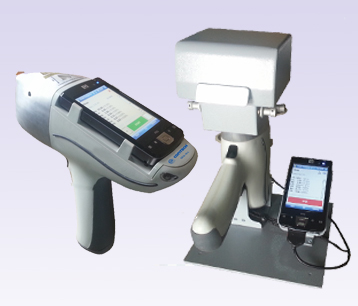 | X-RAY FLUORESCENCE SPECTROMETERS GOLD PURITY CHECKING INSTRUMENTS X-Ray Fluorescence Spectrometer Handheld Detector X-Ray Fluorescence Spectrometer Handheld Detector (Si-PIN / SDD) – CGX-104 The X-Ray Fluorescence... View product → |
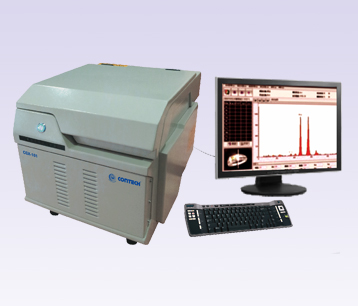 | X-RAY FLUORESCENCE SPECTROMETERS X-Ray Fluorescence Spectrometer – Gas Proportional XRF Detector CGX-101 X-Ray Fluorescence Spectrometer – Gas Proportional XRF Detector CGX-101 The X-Ray Fluorescence Spectrometer – Gas Proportional XRF Detector CGX-101... View product → |
Set up safe quality control and define when XRF is not enough
Make the quotation include commissioning, site requirements, and documented acceptance testing—not only the analyser price. For a benchtop unit, specify enclosure location, electrical supply, ventilation, fixed geometry, interlock checks, warning labels, and operator training. For a handheld xray gold detector, require instructions for controlled use, storage, access, and safe testing at a jewellery counter.
Ask the supplier to identify the applicable Indian radiation-safety approvals and AERB requirements, provide installation records, and explain who handles registration, inspections, servicing, and incident reporting. Include Mumbai response time, preventive-maintenance frequency, calibration support, loaner availability, warranty exclusions for the detector and X-ray tube, and replacement-part cost and turnaround.
Your calibration plan must use certified reference materials with alloy matrices resembling your stock, including relevant gold, silver, copper, zinc, palladium, or nickel combinations. Pure-gold standards alone can leave jewellery results biased.
- Require a written quality-control procedure covering daily checks, verification frequency, failed-check action, record retention, and operator competency.
- Specify repeat measurements and multiple test locations for plated, soldered, repaired, hollow, or visibly heterogeneous articles.
- State that XRF is a screening or production-control method. For a disputed transaction, regulatory decision, or definitive bulk result, retain a representative sample and name an independent confirmatory method, such as fire assay, before approving the purchase of gold testing equipment.
Frequently asked questions
Which XRF analyzer format suits jewellery and bullion testing?
Choose a benchtop analyzer for enclosed, repeatable testing at a counter or bullion desk. Choose a handheld unit for large objects, installed metalwork, or pieces that cannot enter a chamber.
What specifications should you compare when buying an XRF gold analyzer?
Compare the detector, measurement area, sample chamber, repeatability, calibration method, alloy library, software reporting, display, and service support. Confirm each claim during a live demonstration.
Can one XRF gold purity analyzer test jewellery, bullion, plating, and alloys?
Test the instrument on each material type before buying. Surface condition, coating thickness, geometry, and alloy composition affect results, so a configuration suitable for bullion may not resolve plating problems.
When is XRF testing not enough to confirm gold purity?
Use a confirmatory laboratory method when the surface is plated, contaminated, uneven, too small, or disputed, or when results have legal or high financial consequences. XRF measures the tested surface and does not replace every destructive assay.
Related product
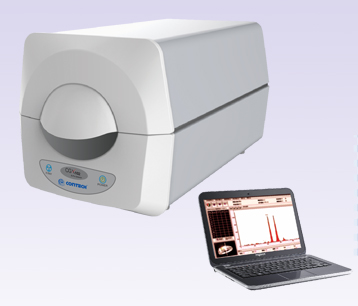 | X-RAY FLUORESCENCE SPECTROMETERS X-Ray Fluorescence Spectrometer – Gas Proportional XRF Detector CGX-101 / Silicon-PIN XRF Detector C GOLD PURITY CHECKING INSTRUMENTS X-Ray Fluorescence Spectrometer – Gas Proportional XRF Detector CGX-101 / Silicon-PIN XRF Detector CGX-102 X-Ray... View product → |