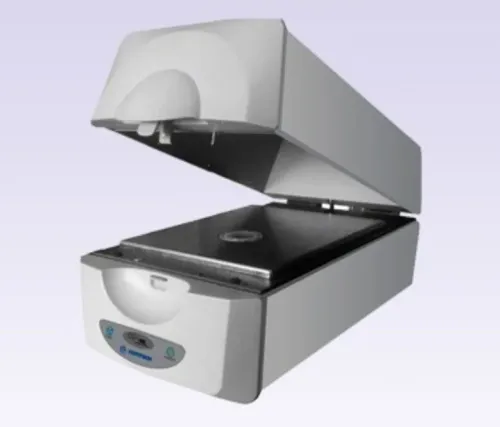

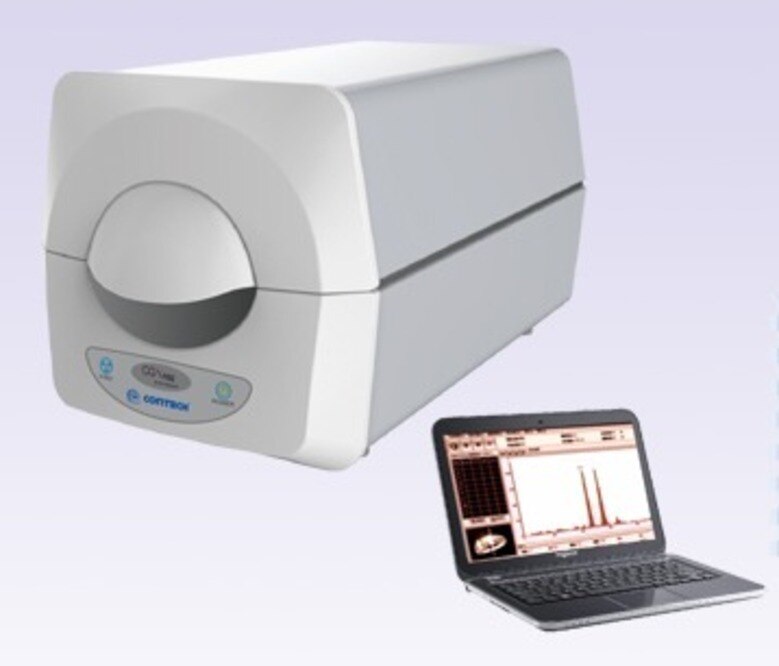
Mumbai quotations for an XRF carat meter can cover anything from a replacement detector to a complete enclosed gold-testing workstation, so headline prices are not directly comparable. By the end, you will know how to normalise those quotes, judge the reading’s limitations, and select equipment that fits jewellery inspection, retail testing, or assay work.
Key takeaways
- A detector-only quote excludes the tube, enclosure, software, and safety interlocks.
- Request an itemised quote separating the detector, complete system, installation, and calibration.
- Confirm surface XRF limits before relying on readings for plated or layered jewellery.
- Use a documented acceptance test covering repeatability, certified samples, and radiation safety.
What Mumbai prices actually include: detector, complete system, or imported package?
A detector-only quote is not the price of a working gold analyzer. An xray gold for carat meter detector still needs an X-ray tube, spectrometer electronics, sample geometry, shielding, calibration software and a safe enclosure with interlocks.
Indicative Mumbai bands for complete systems, before GST and freight, are:
| Type | Indicative price band | What the quote should include |
|---|---|---|
| Gas-proportional | ₹3–7 lakh | Basic enclosed system; slower analysis and narrower capability |
| Silicon-PIN | ₹5–10 lakh | Compact benchtop unit with controlled chamber geometry |
| SDD benchtop | ₹8–20 lakh | Better resolution, software and repeatability for regular jewellery testing |
| Handheld | ₹7–18 lakh | Portable testing with less shielding and geometry control |
These are comparison bands, not a substitute for a dated quotation. Request 125–150 eV resolution at the manganese K-alpha line; resolution alone does not prove accuracy. Handheld portability also does not equal benchtop repeatability.
Ask for an itemised landed quotation covering:
- Detector, X-ray tube, shielding, sample-chamber dimensions and analytical element range
- Software, computer, printer, calibration standards and report access
- Installation, training, warranty, Mumbai freight, GST, UPS or voltage conditioning
- Annual calibration, service-visit charges and response times
- Radiation-safety documents, enclosure interlock details and applicable approval status
Label each offer separately as refurbished, imported without local service, or fully installed. A replacement detector, even one advertised as a gold analyzer component, is not comparable with a complete imported package.
How to operate a carat meter and interpret the number on screen
A normal carat-meter reading reports the gold purity of the irradiated surface, then converts elemental measurements into a karat or fineness value.
1. Clean and dry the test area. Remove dirt, polishing compound, oil, and loose plating without creating a new contaminated surface.
2. Place the item flat and repeatably over the measurement window. For a chambered unit, close the lid; with a handheld gold tester, hold the instrument square to the surface.
3. Select the alloy or precious-metal method, then measure for the stated counting time. Do not compare a 10-second reading with a 60-second reading as though they had equal precision.
4. Repeat the measurement on several clean locations, recording each result rather than relying on one attractive number.
The common conversions are 24K ≈ 999 fineness, 22K = 916, 18K = 750, 14K = 585, and 9K = 375. Karat is a conversion from fineness; elemental reporting instead shows concentrations such as Au, Ag, Cu, Zn, Ni, Pd, or Pt.
A curved ring, chain, hollow piece, solder joint, tilted surface, or uneven section changes the irradiated area and X-ray escape path. The displayed result can therefore describe only that spot, not the entire article.
Software can save spectra, readings, operator details, sample IDs, date and time, method settings, and printable reports. Preserve those records with the item’s identification and repeat readings so a later comparison shows both the number and how it was obtained.
When surface XRF gives the wrong answer—and what other tests add
A high XRF result does not prove the whole item has that gold purity. Plating, gold wash, filled construction, solder, or a thin high-purity skin over a lower-purity core can make a surface XRF gold tester report an inflated value. Several clean-spot readings improve screening, but they still do not establish bulk composition.
| Method | Accuracy and damage | Skill and speed | Best use |
|---|---|---|---|
| Acid touchstone | Approximate comparison; slight rubbing or marking | Trained operator; fast | Jewellery-shop screening |
| Electronic conductivity tester | Indirect result; non-destructive | Simple and fast, but alloy-dependent | Quick sorting, not final valuation |
| Specific gravity | Bulk-density clue; non-destructive if intact | Careful weighing and volume measurement; slower for hollow items | Cross-checking solid pieces |
| Fire assay | Reference-level bulk result; destructive | Skilled laboratory; slow | Disputes, settlement, and defensible valuation |
| Other non-XRF testers | Performance varies; verify the measurement principle | Depends on calibration and sample geometry | Secondary screening only |
Sample or cut the item when a thick coating, filled body, solder seam, hollow section, or conflicting result prevents representative testing. Send it to a qualified laboratory for fire assay when the transaction is disputed or a legally defensible bulk value matters. Do not let an attractive single reading settle that case.
A gold testing machine is sufficient for rapid, non-destructive screening of clean, homogeneous surfaces. It is not sufficient for every counterfeit or plated article, especially when the instrument reports only Au percentage rather than silver, copper, zinc, nickel, palladium, and platinum as well. Treat XRF as screening; use sampling and laboratory confirmation for bulk claims.
How to compare a Mumbai supplier’s service, safety, and acceptance test
Before paying, make the quotation pass a written checklist and an acceptance test, not just a live reading on one 22K ring.
- Calibration standards must cover your intended yellow, white, and rose-gold karats, plus soldered jewellery and alloys containing silver, copper, zinc, nickel, palladium, or platinum.
- Request radiation-safety documentation, enclosure-interlock details, and the type-approval or regulatory status applicable to the supplied configuration.
- Name who handles installation, method setup, operator training, software access, sample cups or films, warranty duration, response times, annual maintenance, and Mumbai service visits.
- Separate the instrument, X-ray tube, computer, printer, UPS or voltage conditioner, GST, freight, calibration, and consumables as individual quotation lines.
CONTECH INSTRUMENTS LTD. is one Mumbai supplier you can ask for this complete, itemised quotation, then compare it against competing offers on identical terms.
Your acceptance test must use certified reference materials at each karat you will report. Take repeated readings, record the stated repeatability and measurement time, compare results with an independent assay method, and test both plated and soldered samples. Reject a quotation that defines acceptance as “the display shows the expected value” without numerical limits.
| Quote item | Require before payment | What failure exposes |
|---|---|---|
| Safety | Documents and interlock demonstration | Unsafe or non-compliant enclosure |
| Accuracy | Reference-material results and tolerance | Unproven gold analyzer performance |
| Ownership | Warranty, response time, maintenance and Mumbai service | Downtime after purchase |
| Software | User access, reports and exported spectra | Locked gold testing machine data |
Related products
 | X-RAY FLUORESCENCE SPECTROMETERS X-Ray Fluorescence Spectrometer – Gas Proportional XRF Detector CGX-101 / Silicon-PIN XRF Detector C GOLD PURITY CHECKING INSTRUMENTS X-Ray Fluorescence Spectrometer – Gas Proportional XRF Detector CGX-101 / Silicon-PIN XRF Detector CGX-102 X-Ray... View product → |
 | X-RAY FLUORESCENCE SPECTROMETERS X-Ray Fluorescence Spectrometer – Gas Proportional XRF Detector CGX-101 X-Ray Fluorescence Spectrometer – Gas Proportional XRF Detector CGX-101 The X-Ray Fluorescence Spectrometer – Gas Proportional XRF Detector CGX-101... View product → |
Which XRF configuration is worth the ownership cost for your workflow?
A low purchase price is worthwhile only if the instrument survives your actual sample mix and reporting needs. Match the configuration to the workflow, not the label “gold analyzer”: a replacement detector is not a working gold testing machine, and a handheld tester is not automatically equivalent to an enclosed benchtop system.
| Option | Best fit | Ownership trade-off |
|---|---|---|
| Gas-proportional or Silicon-PIN | Occasional screening and simple gold purity checks | Lower entry cost, but slower measurements, narrower validated elemental coverage, greater calibration burden, and less controlled geometry |
| SDD benchtop analyzer | Jewellery counter with repeated flat samples or an assay office | Higher cost, but faster counting, controlled chamber and shielding, stronger repeatability, broader elemental coverage, stored reports, and simpler operator training |
| Handheld tester | Workshop handling irregular pieces or needing mobility | Fast access to awkward items, but surface angle, sample distance, repeatability, report storage, and service support need closer checking |
Choose the benchtop SDD when throughput, documented results, and repeatability outweigh portability. Choose handheld equipment only after testing irregular and plated samples; do not treat a low-cost handheld or detector replacement as an enclosed benchtop gold testing machine.
Normalise the quotation for installed price, calibration, service, consumables, and downtime across the intended ownership period. Select the least expensive system that passes repeated certified reference-material tests at your target karats, agrees with an independent assay, and exposes errors on plated and soldered samples.
Frequently asked questions
What does a Mumbai price for an X-ray gold carat meter include?
Compare whether the quote covers only the detector or a complete system with the X-ray tube, spectrometer electronics, sample geometry, shielding, interlocks, software, installation, calibration, and imported-package charges.
How do you operate a carat meter and interpret its reading?
Place a clean, representative area at the specified working distance, select the correct jewellery or alloy method, run the measurement, and read the reported elemental percentages alongside repeat readings and the instrument’s uncertainty.
When can surface XRF give the wrong gold-purity result?
Surface XRF can mislead when jewellery is plated, filled, soldered, hollow, dirty, curved, or layered. Add repeated tests at different points and use density, touchstone, fire assay, or another method when the result matters.
How should you compare a Mumbai gold analyzer supplier?
Ask for licensing and safety documentation, installation and calibration scope, response times, spare-parts support, training, warranty terms, and a written acceptance test using certified reference materials.
Which XRF configuration is worth the ownership cost?
Choose a benchtop system for controlled, repeatable counter or laboratory testing; choose a portable unit when mobility matters and you can manage its geometry, battery, environmental, and measurement-limit trade-offs.
Related product
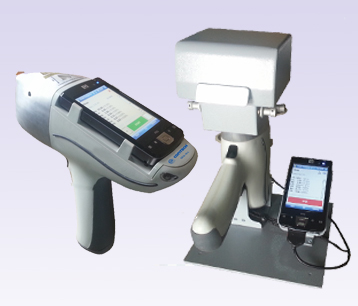 | X-RAY FLUORESCENCE SPECTROMETERS GOLD PURITY CHECKING INSTRUMENTS X-Ray Fluorescence Spectrometer Handheld Detector X-Ray Fluorescence Spectrometer Handheld Detector (Si-PIN / SDD) – CGX-104 The X-Ray Fluorescence... View product → |