
A heating moisture analyzer can produce a useful soil moisture result, but its display does not automatically match a standards-based laboratory water-content value. By the end, you will know how to prepare and calculate a soil test, when to use an analyzer for screening, and when to confirm the result with a reference oven method.
Key takeaways
- Confirm loss-on-drying against the specified reference method.
- Record sample mass, drying temperature, time, and endpoint.
- Compare results across soil types and the tested moisture range.
- Reject an analyzer that fails repeatability or method agreement checks.
When is a soil moisture balance suitable for laboratory soil testing?
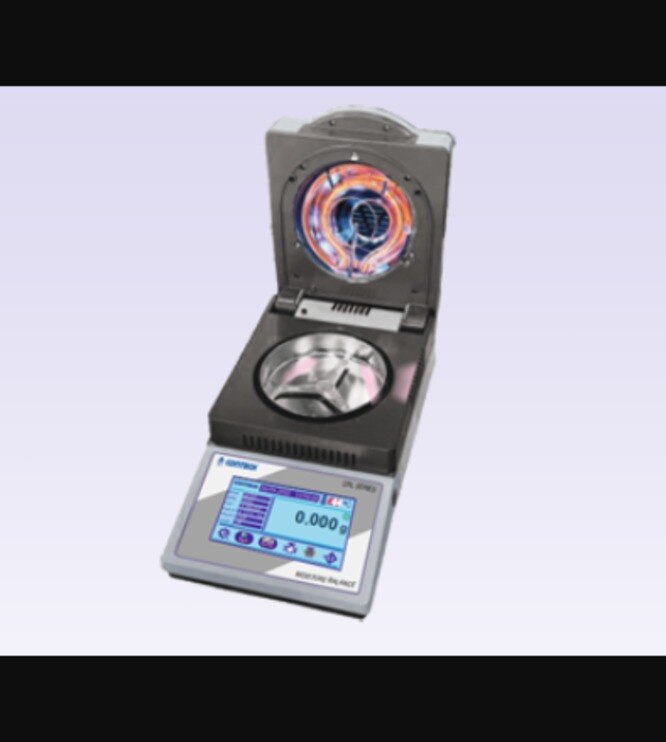
A soil moisture balance is suitable for laboratory moisture measurement only after its loss-on-drying result agrees with the specified reference method for the soil types and moisture range you test. Readability alone does not establish suitability.
The instrument weighs the sample, heats it, and calculates mass loss. That loss represents volatile material, not water specifically; solvents, decomposition products, or chemically released water can also contribute.
Many analyzers report wet-basis moisture: (wet mass − dry mass) ÷ wet mass × 100. ASTM D2216 water content uses a dry basis: (mass of water) ÷ (oven-dried soil mass) × 100. A percentage without its denominator is incomplete.
Demonstrate suitability with a comparison such as this:
- Select representative soils across the expected textures, organic-matter levels, salts, and moisture range.
- Prepare duplicate or triplicate portions from each soil using the same mixing and reduction procedure.
- Test one set on the soil moisture balance and the other with the actual laboratory reference procedure, including its specified temperature, duration, sample mass, and calculation.
- Compare bias, repeatability, and between-preparation variation rather than quoting only the balance readability.
- Confirm that the analyzer’s reported basis matches the reference result, or convert both results before evaluation.
Agreement supports routine screening or process control. A contract, specification, or regulatory report can still require ASTM D2216 or another named oven method, so a rapid soil moisture balance result is not automatically an acceptable substitute.
How do you prepare and run a soil moisture sample?
A reliable soil moisture measurement starts with representative sampling, not with the balance. Follow the applicable soil sampling procedure and keep the material protected from evaporation, rain, washing, or other added water.
1. Label the sample with the location, depth, collection date, and sample identifier. Record any handling time that could affect moisture loss.
2. Remove stones and roots when the specified method excludes them. Break clods gently without squeezing the soil or allowing water to escape, mix the material, and reduce it to a representative test portion using the applicable standard.
3. Weigh the empty, clean, dry pan and record its mass. Add the soil, record the wet mass, and spread the material in a thin, even layer rather than leaving a heap that can dry at the surface and remain wet underneath.
4. Dry the loaded pan under the approved method. Use its specified temperature, drying profile, and endpoint criterion; do not copy a generic analyzer setting. Cool or condition the pan and soil as required before reweighing, then record the dry mass.
5. Define the moisture content determination calculation in the method. State whether the result uses wet mass or dry mass, because those denominators produce different percentages.
The procedure must specify sample mass, pan geometry, layer thickness, temperature, drying profile, endpoint criterion, and test duration for that soil. A fixed time can leave clay-rich material wet, while an aggressive endpoint can extend the run through drift or moisture migration.
A constant-mass check belongs in the method when the standard or risk assessment requires it.
How do soil properties change the moisture result?
Two percentages can describe the same soil sample, yet produce different results because their denominators differ.
Wet-basis moisture percentage equals (wet mass minus dry mass) divided by wet mass, multiplied by 100. If a sample weighs 120 g wet and 90 g dry, the result is 25%.
Dry-basis water content equals (wet mass minus dry mass) divided by dry mass, multiplied by 100. The same sample therefore gives 33.3%. Name the basis in every moisture content determination report; “30% moisture” is incomplete and cannot be compared safely.
Drying behaviour changes with soil composition:
- Clay holds water tightly and slows vapour release.
- Organic matter can retain water or decompose during heating.
- Salts can bind water and change the dried residue.
- Soil texture controls heat transfer and moisture movement.
- Hydrated minerals such as gypsum can lose crystal water.
A thick heap can develop a dry crust while wet material remains underneath. A thin, even layer improves drying and moisture detection. Fixed time can leave clay-rich samples wet; an aggressive endpoint can extend the run through balance drift, convection, or moisture migration.
A soil moisture balance measures loss on drying, not water alone. Its result can include solvents, volatile organics, decomposition products, and chemically released water. Use Karl Fischer when the measurand is specifically water, with a validated extraction procedure for insoluble soil.
Which soil moisture method should you compare with an analyzer?
Compare a soil analyzer with the method named by the project, not with a generic moisture percentage. ASTM D2216 is the conventional oven reference for many soils and defines water content on a dry mass basis: water mass divided by oven dried soil mass.
Its commonly used condition for mineral soils is 110 ± 5 °C, but the material type and applicable standard control the method.
| Method | What the result represents | When it applies |
|---|---|---|
| Analyzer | Loss during instrument specific heating; often reported on a wet basis | Routine screening or process control after agreement is demonstrated |
| Infrared or halogen drying | Loss on drying from a different instrument heating profile | Rapid moisture measurement after comparison with the required reference |
| ASTM D4643 microwave drying | Accelerated soil drying with safeguards for uneven heating, spattering, and overheating | Projects that specifically permit the microwave method |
| Field moisture probe | Rapid in place reading, not dried mass | Field moisture detection and immediate decisions |
An analyzer is not automatically ASTM D2216 equivalent because it uses a different temperature, sample mass, duration, or endpoint. Specifications, research, contracts, and regulatory reports can require the named oven method, temperature, duration, sample mass, and dry basis calculation.
Treat gypsum bearing soils, soils with other hydrated minerals, and some organic soils separately: heating can remove crystal water or cause decomposition, producing a result above free water content. Use an analyzer for routine work only after it agrees with the project method across the soil types and moisture range that matter.
How should you validate and select a soil moisture balance?
1. Check weighing performance with a traceable mass standard and check the temperature system using the instrument’s appropriate calibration or verification procedure. Neither check proves moisture accuracy: pan geometry, heating uniformity, endpoint logic, and preparation also affect the result.
2. Validate the complete method against the specified reference oven method, such as ASTM D2216. Compare duplicate or triplicate analyzer portions across the actual soil textures, organic-matter levels, salt concentrations, and moisture range. Include a control soil, record between-preparation variation, and require a constant-mass check when the governing standard or risk assessment calls for it.
3. Choose the portion size as a method trade-off. A larger portion improves representativeness but lengthens drying and can overload the pan; a smaller portion shortens the run but magnifies subsampling and tare errors. Specify pan loading and spreading rather than copying a generic setting.
4. Treat the endpoint as part of moisture measurement, not as a universal instrument feature. A fixed time can leave clay-rich soil wet, while an aggressive stability endpoint can prolong drying through drift, convection, or moisture migration. Define temperature, portion mass, endpoint, and data records for the moisture content determination.
5. When evaluating equipment from CONTECH INSTRUMENTS LTD., ask for method-development support on pan loading, temperature verification, endpoint settings, records, and comparison with ASTM D2216. Do not select a soil moisture balance on stated readability alone; suitability depends on demonstrated agreement for your laboratory moisture measurement method.
Related product
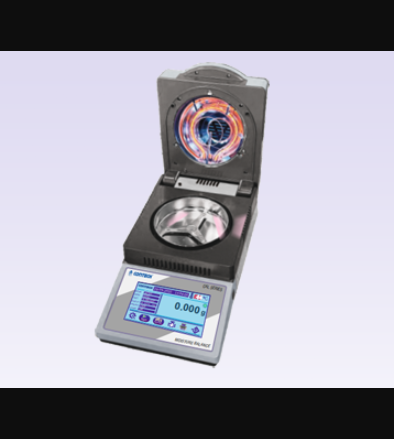 | Moisture Balances Moisture Balances (CAL Series) (0.001 g to 180 g) Moisture Balances (CAL Series) (0.001 g to 180 g) The CONTECH CAL Series Moisture Balances are advanced moisture analyzers designed for fast,... View product → |
Frequently asked questions
When is a soil moisture balance suitable for laboratory soil testing?
Use it after its loss-on-drying results agree with the specified reference method for the soil types and moisture range you test.
How do you prepare and run a soil moisture sample?
Homogenize the sample, record the initial mass, spread it evenly in the pan, and document the drying conditions and endpoint.
How do soil properties change the moisture result?
Clay content, organic matter, particle size, salts, and bound water affect drying behaviour and can change the measured moisture result.
Which soil moisture method should you compare with an analyzer?
Compare the analyzer with the reference method specified for your application, using matched samples across the expected moisture range.
How should you validate and select a soil moisture balance?
Check repeatability, agreement with the reference method, temperature control, sample capacity, endpoint settings, and suitability for your soil matrix.